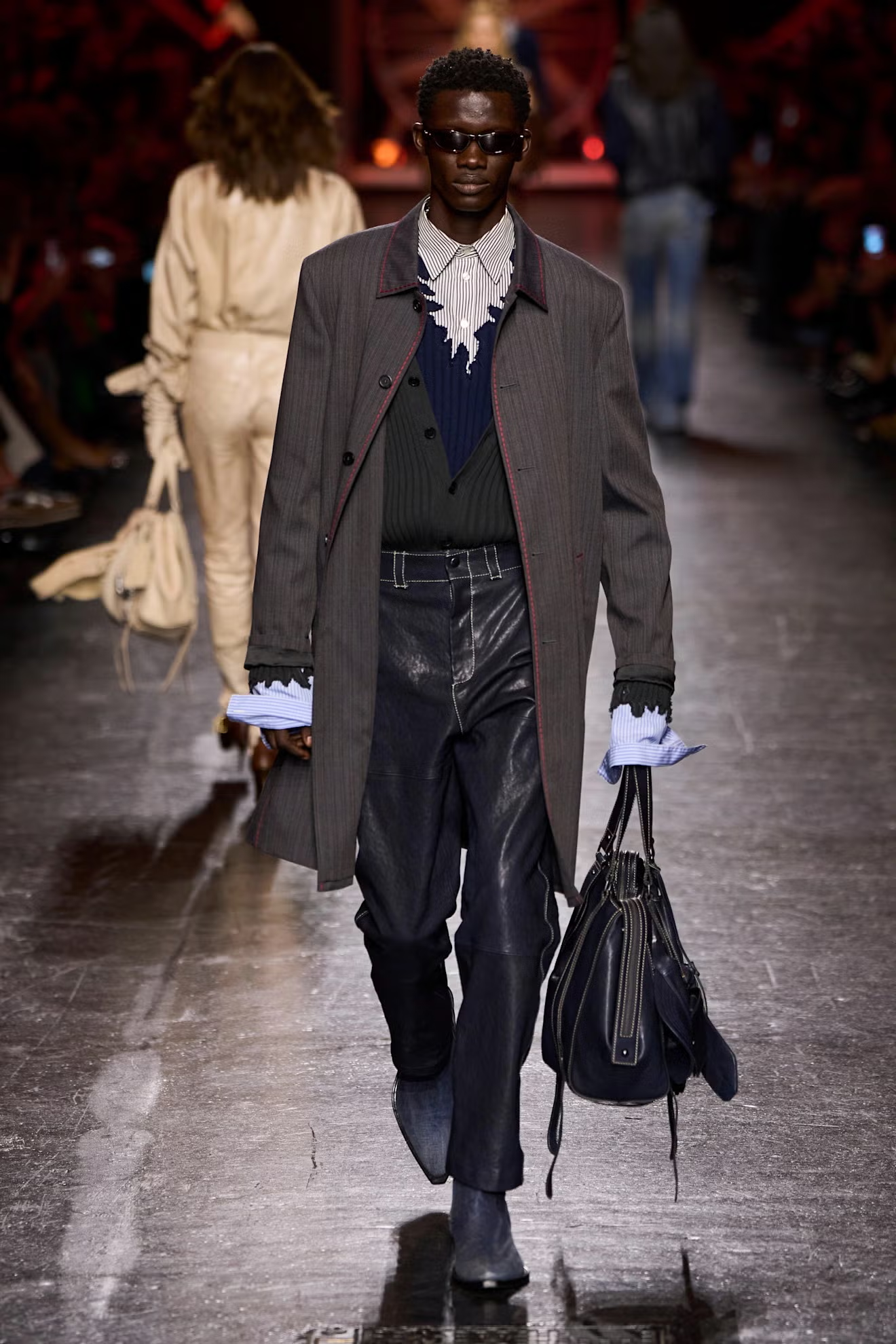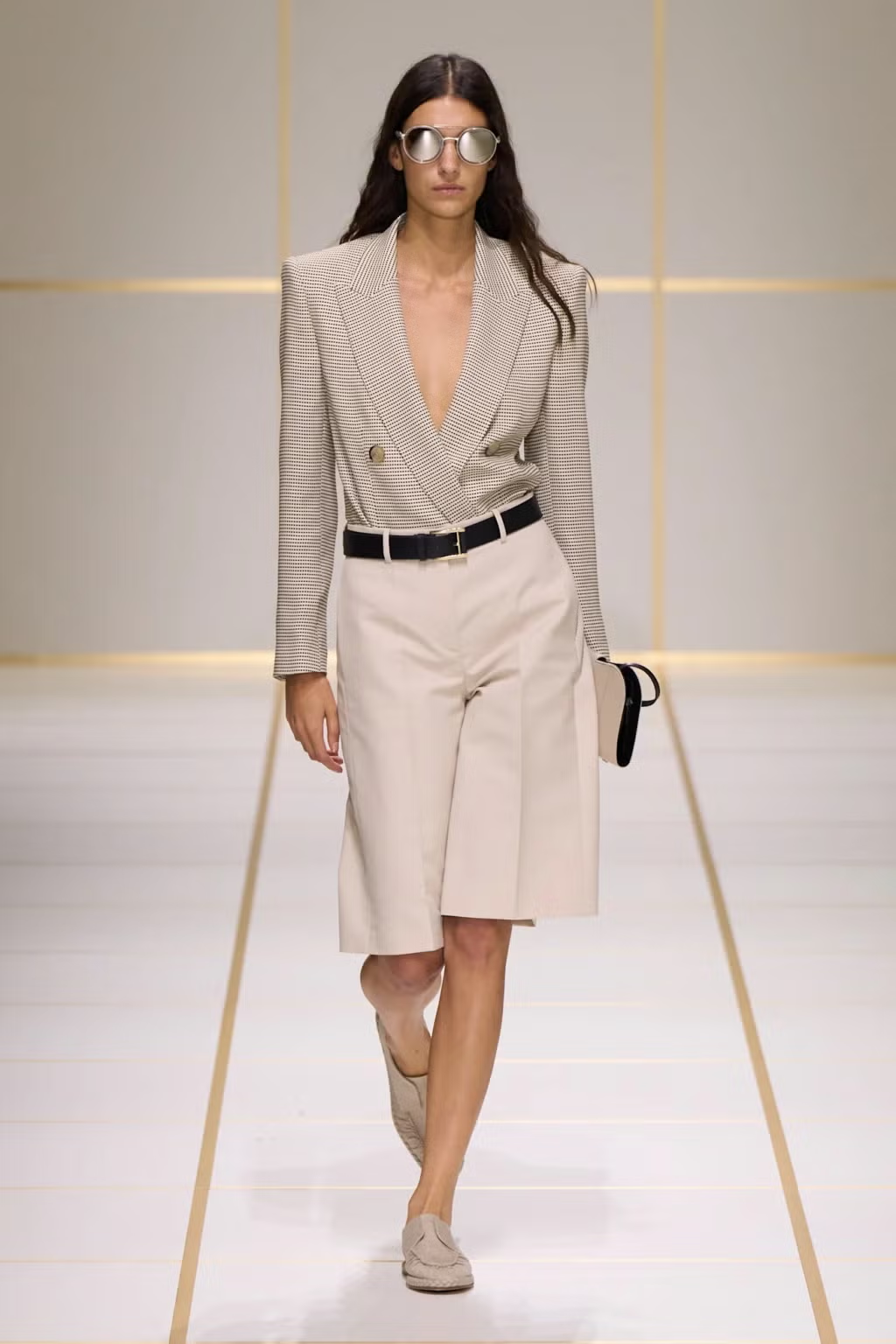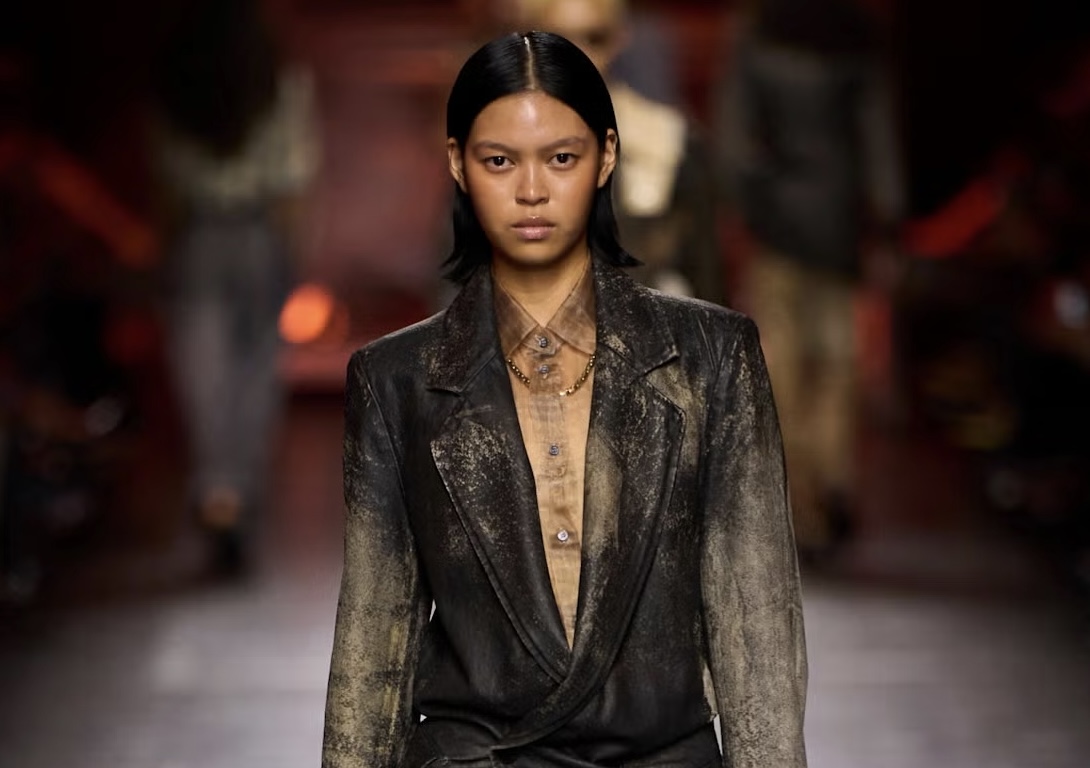
Milan Fashion Week has never been interested in playing it safe, and the Spring/Summer 2027 season made that particularly clear. Across more than 200 events, Italian fashion moved between restraint and excess, heritage and experimentation, with designers using clothes to examine everything from femininity and power to nightlife, nostalgia and the increasingly blurred line between fashion and performance. If there was one defining mood, it was a refusal to settle on a single one.
At Prada, Miuccia Prada and Raf Simons placed the skirt firmly at the center of the conversation, sending more than 60 versions down the runway. Pleated silhouettes, Re-Nylon constructions, sharp pencil shapes, dramatic slits and crystal embellishments gave the traditionally familiar piece a new range of identities. The collection also introduced micro satin and muslin bras and strips of fabric wrapped across the upper body, creating a tension between exposure and structure. The timing was impossible to ignore after Italian Foreign Minister Antonio Tajani’s controversial comments linking longer skirts with women being more serious and reliable. Prada’s response was less a direct rebuttal than a reminder that clothes only mean what the wearer allows them to mean.
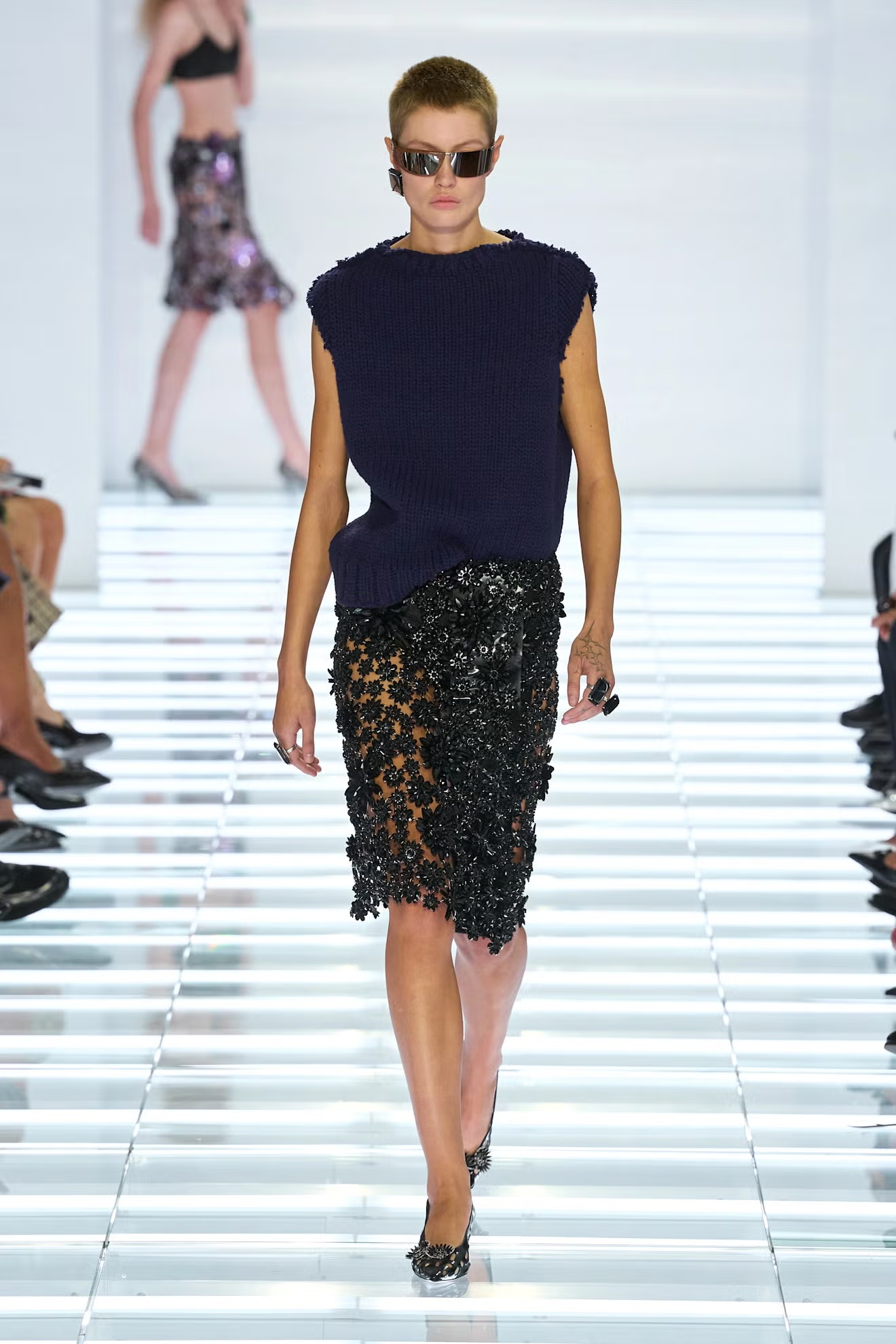
Elsewhere, Milan leaned fully into spectacle. Glenn Martens used his final Diesel collection as an opportunity to turn the runway into something closer to performance art, with 200 performers from Marseille-based La Horde moving through the audience as Donna Summer played in the background. The clothes carried the same sense of controlled destruction, moth-eaten-looking denim, eroded knits and jackets treated with wax, leather-like finishes and laser detailing. Fendi travelled in a different direction, drawing from the glamour of Italian television icon Raffaella Carrà. Black tailoring, semi-sheer layers, body-conscious shorts, silk, lace and animal prints created a distinctly 1980s Italian mood, filtered through Maria Grazia Chiuri’s understanding of punk and bourgeois codes.
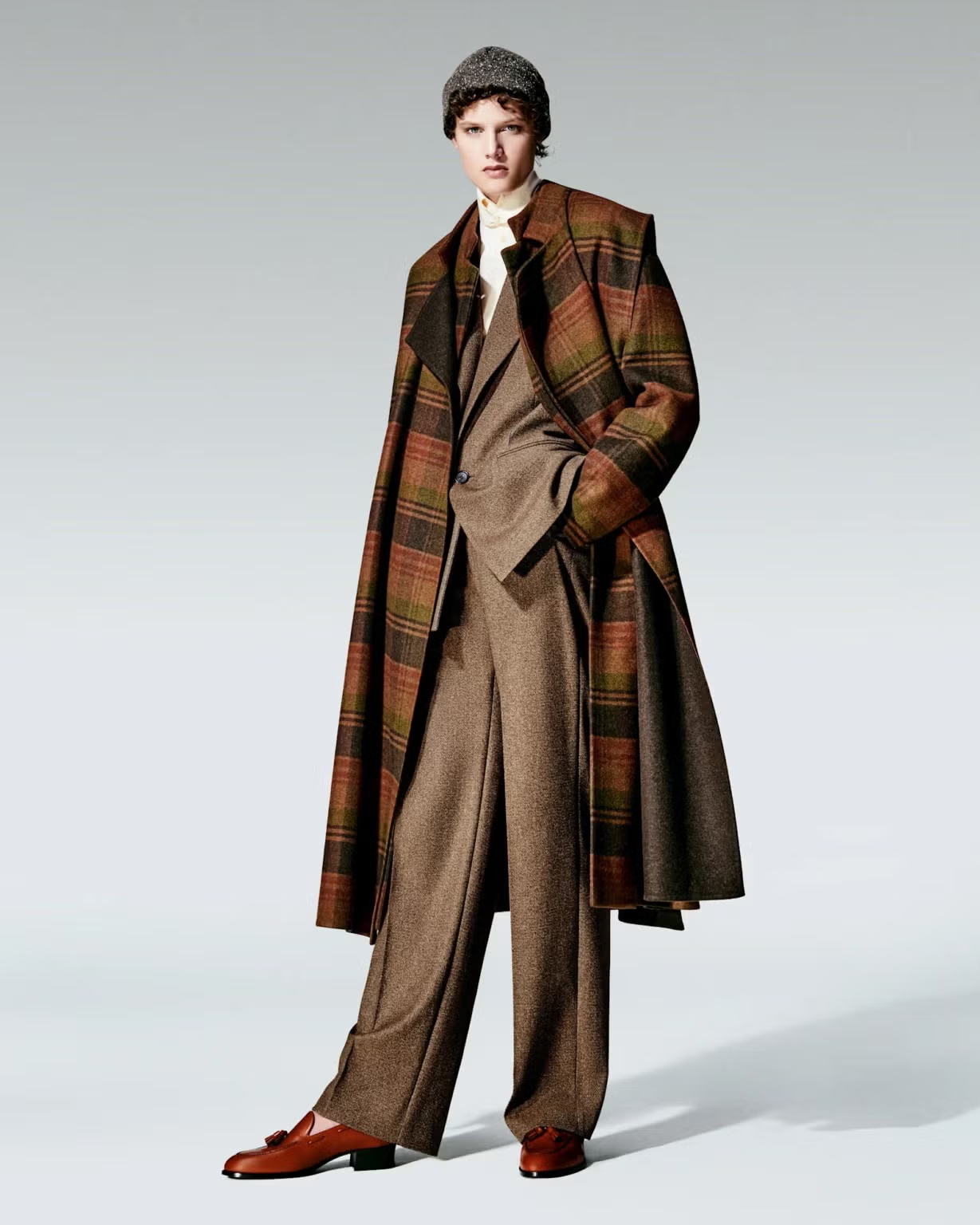
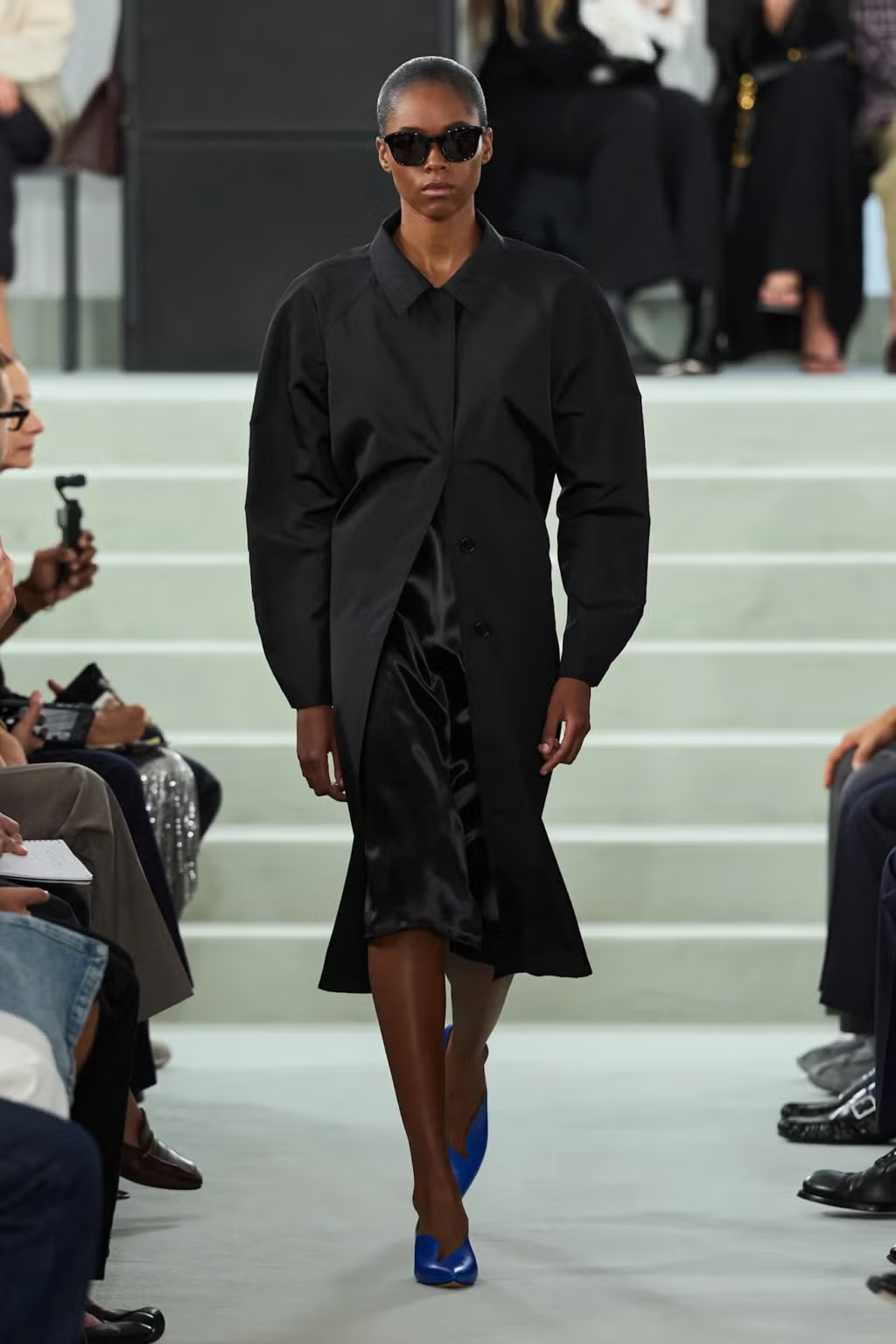
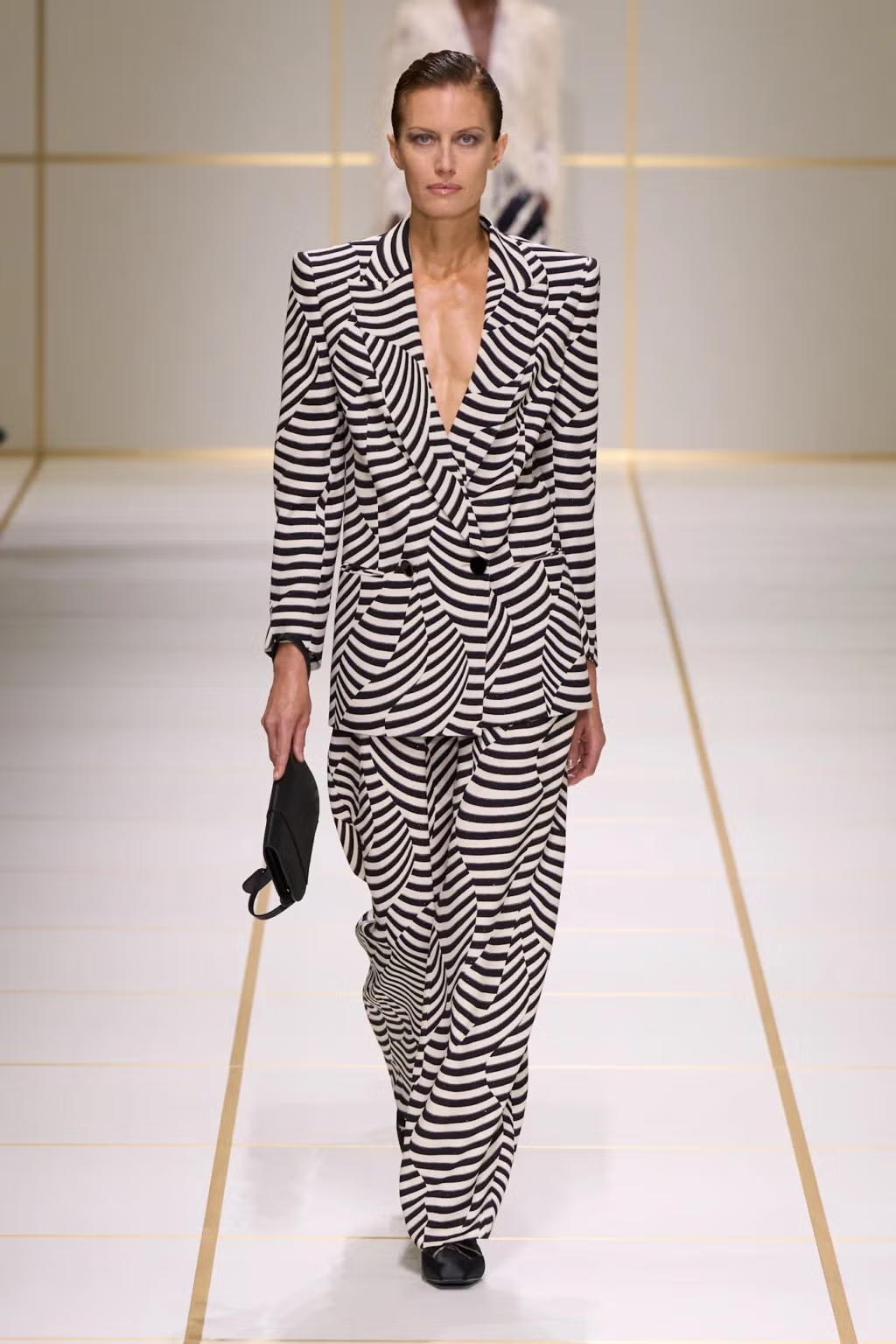
There was also a quieter side to the season. Jil Sander demonstrated that minimalism does not have to mean predictability, shifting seams, darts and lapels to subtly distort otherwise familiar tailoring. Fine wool suiting stretched longer, knitwear appeared deliberately crumpled and coats floated away from the body. Loro Piana offered another interpretation of luxury through cashmere, suede, camel tailoring and sharply cut tuxedos, proving that understatement can still have presence. At Giorgio Armani, the house continued its language of polished black, white and cream, while Emporio Armani kept things relaxed in gray and ecru ahead of Dario Vitale’s arrival for 2027.
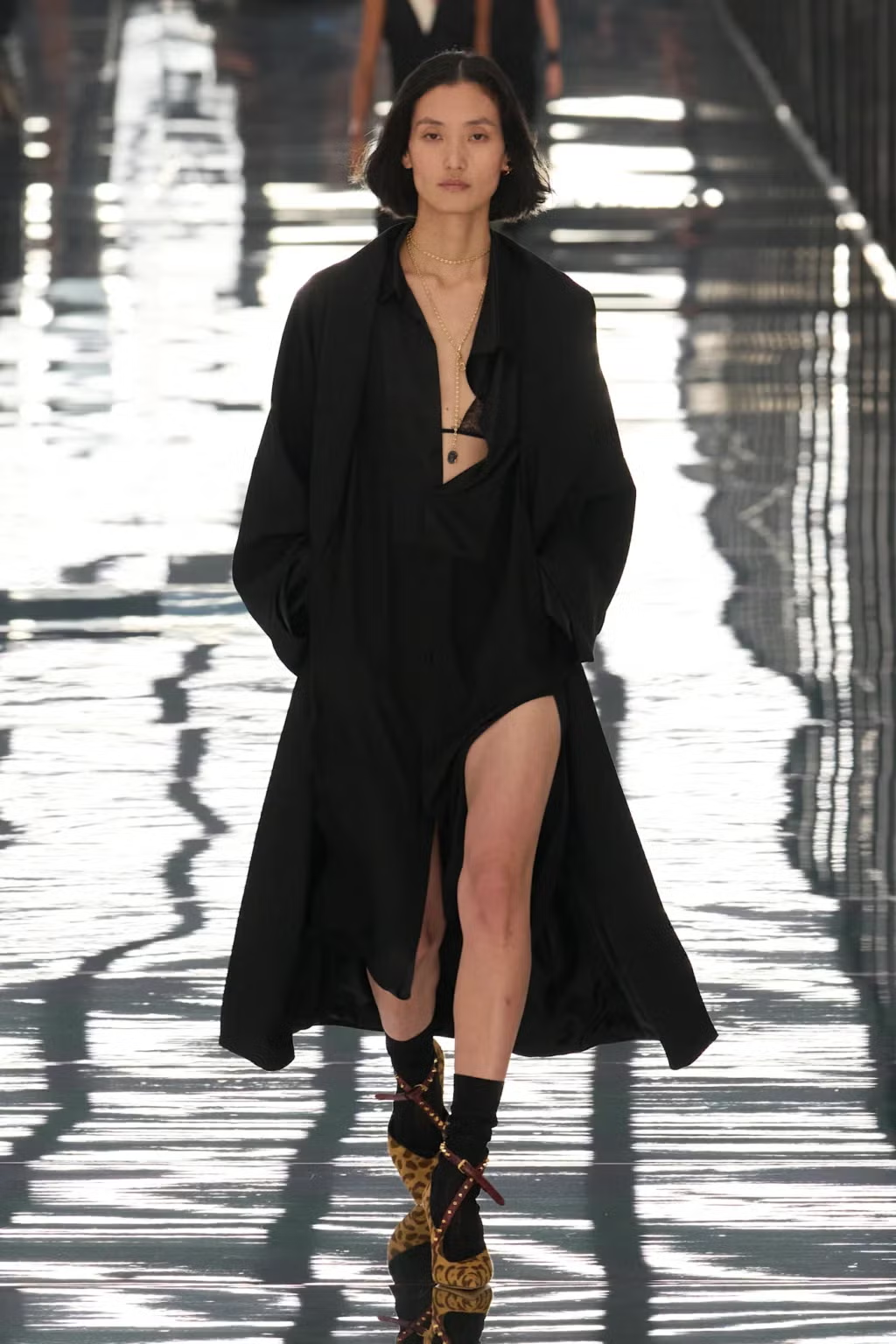
Then there was Gucci, where Demna transformed the idea of the boutique into the actual setting for his SS27 collection. The Store Show surrounded 800 guests with a giant virtual shopping environment, while the clothes played with the idea of who exactly gets to be extravagant. White jeans, riding boots and oversized horse-bit belts spoke to the rebellious aristocrat, faux-fur animal prints catered to the unapologetic snob, and distorted trousers, rugby sweaters and leather blousons belonged to the eccentric. The accessories pushed the fantasy further, with sharpened G-emblem spurs, dramatic horse-bit stilettos and elongated men’s moccasins turning familiar Gucci codes into something stranger.
And Milan was ready to party again. Dolce & Gabbana looked into a Sicilian family wardrobe, transforming antique lace, bodices and lingerie into cocktail dresses, skirts and blouses for a collection that deliberately blurred the distinction between day and night. Roberto Cavalli went maximal with magnified leopard and cheetah prints, asymmetric dresses and vivid tailoring, while Taller Marmo revisited Seventies decadence with kaftans, metallic organza and deep-slit eveningwear. Across the city, fashion seemed less interested in quiet dressing and more willing to embrace the pleasure of getting dressed up again.
Perhaps the most interesting thread running through Milan was the return of fashion as fantasy. A Dalí exhibition at Palazzo Reale reinforced the relationship between surrealism and clothing, while emerging designers presented their own improbable visions, sculptural footwear made from recycled shoes, gowns developed through unusual biological processes and tailoring that merged Palestinian draping traditions with British precision.