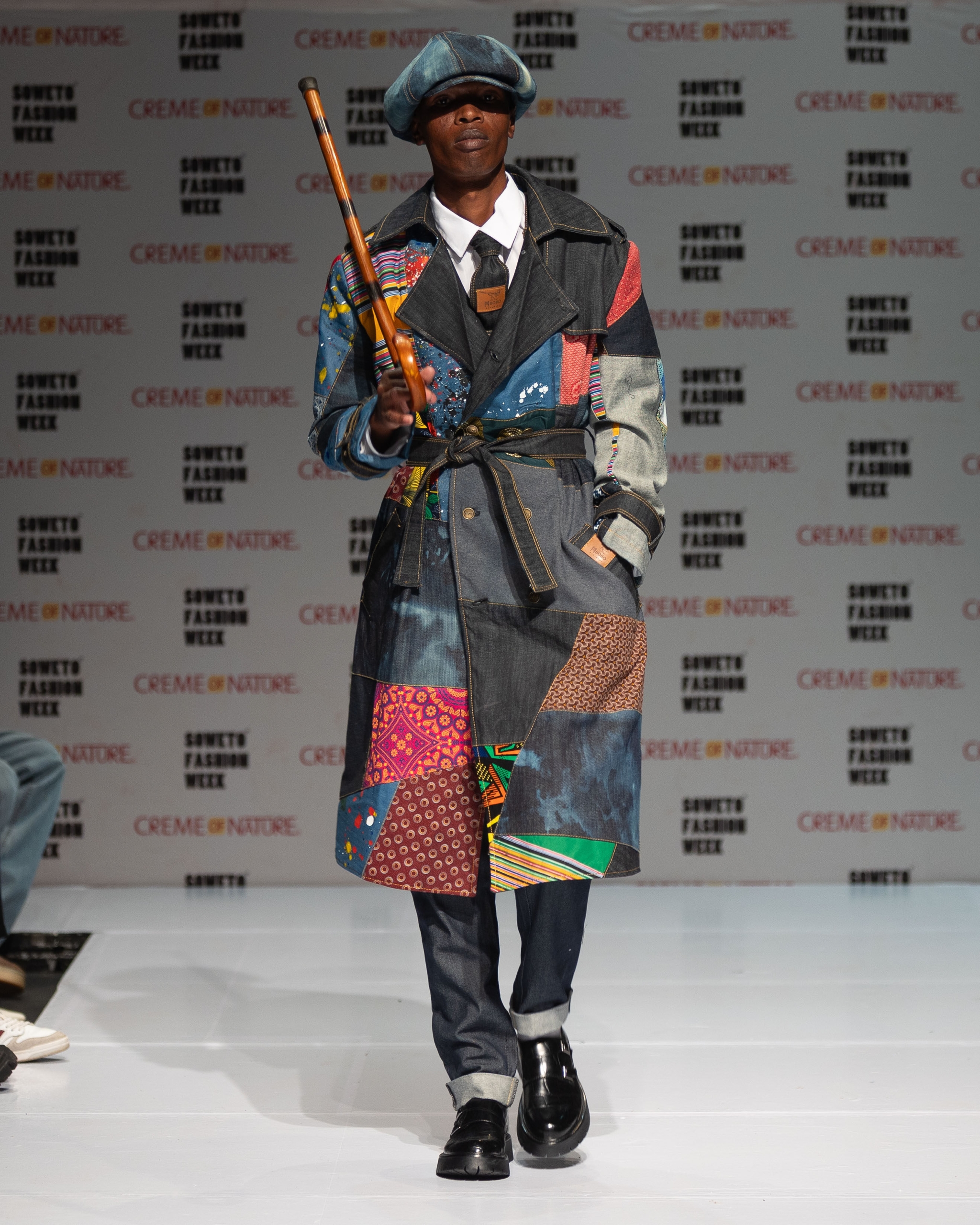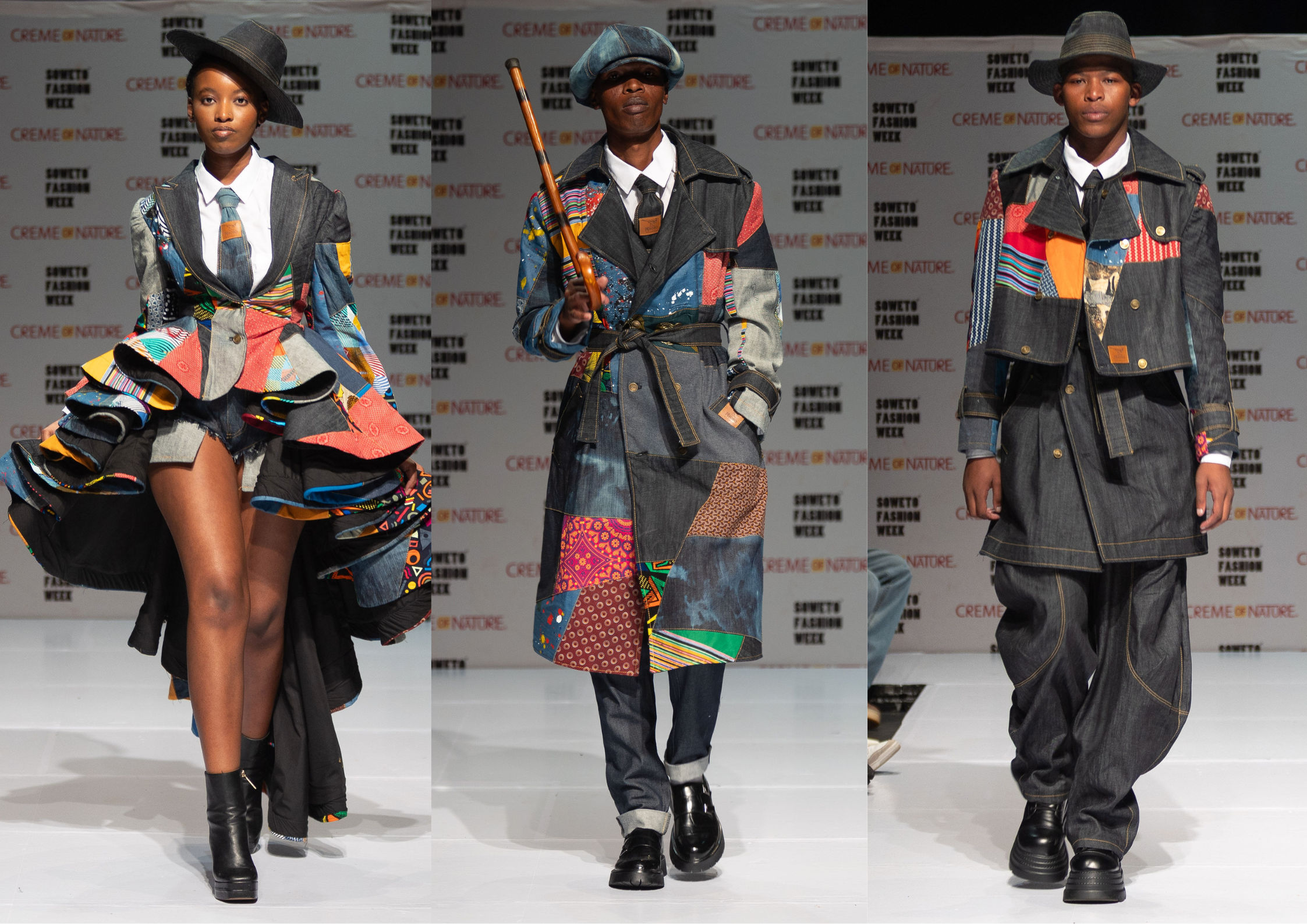
At Soweto Fashion Week Autumn/Winter 2026, amidst the polished tailoring and high-glamour runway moments, Mbobo Movement brought something different to the conversation. The collection felt rooted in memory and community, shaped through distressed denim, patchworked textures and vibrant African prints that carried the spirit of township culture into a contemporary fashion space. Rather than chasing spectacle, Luthando Mbobo focused on storytelling, presenting garments that felt lived in, personal and emotionally connected to the people who inspired them.
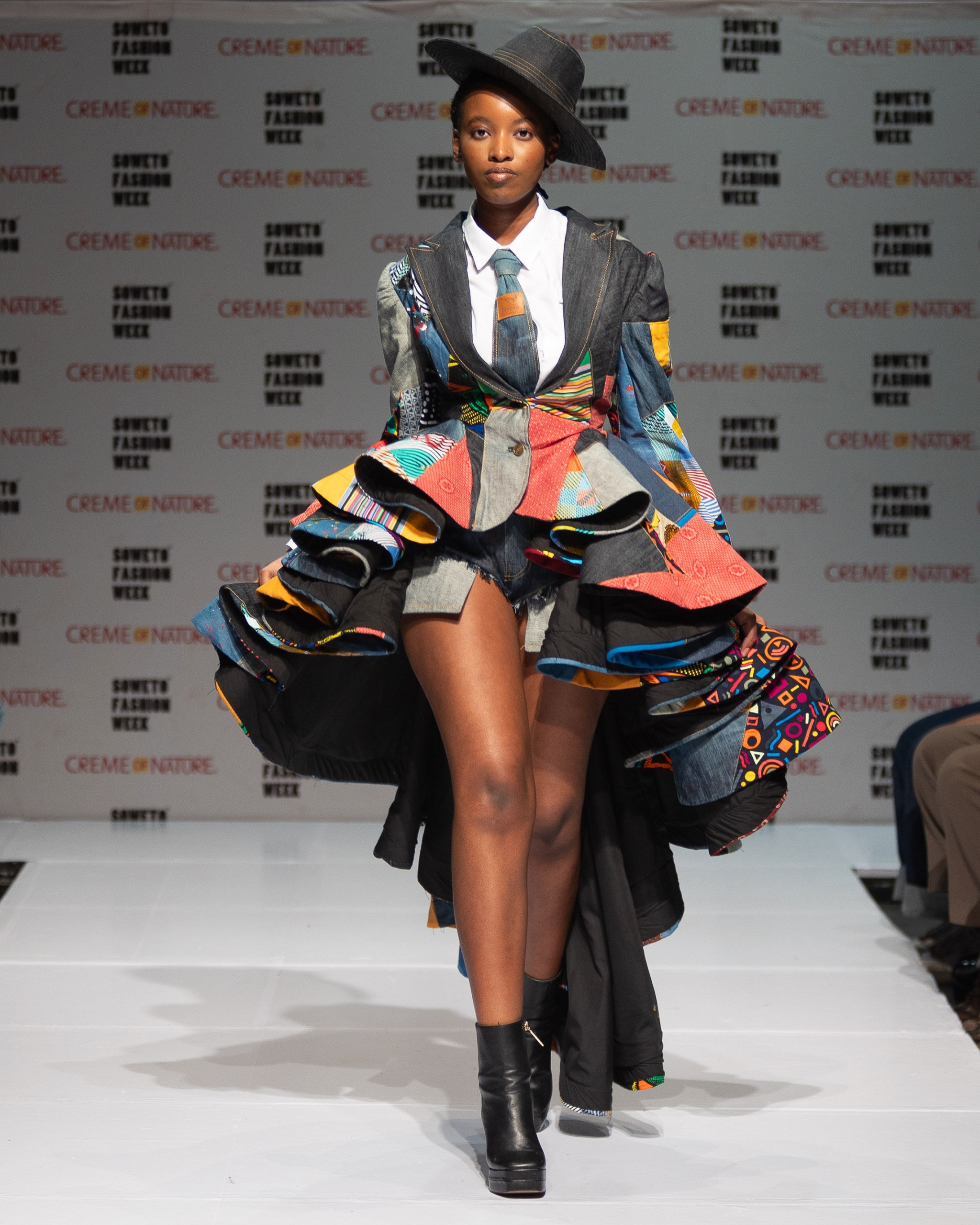
Presented as part of the emerging designers bloc, the collection captured the layered realities of South African identity through fabric and construction. Oversized denim silhouettes were paired with colourful printed panels and carefully placed patchwork details, creating garments that felt expressive without losing their authenticity. Every look carried a sense of individuality, almost as though each piece had collected fragments of different lives and experiences before arriving on the runway.
For Mbobo, fashion has always been deeply personal. Long before the showcases and growing recognition, there was his mother, a tailor whose relationship with clothing shaped the very foundation of his creative journey. “I was fascinated by her ability to transform a simple piece of fabric into something beautiful and wearable,” he reflects. “Growing up, she took great pride in dressing us, and her love for fashion was evident in everything she created.”
After her passing, fashion became more than admiration. It became connection, memory and eventually purpose. “I inherited her sewing machine and began creating garments for clients,” he says. “What started as a way to stay connected to her soon became a deeper calling.”
That calling would eventually lead to a defining breakthrough. In 2013, Mbobo was named the overall winner at the 19th Annual Vukani Fashion Awards, a moment that affirmed his path as a self-taught designer navigating an industry that often prioritises formal training and traditional access points. “That moment gave me the courage to pursue this path, no matter the challenges,” he says. A year later, he officially registered Mbobo Movement, building a brand centred on unity, storytelling and cultural expression.
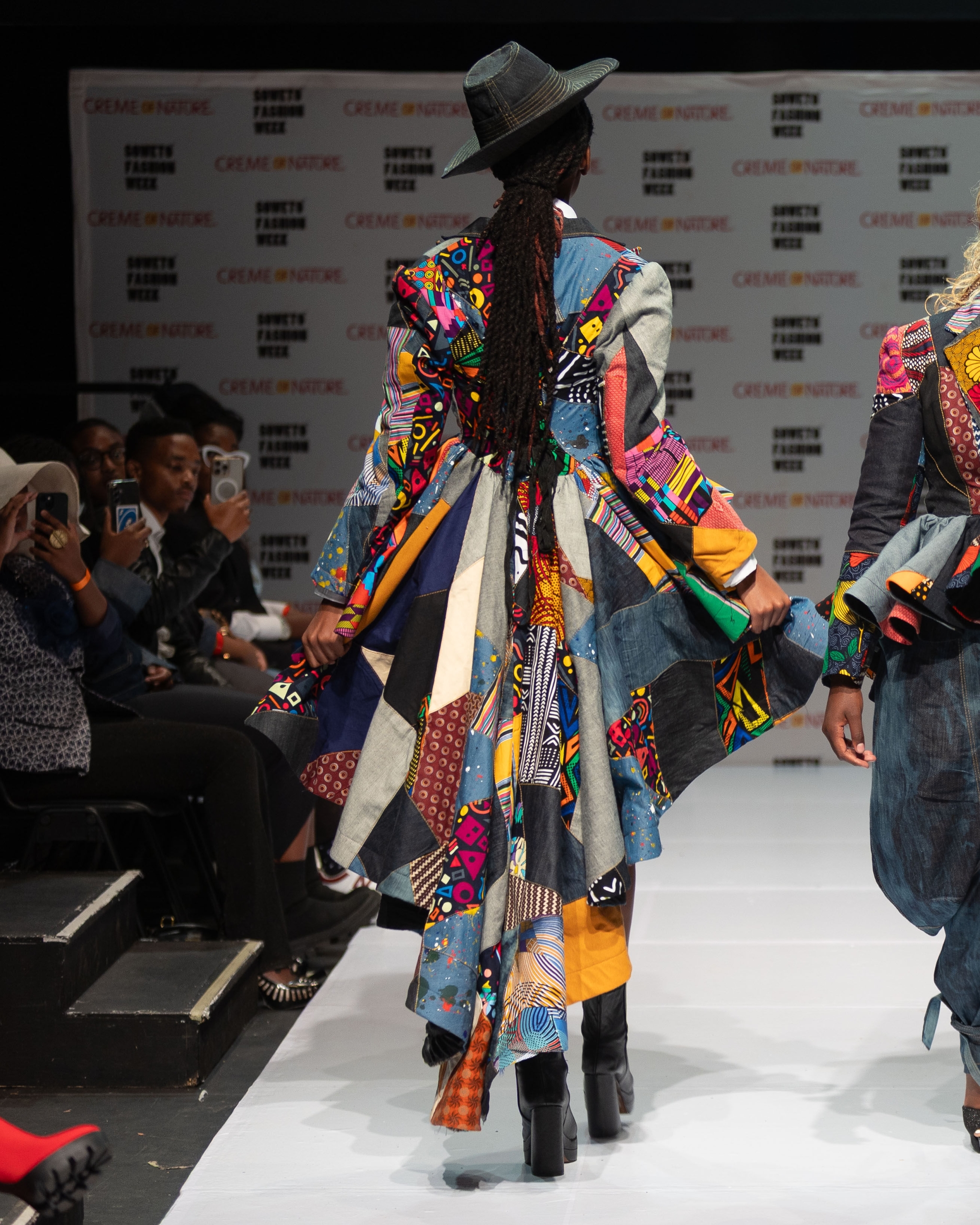
“The vision behind Mbobo Movement is rooted in unity,” he explains. “Bringing together diverse cultures and stories through fashion.” That philosophy is visible throughout his work, particularly in the way he uses patchwork and denim as visual storytelling devices rather than trends.
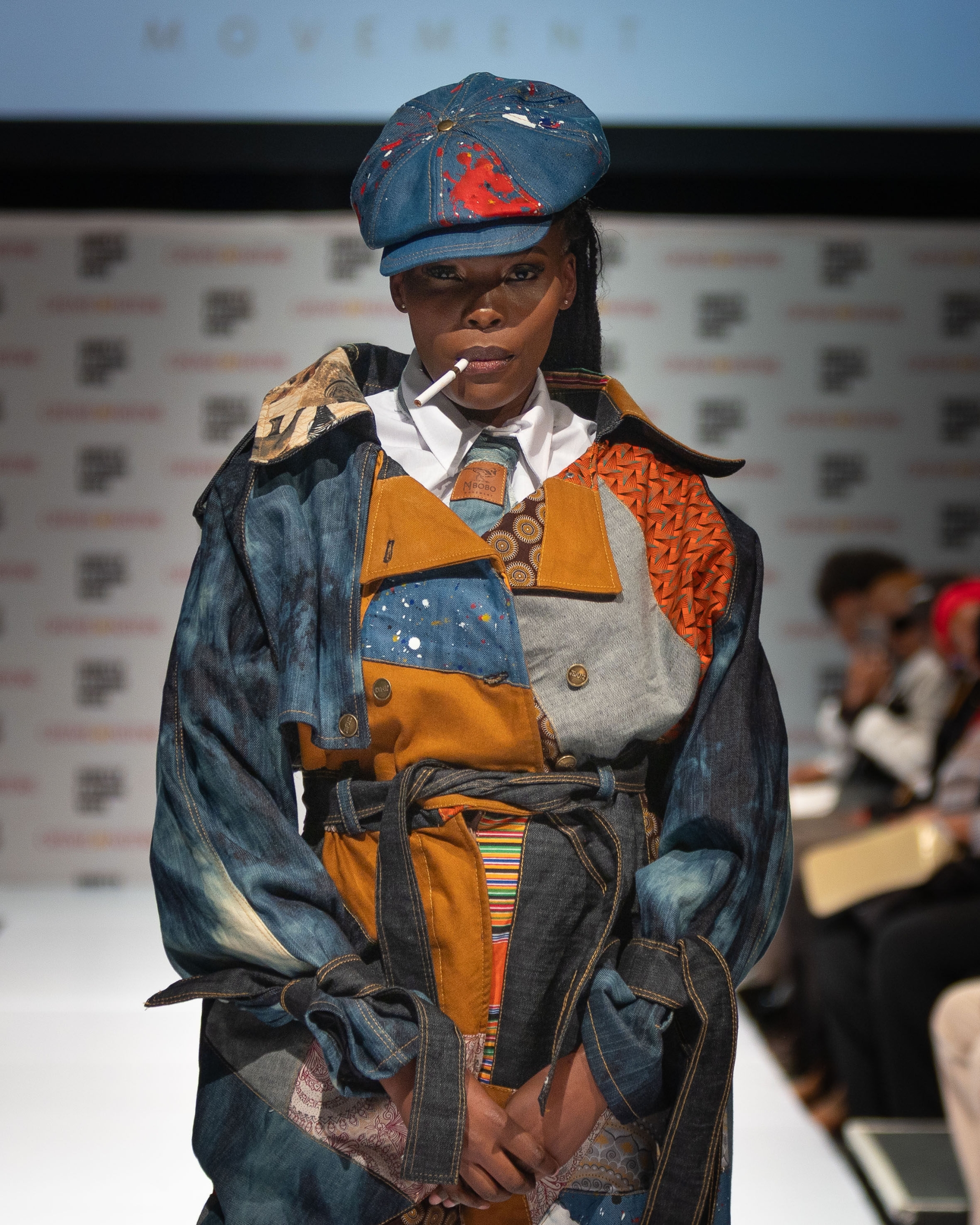
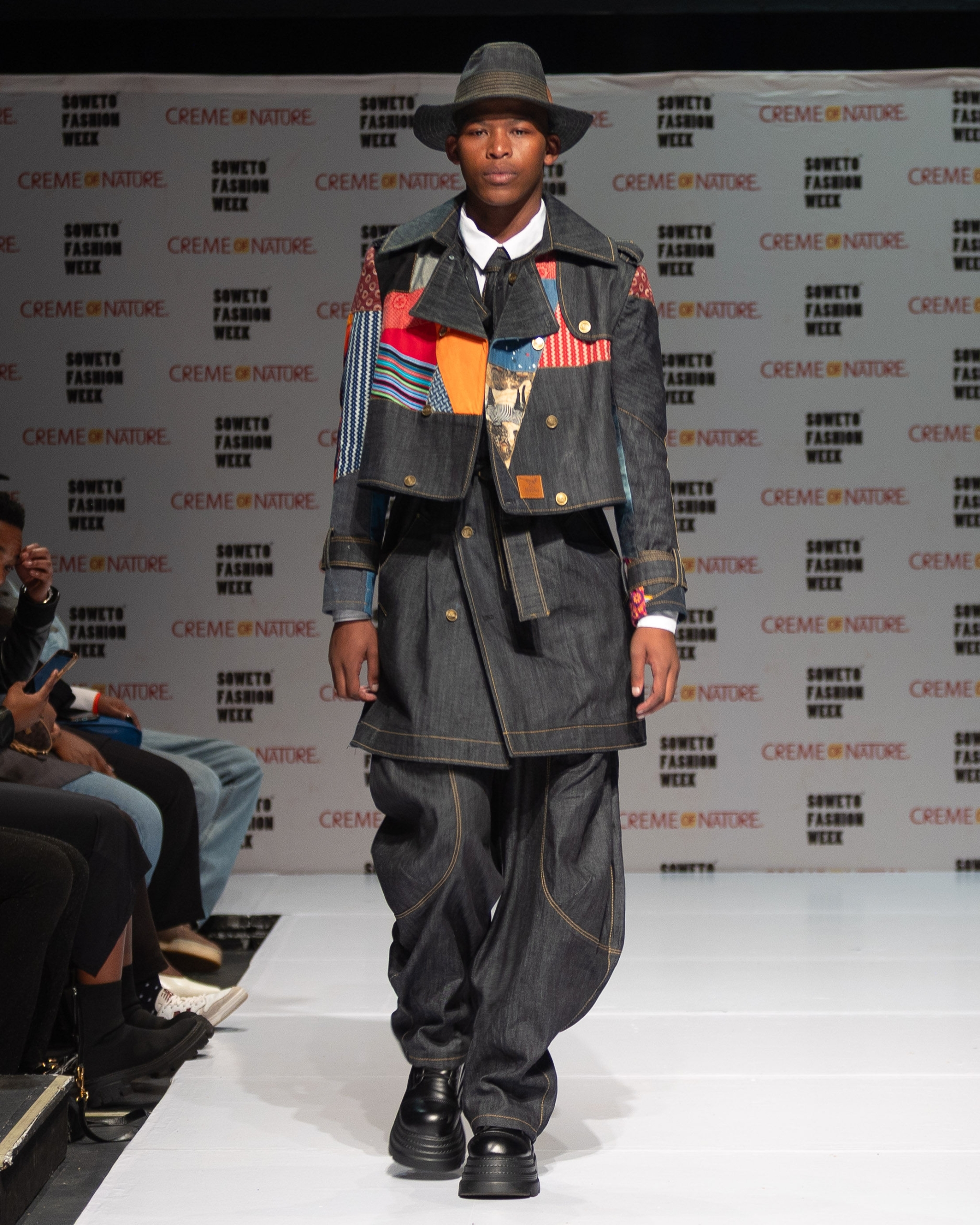
For Mbobo, patchwork is not simply an aesthetic choice. It is symbolic. Moving to Johannesburg exposed him to different cultures, languages and lived experiences, all of which naturally found their way into his work. “Being surrounded by people from such varied walks of life and hearing their stories naturally drew me toward patchwork as a design language,” he explains. “For me, patchwork became a way to express diversity within our communities and across Africa as a whole.”
That layered storytelling gives the brand its emotional depth. “Each fabric, each detail, represents a different narrative coming together to form one cohesive story,” he says. “I often think of my work as a book. Luthando is the author, Mbobo Movement is the book itself, and each garment reveals a different character.”
At Soweto Fashion Week Autumn/Winter 2026, those stories unfolded through oversized denim silhouettes, patchworked separates and African prints that brought warmth and vibrancy to the collection. The garments captured the spirit of township style while still feeling elevated and contemporary, reflecting a version of South African streetwear that prioritises authenticity over imitation.
“To me, ‘cool’ in 2026 is authenticity rooted in storytelling,” Mbobo says. “It’s about embracing who you are and where you come from, without trying to conform to global trends that don’t reflect your truth.”
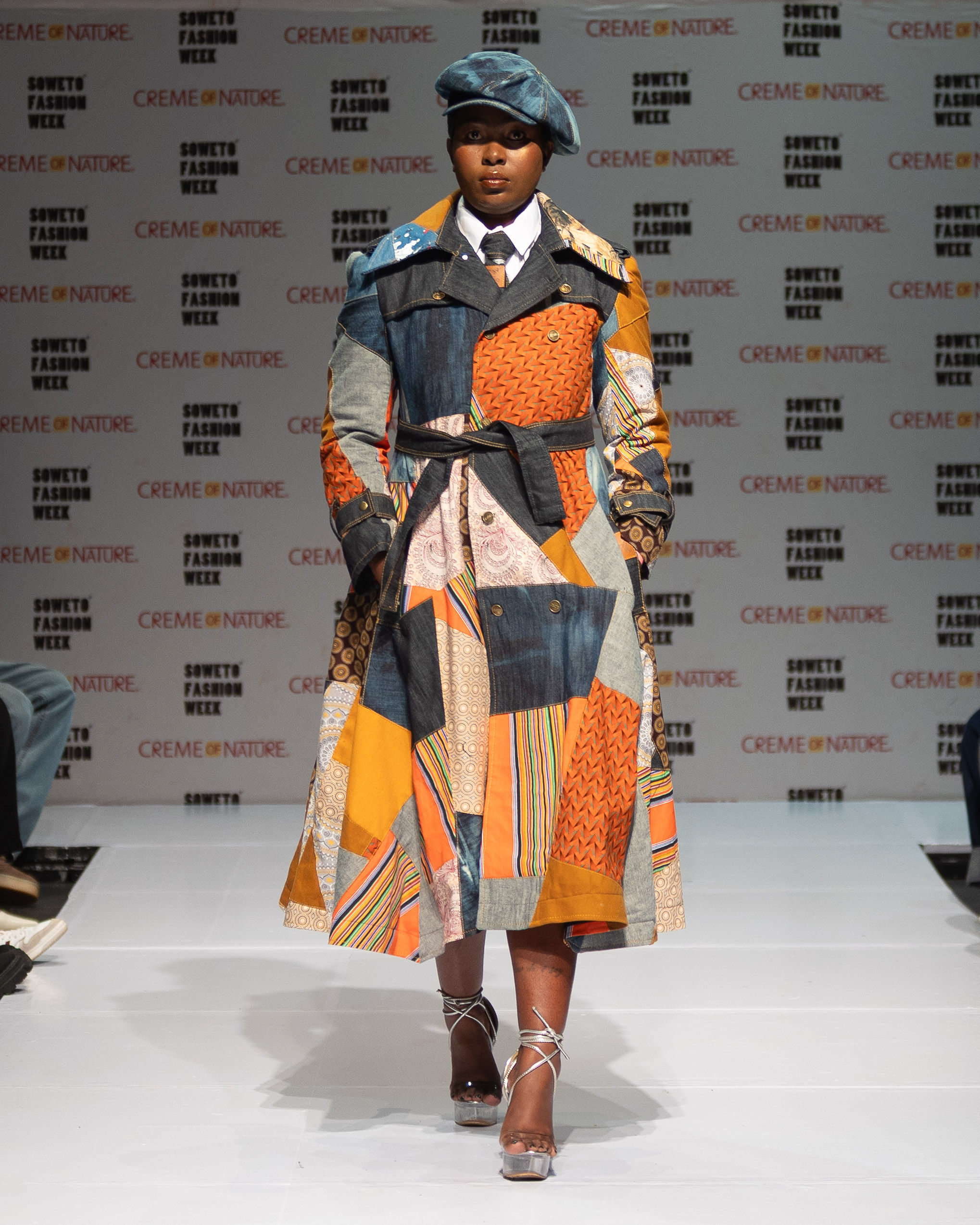
That idea feels particularly relevant within South African fashion right now, where designers are increasingly reclaiming local narratives and aesthetics on their own terms. For Mbobo, “cool” is found in intentionality and meaning rather than performance. “It’s wearing something that carries meaning, something that reflects your journey,” he explains. “It’s not just about how it looks, but what it says.”
The designer’s creative evolution has also been shaped by resilience and self-belief. As a self-taught creative entering an often-exclusive industry, he had to carve out opportunities for himself rather than wait for them to appear. “Breaking into the industry was challenging without a formal tertiary background,” he says. “So I had to create my own opportunities.” That persistence eventually led to one of his proudest milestones, winning a boutique space on Vilakazi Street in Soweto.
Behind the scenes, Mbobo’s creative world is also supported by his partner, someone he describes as both grounding and deeply intuitive within the brand’s journey. “Working with my partner is incredibly fulfilling,” he says. “She is an artist at heart, and we share a deep creative connection.”
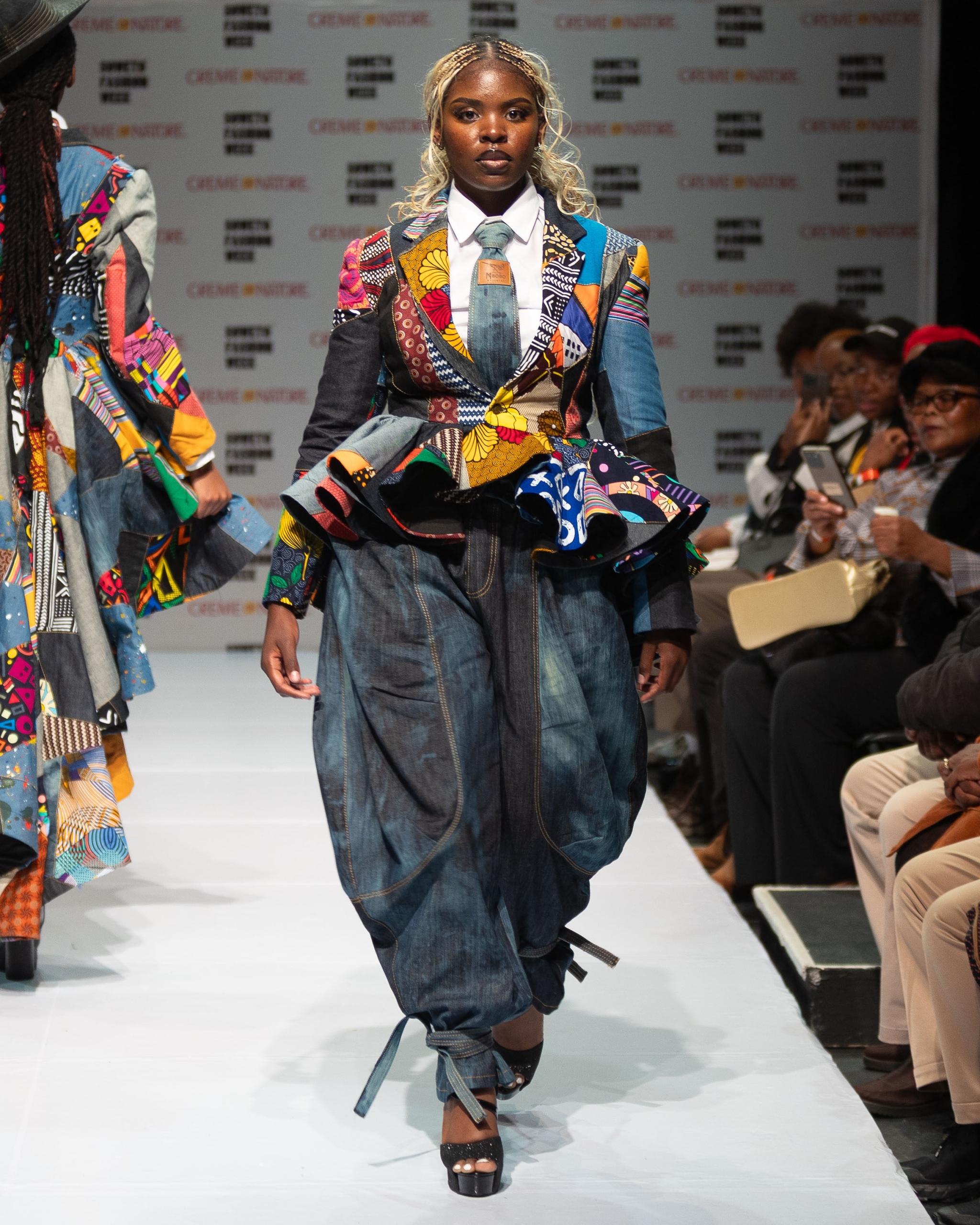
Their dynamic is less about rigid structure and more about instinctive collaboration. “She naturally takes on multiple roles without needing to be defined, while I focus more on the creative direction,” he explains. “Together, we create a balance that keeps the brand moving forward.” In moments of exhaustion and uncertainty, her support becomes essential. “She grounds me and reminds me of what we’re building,” he adds.
Presenting at Soweto Fashion Week Autumn/Winter 2026 carried emotional significance beyond the runway itself. For Mbobo, the platform represents something larger within township culture and South African creativity. “It was everything I had imagined, creatives coming together to celebrate fashion,” he says.
“Platforms like this have historically been rare in our townships, yet they are so necessary in telling the real stories of people and their deep connection to fashion.”
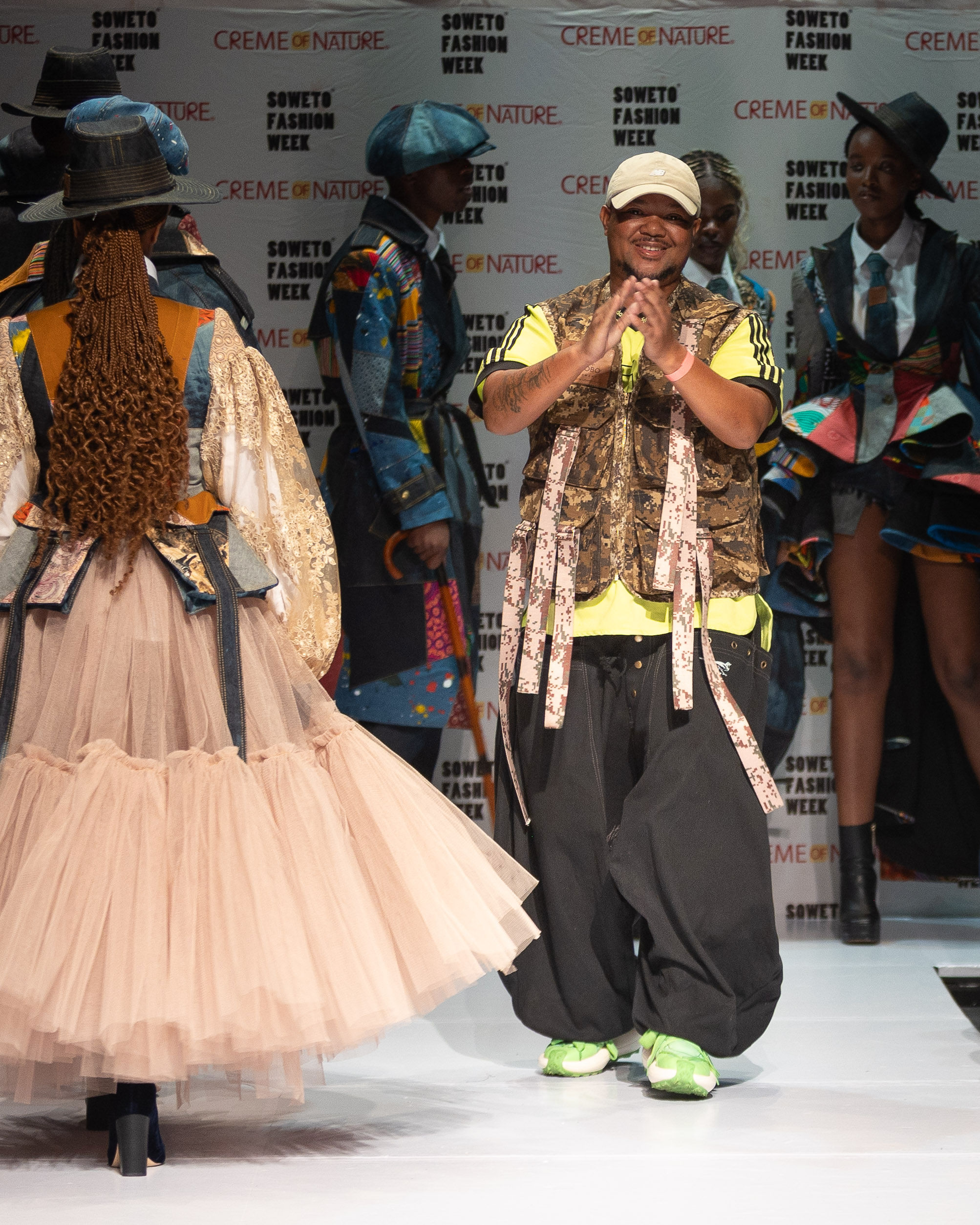
That sense of community was reflected in the audience response, which the designer describes as overwhelmingly supportive. “The energy in the room reflected a genuine love for creativity and self-expression,” he says.
As Mbobo Movement continues evolving, the vision extends far beyond clothing alone. Creatively, Mbobo wants to push his exploration of patchwork, textiles and silhouettes even further while remaining rooted in authenticity. Culturally, he sees the brand becoming a stronger platform for African storytelling on a global scale.
“I see the brand becoming a stronger voice for African narratives on a global stage,” he says. “Connecting different communities, preserving stories, and celebrating identity in a way that feels both modern and timeless.”
Ultimately, Mbobo Movement feels less like a fashion label and more like a living archive of culture, memory and identity. Through denim, patchwork and storytelling, Luthando Mbobo is creating garments that do more than dress people. They carry stories with them.