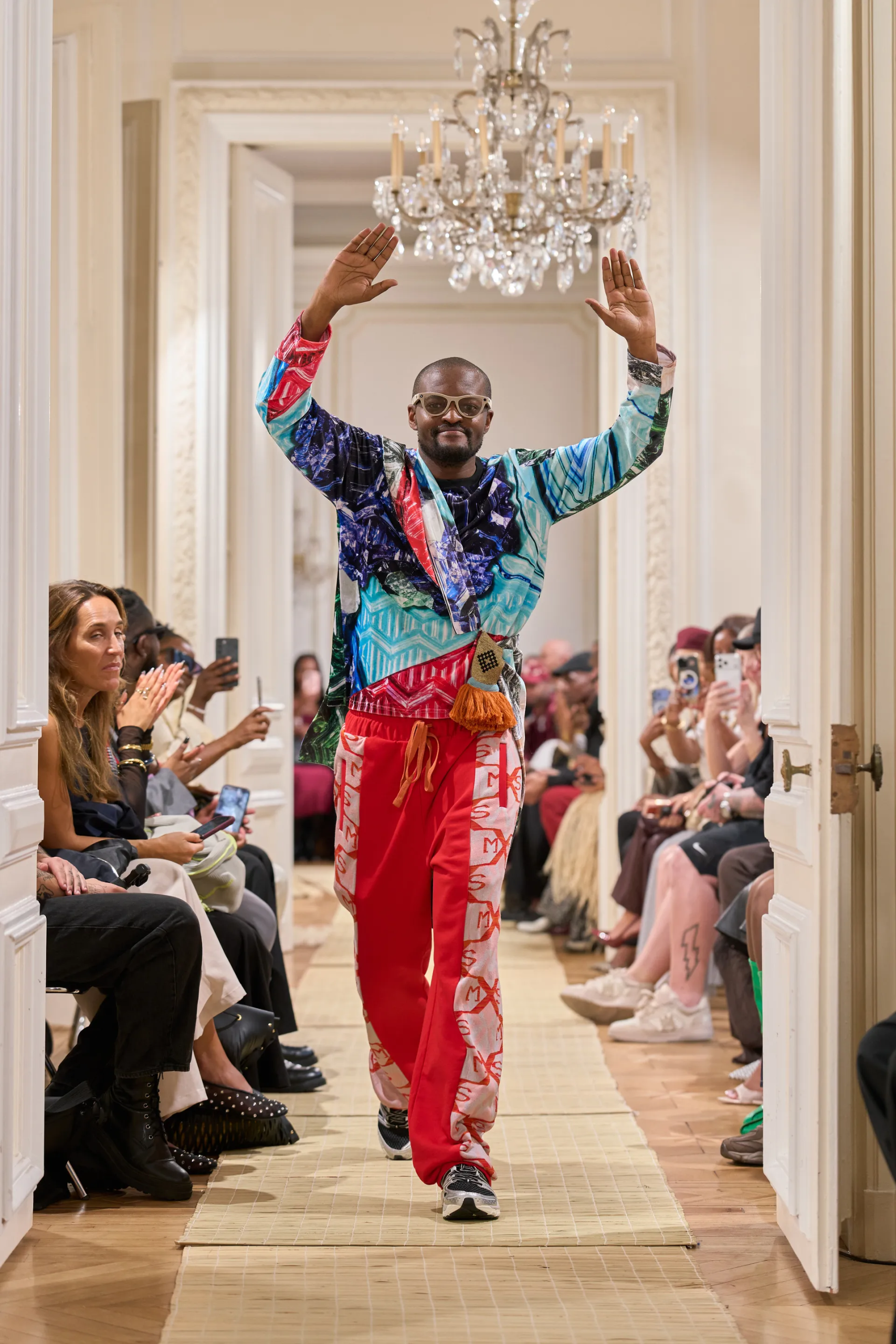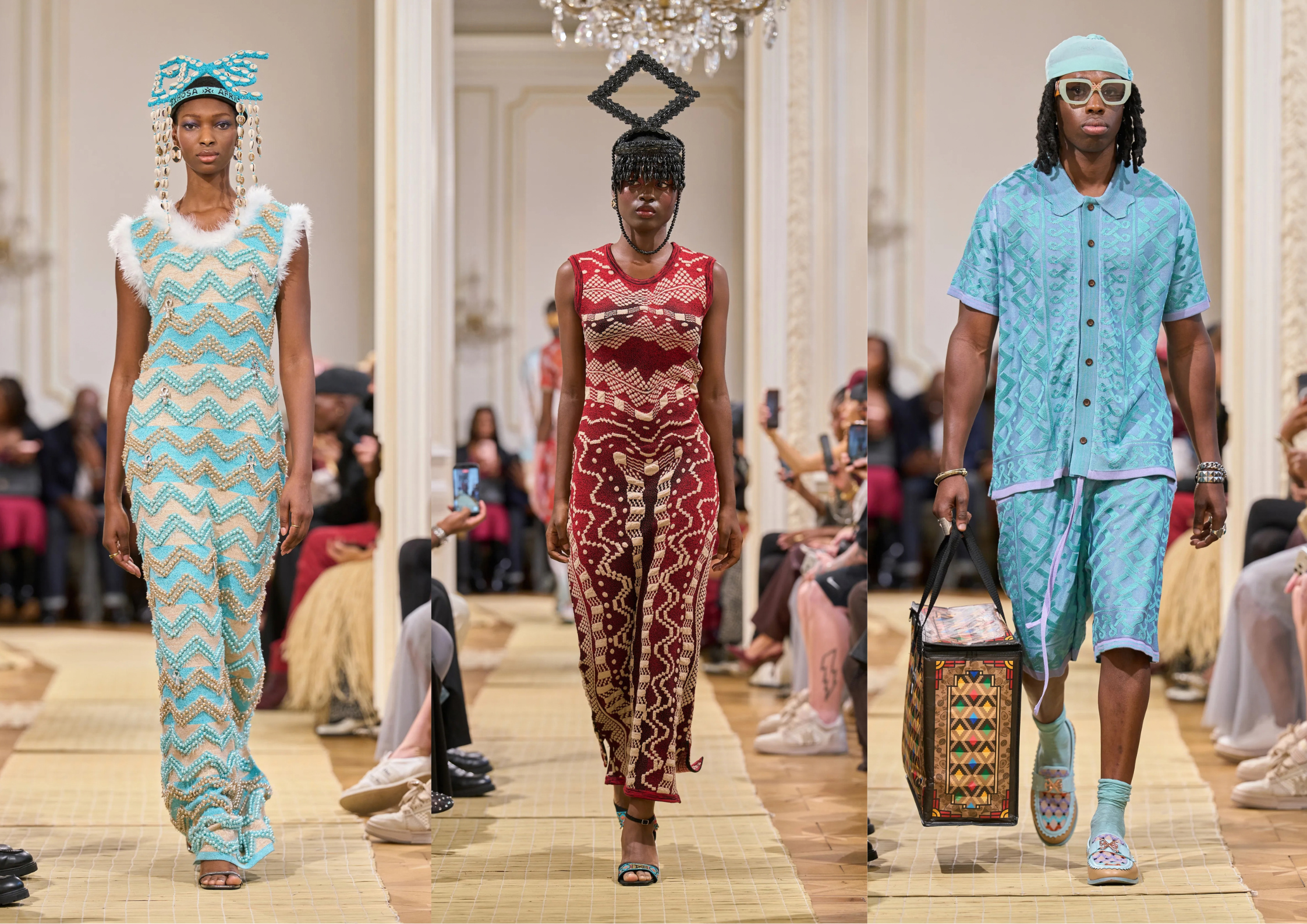
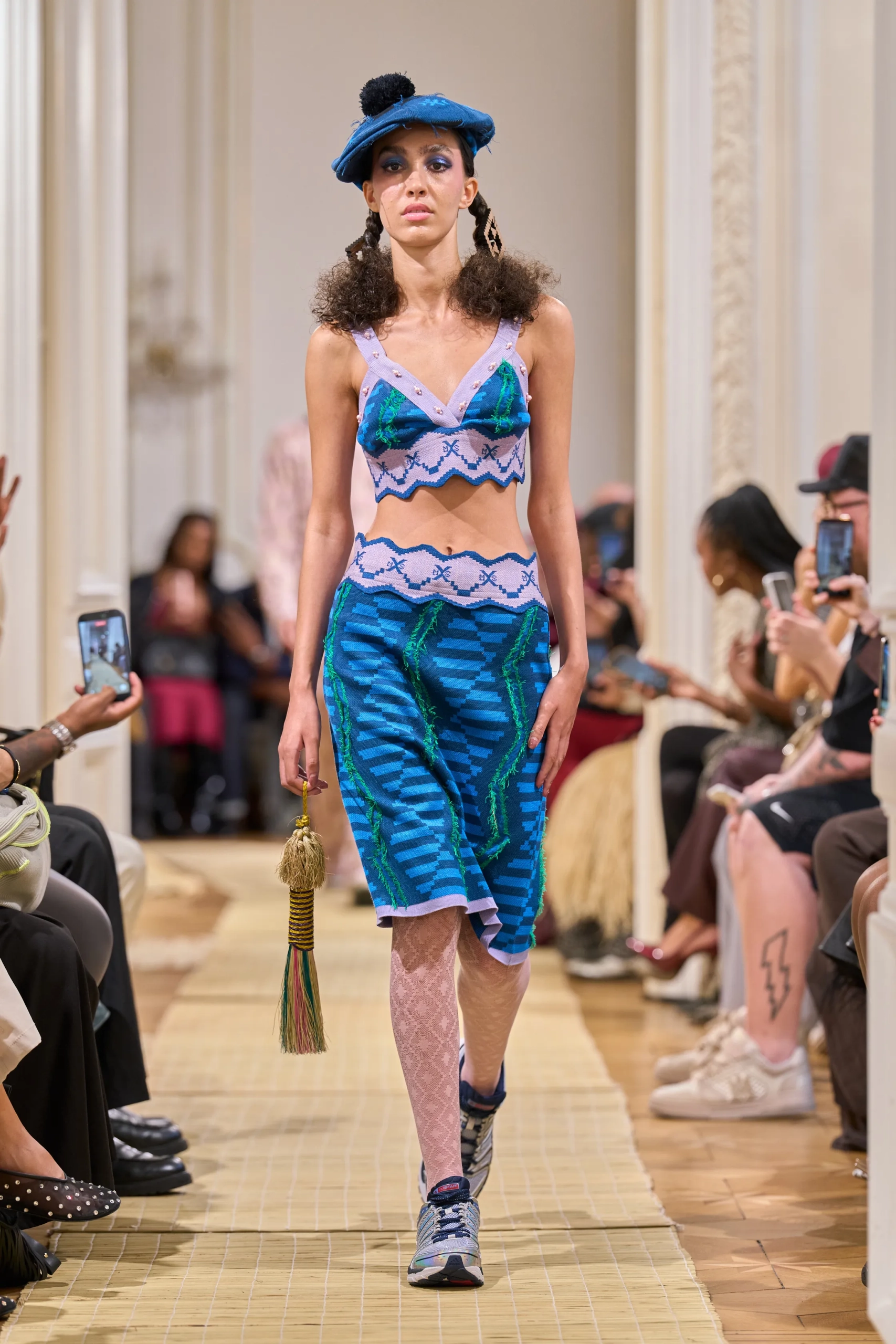
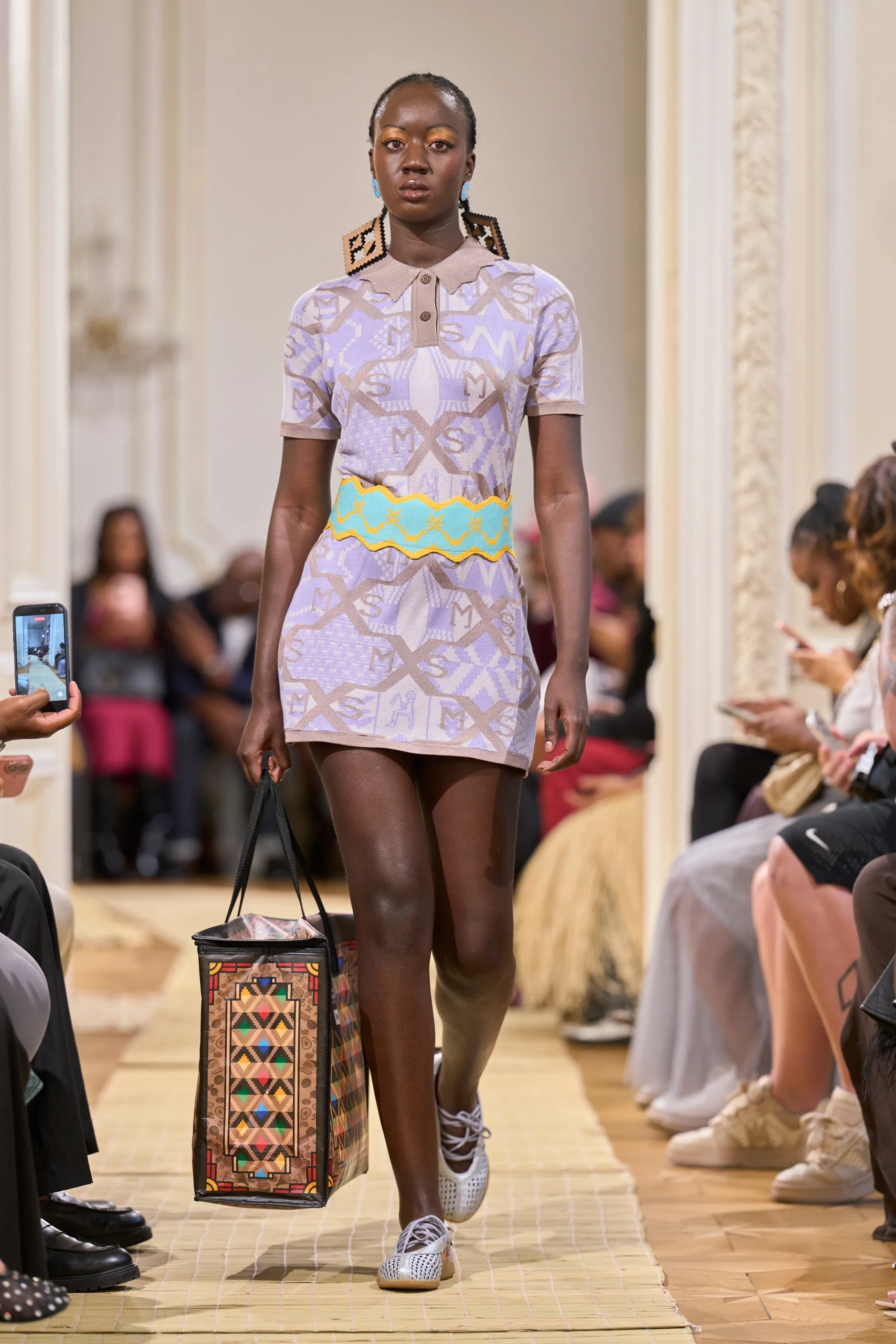
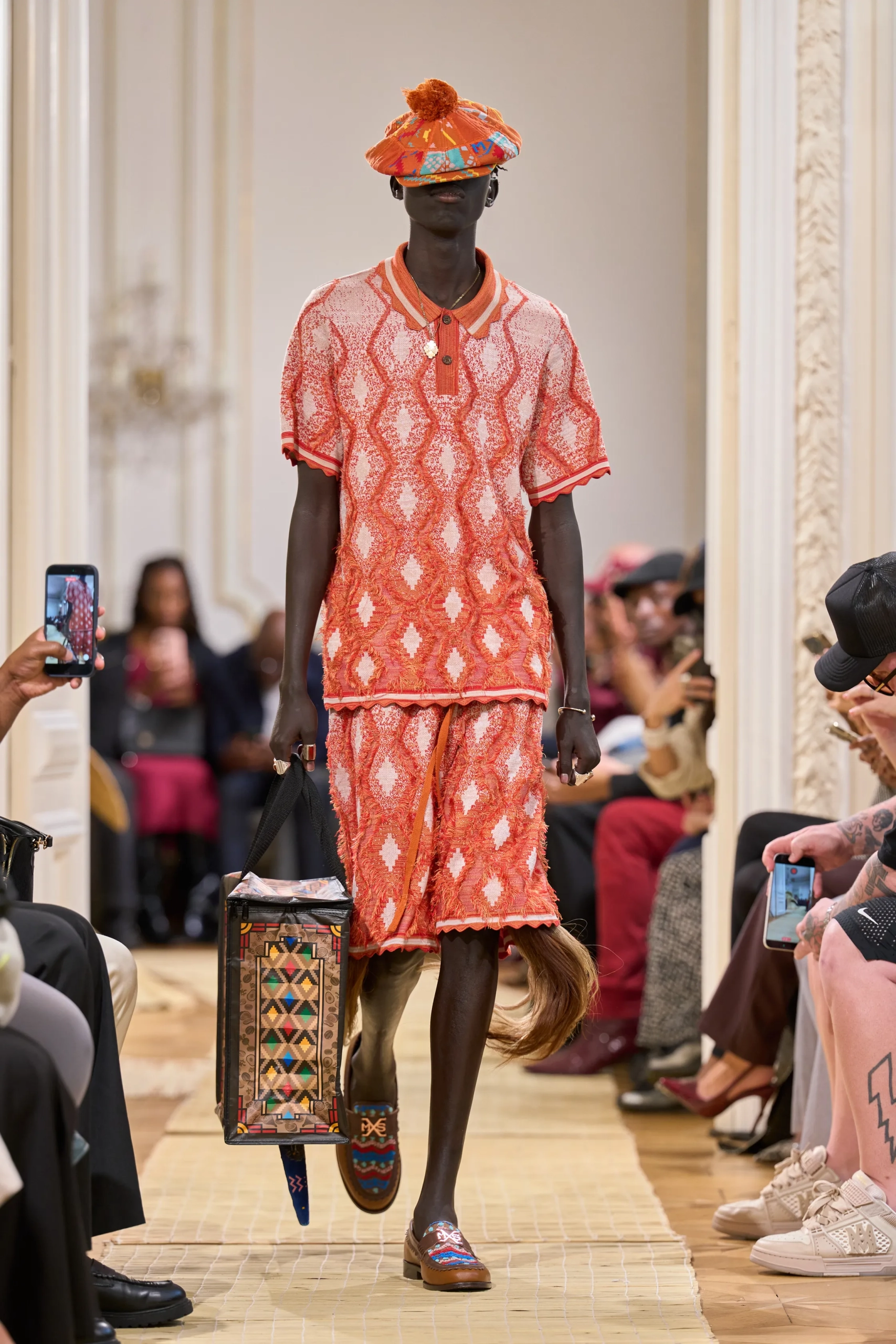
There are fashion shows that introduce a collection, and then there are fashion shows that announce a presence. MaXhosa Africa’s Paris Fashion Week debut belonged to the second category. At the South African ambassador’s residence in Paris, Laduma Ngxokolo sent 54 looks down the runway for his first appearance on the official Paris Fashion Week calendar, bringing with him more than a decade of work built around knitwear, Xhosa heritage and the possibilities of African luxury. The setting mattered, but so did what happened inside it. This was not an African designer borrowing Paris as a backdrop. It was a South African brand arriving in one of fashion’s most established rooms with its own visual language already fully formed.
The show opened with Sjava, whose spiritual vocals filled the room before the audience joined in, turning the first moments of the presentation into something closer to a collective ritual than a conventional runway opening. The collection, titled Izihlwele Zivumile, meaning “the ancestors have approved”, took that feeling of connection seriously. Its title reflected the communities and cultures that have shaped Ngxokolo’s journey, while the clothes translated that history into a contemporary wardrobe.
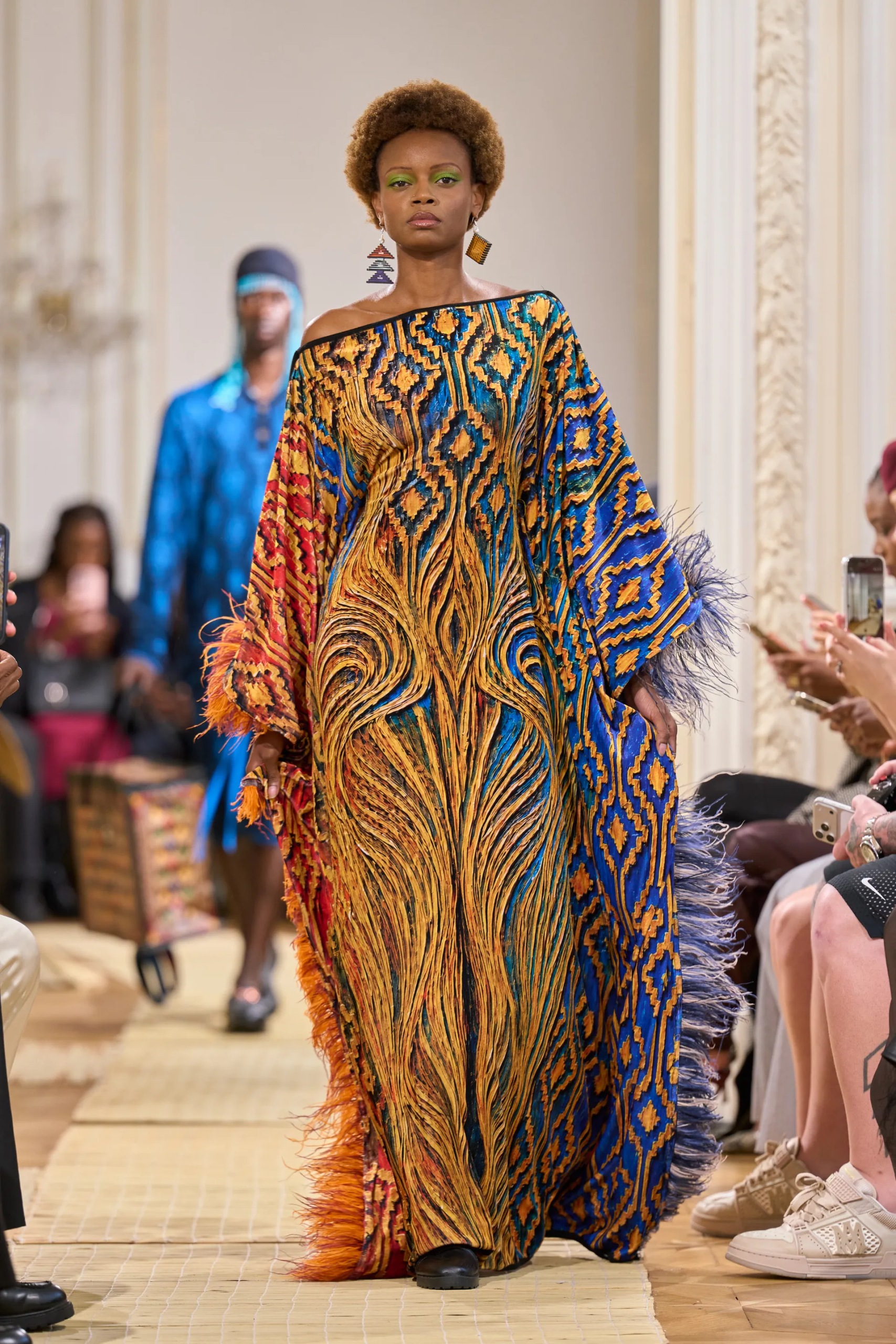
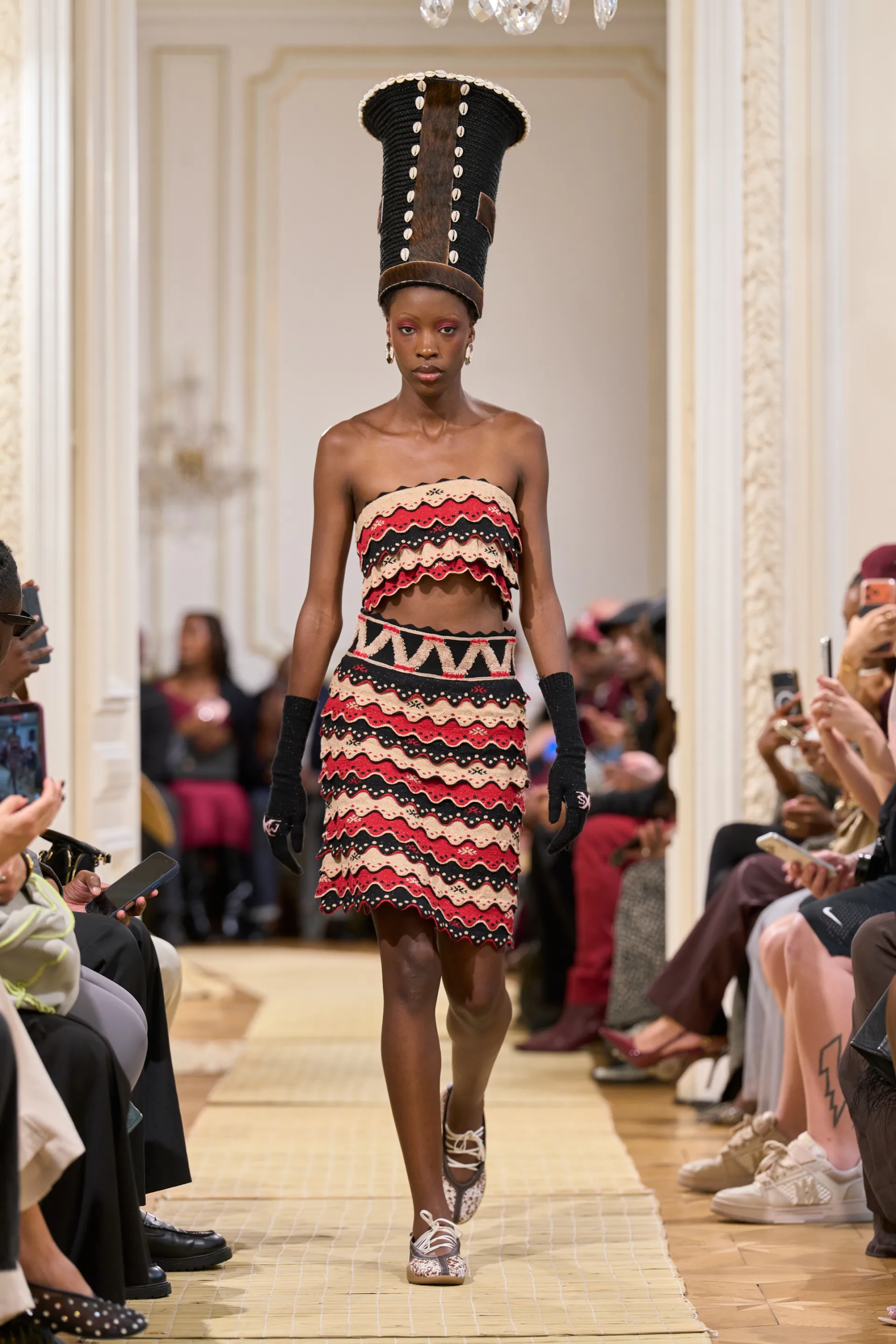
That distinction is important because MaXhosa has never really been interested in making heritage feel like a museum piece. Ngxokolo’s Xhosa references have always existed through knitwear, colour, pattern and iconography, but in Paris they were allowed to occupy the same space as the codes of contemporary luxury. The result was joyful and unmistakably specific, clothing that could carry cultural meaning without requiring the wearer to treat it like a history textbook.
One of the collection’s clearest statements came through a wool dress decorated with knitted tassels carrying the names of African countries. Another black-and-grey look placed a huge outline of Africa across the front of the garment, while other parts of the world appeared across the back and sleeves. The reference was to a recent effort to resize Africa on the United Nations’ official map to more accurately represent the continent’s actual landmass. Geography became graphic language, the map became part of the garment.
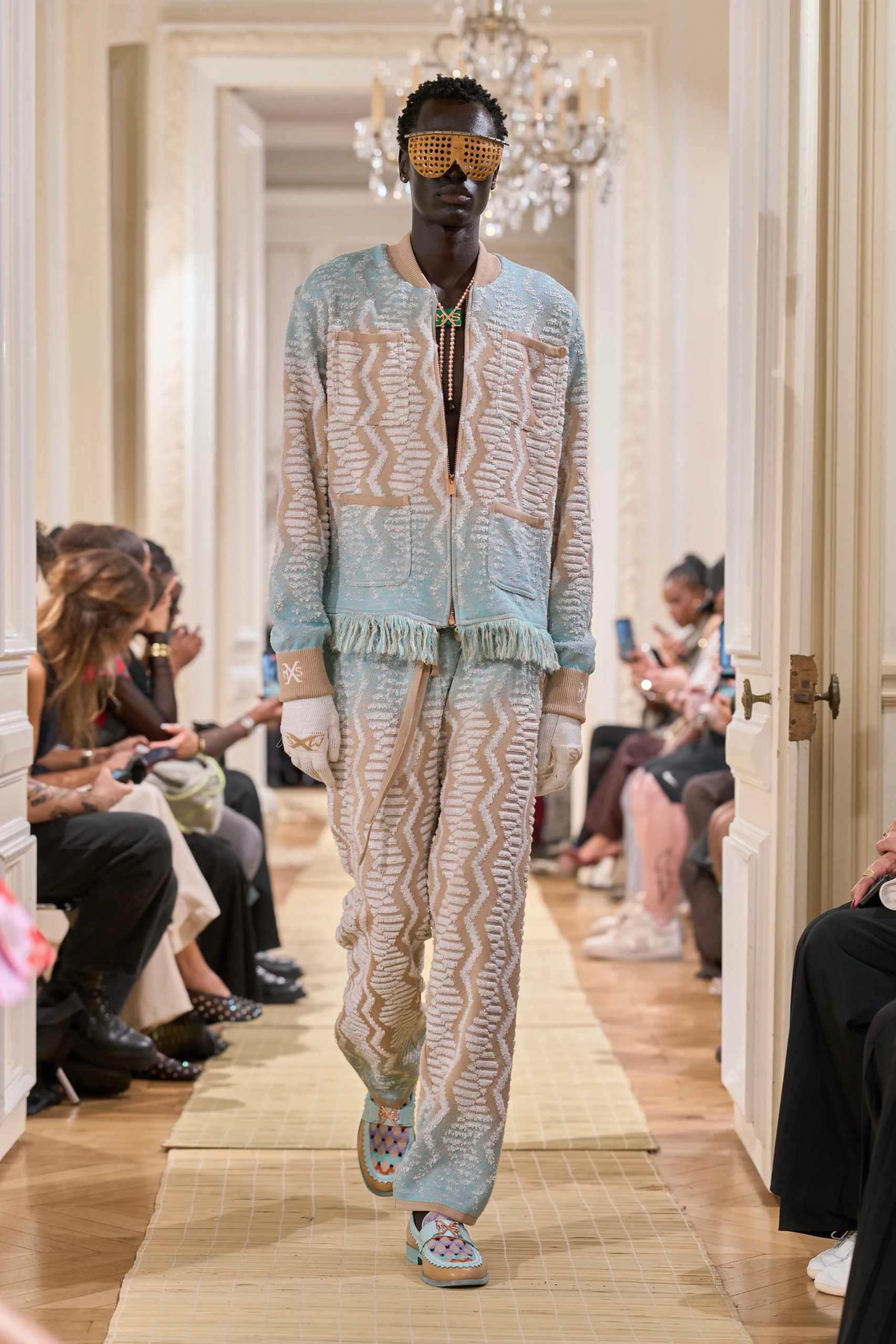
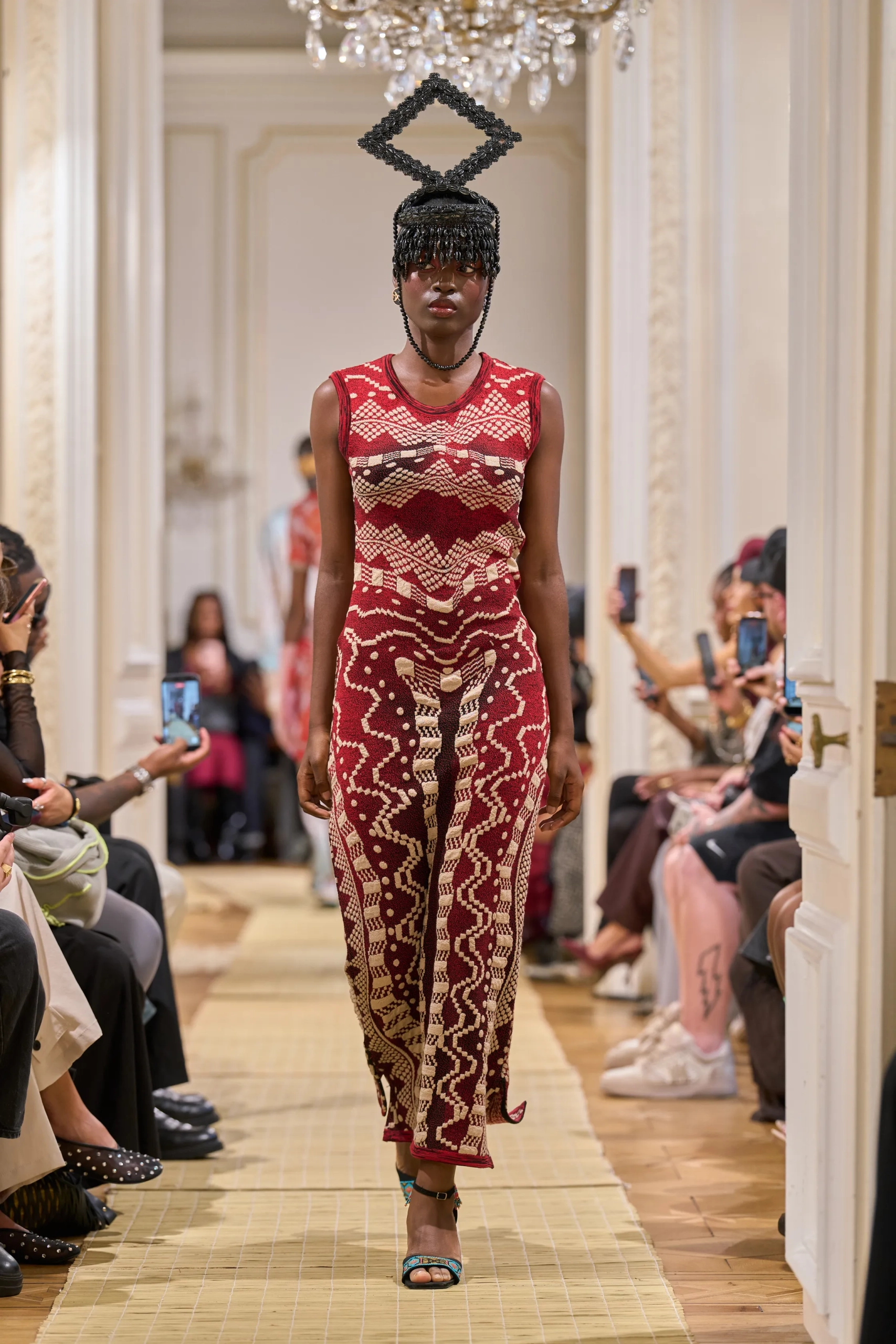
It is the kind of gesture that could easily become heavy-handed. Here, it worked because the clothes did not stop at symbolism. There was still an understanding of fashion as fashion , silhouette, texture, colour, movement and desire. The collection is a reimagining of the modern knit-focused wardrobe through Xhosa heritage and local iconography, the result is contemporary, elevated and joyful.
That balance has become increasingly important for African designers operating on global stages. For years, the international fashion conversation has often approached African creativity through the language of discovery, as though the continent were constantly waiting for permission to participate. Designers are expected to explain their heritage, their materials, their countries and their histories before the clothes can simply be considered as clothes. MaXhosa’s Paris debut offered a different proposition, the culture was present, but it did not have to apologise for being fashion.
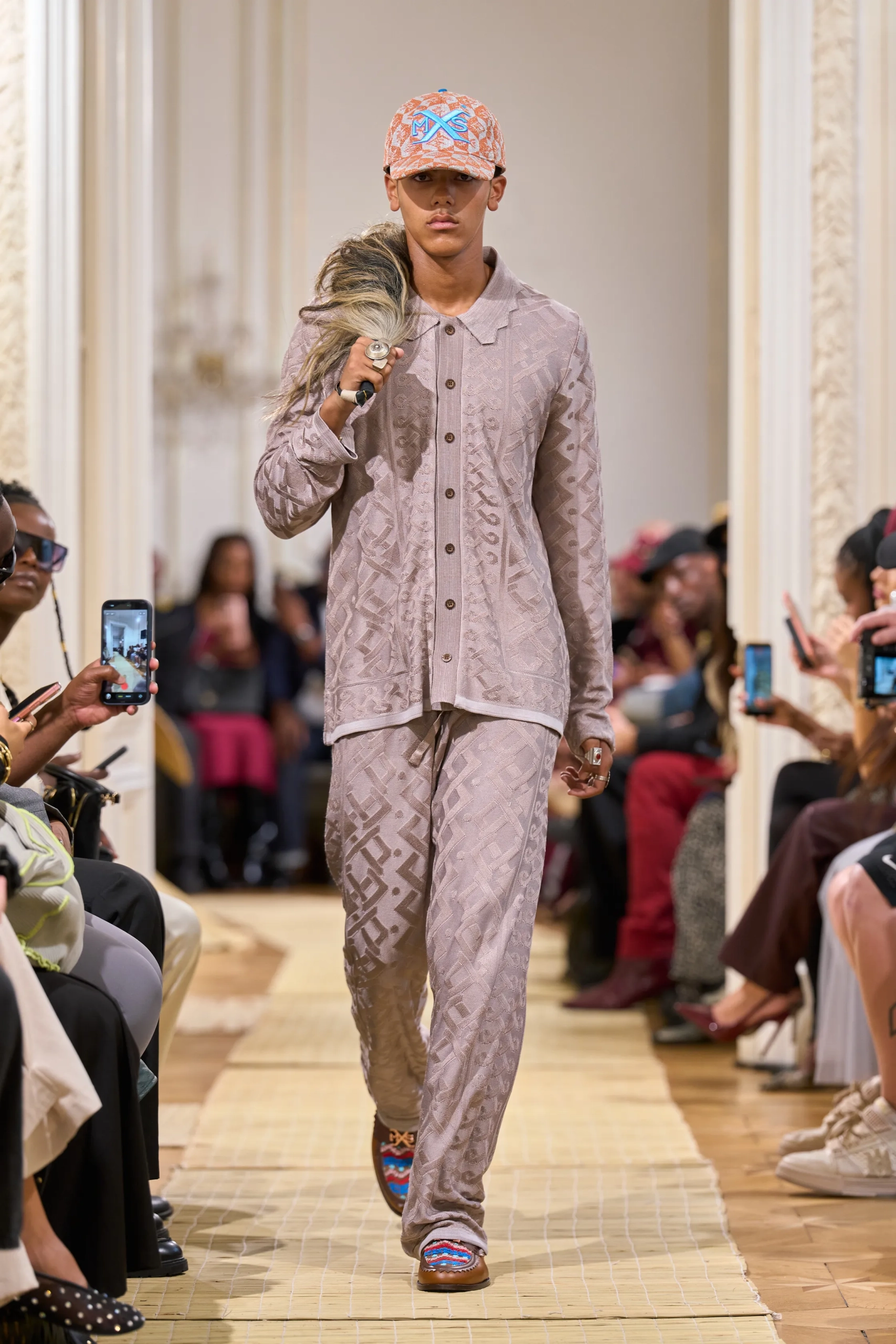
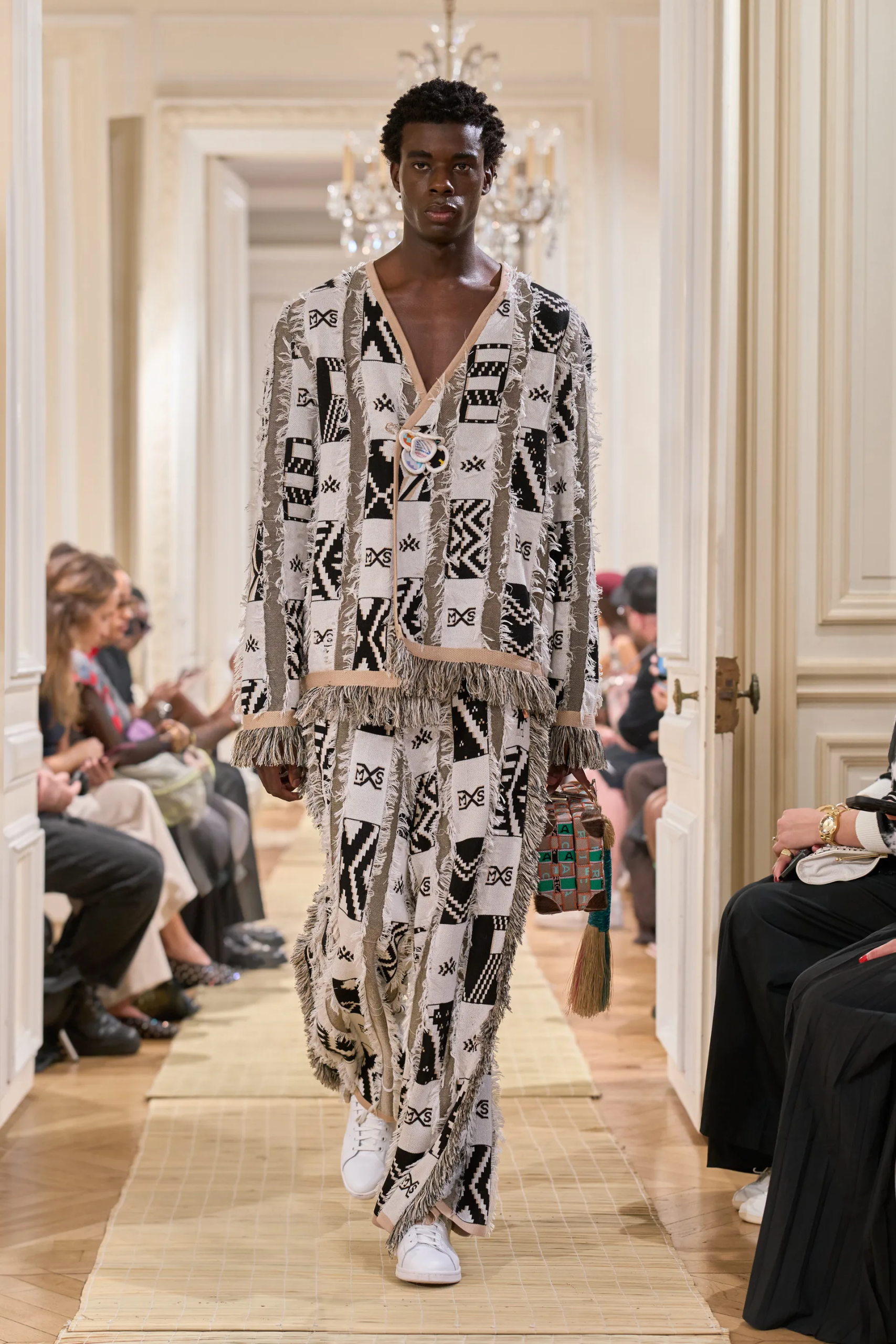
Ngxokolo has spent 16 years trying to reach this particular table. He has spoken about growing up inspired by houses such as Gucci and Louis Vuitton while noticing the absence of a globally recognised luxury brand that could be proudly identified as “made in Africa.” That gap has always been part of MaXhosa’s larger ambition.
The numbers behind the brand make that ambition more tangible. Founded in 2010, MaXhosa now employs around 300 people, operates eight stores and produces its knitwear through factories in Johannesburg and East London. Ngxokolo has also said that 90 percent of the brand’s products are produced in-house. This is not simply a designer with an interesting cultural point of view. It is a fashion business that has spent years building the infrastructure necessary to turn that point of view into a lasting brand. That is why the Paris debut feels less like a sudden breakthrough than a public recognition of something that has been developing for years.
MaXhosa had already begun showing in Paris through a presentation format in 2023. This runway appearance marked the next step, a place on the official calendar, alongside the major houses that have traditionally defined the rhythm and hierarchy of Paris Fashion Week. Very few designers from sub-Saharan Africa have received that opportunity. Cameroonian designer Imane Ayissi became the first sub-Saharan African designer to appear on the official Haute Couture calendar in 2020, making Ngxokolo’s moment part of a much larger, still-developing shift in how African fashion is represented within the global industry.
But representation alone is not the argument Ngxokolo appears interested in making. He has acknowledged that African designers remain underrepresented while also insisting on professionalism, quality and high standards. That is perhaps the more challenging conversation. Getting invited into global fashion is one thing. Building a brand capable of sustaining its place there is another.
The Paris presentation made that tension visible. Sjava performed. Kenyan artist Cyrus Kabiru contributed eyewear and accessories created from upcycled waste. MaXhosa’s knitwear carried Xhosa references into a room historically dominated by European fashion houses. The show was distinctly African without becoming a collection of disconnected national symbols. It felt less like a single designer speaking for an entire continent and more like a network of African creative practices meeting on one runway. And that may ultimately be the most interesting thing about MaXhosa’s debut. The collection was not asking Paris to validate African fashion. It was demonstrating what happens when a brand has spent enough time developing its own identity that validation becomes secondary to visibility.
For Ngxokolo, the journey has taken 16 years. For MaXhosa, it has meant building factories, stores, a workforce and a recognisable design language before earning a place on the official calendar. For South African fashion, the significance is equally practical, another door has opened, but what matters now is what happens after the applause. Paris has a way of turning fashion into spectacle. MaXhosa arrived with spectacle, but it also arrived with substance.
The clothes carried the names of African countries. Africa itself was drawn across the body. Xhosa heritage moved through contemporary knitwear. Sjava’s voice opened the show. And somewhere between the music, the clothes and the room full of fashion insiders, the message became difficult to miss. MaXhosa was not in Paris to prove that Africa could make fashion. It was there because it already does.