
From childhood theatre classes to Netflix’s Blood Legacy, the South African actress is embracing the lessons, uncertainties and possibilities that come with a life devoted to performance.
Before Lihle Ngubo imagined a life on screen, there were costumes, other children to play with and a theatre academy her mother enrolled her in when she was about four or five. Acting was not yet a grand ambition. At first, it was simply something she loved doing.
Raised in Pietermaritzburg, KwaZulu-Natal, alongside her older brother and a large extended family, Ngubo was introduced to theatre to help build her confidence and communication skills. The career aspirations came later, around Grade 7, when she began to realise that something she enjoyed could become something more.
“I loved the costumes. I loved playing with the other kids,” she recalls. “As I grew older, I started realising that this could actually be a career. I wanted to do drama in high school.”
Theatre gave her more than an introduction to acting. It taught her discipline, sharpened her instincts and showed her the intimacy of connecting with an audience in real time. Unlike screen productions, where a scene can be stopped and repeated, live performance requires an actor to stay present, responding to whatever unfolds.
“I love theatre because I love people,” she says. “I love those encounters. You never really know what you’re going to get from an audience, and that’s what makes it special.”
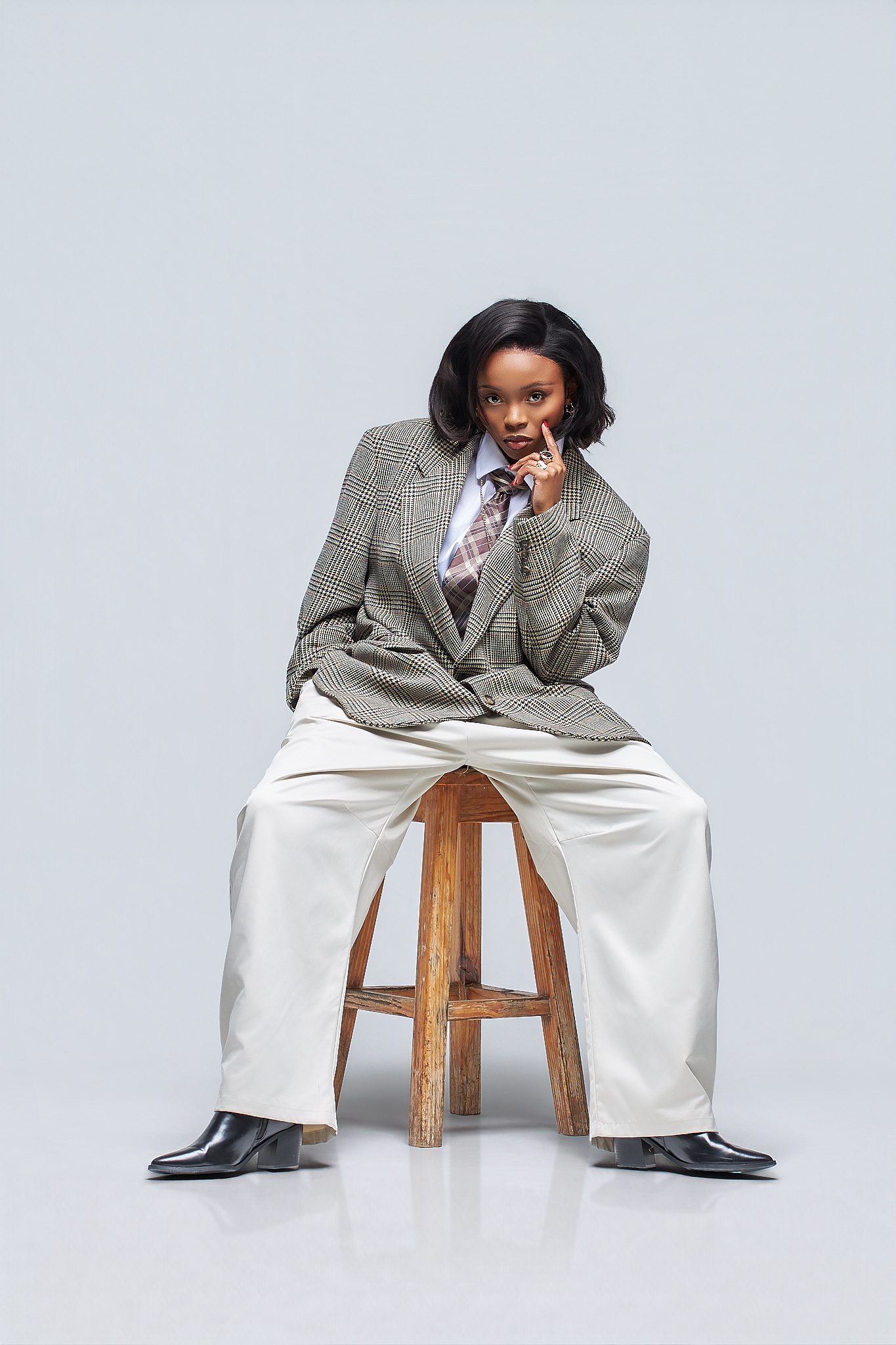
When Ngubo moved to Johannesburg in 2020, she entered a different kind of performance space. Screen auditions brought rejection, and the feedback she sought was not always easy to hear. Some performances, she was told, were too big for the camera.
For someone trained to project emotion across a theatre, learning restraint required a different kind of confidence. She had to trust that the smallest expression could communicate what a grand gesture once had.
“I had to learn that you don’t always have to do so much,” she explains. “Sometimes you can just be, and the camera will see it. You don’t have to make these big expressions for people to understand what you’re feeling.”
It was not about abandoning what theatre had taught her, but expanding her understanding of the craft. She was learning that an actor could command attention without demanding it, and that stillness could speak just as loudly as movement.
The call that changed everything
Ngubo’s relationship with rejection shifted when she booked Blood Legacy, the Netflix drama centred on the Ndlovu family and the secrets surrounding its business empire, Spear Industries.
She had auditioned for three characters before eventually receiving a callback for Amahle. By then, however, Johannesburg was beginning to feel like a chapter she might have to close. Things were not working out as she had hoped, she was staying with a friend, and returning home to focus on theatre was becoming a real possibility.

Before the callback, she prayed for the ability to tell the truth of the character. She went in, gave the audition her best and returned to packing her belongings, unsure what would happen next.
Then came the call. Her agents, who were also her friends, had news while she was in her boss’s car after recording a voice-over. Ngubo had booked the role.
At first, she thought they were joking.
“Guys, today’s not the day to play like that!” she recalls, laughing.
When she realised they were serious, she cried and immediately wanted to call her mother. After years of working towards opportunities that did not always materialise, she felt an enormous weight lift from her shoulders.
“I just felt like God had me. I felt like somebody had watched my tape and decided to take a chance on me.”
The experience changed how she approached auditions. Rather than allowing every rejection to become a judgement on her ability, she began to trust that she could do the work without carrying the outcome on her shoulders.
“If it’s for me, they’ll call me back,” she says.
It is a simple philosophy, but one that has given her room to breathe in an industry where so much depends on decisions beyond an actor’s control. For Ngubo, trusting the process does not mean doing less. It means showing up, giving the work her best and allowing herself to move forward.
Now returning to Blood Legacy as Buhle, Zakhele Ndlovu’s girlfriend, she has a different challenge: ensuring that her character is more than her relationship.
Finding Buhle
On Blood Legacy, Buhle is quiet, soft and confident, with a strength that does not need to announce itself. Ngubo is conscious of how easily the character could become defined by Zakhele’s storyline, and wants her to have an identity of her own.
Buhle’s background, style and presence set her apart from what the Ndlovu family might expect of Zakhele’s partner. For Ngubo, those differences are worth exploring. Buhle can be gentle without being weak, and soft-spoken without fading into the background.
“When Season 1 ended, I was still trying to find Buhle,” she says. Returning to the role, with a stronger understanding of the scripts and character, gave her more room to make deliberate choices.

One of the most enjoyable was developing Buhle’s appearance. Short hair, a line cut into it, blue braids and colour blocking all became part of the process. When the stylists suggested experimenting with her hair, Ngubo was more than happy to play along.
“When they wanted to experiment with the hair, I was like, ‘Do it. Go for it. Let’s have fun!’”
The look is more than an aesthetic choice. Buhle does not always say much, so her appearance helps communicate what words cannot.
“I loved being able to build her from her hair down to her nails and her outfits,” Ngubo says. “Her physical appearance speaks volumes, which is interesting because Buhle herself doesn’t always say much. Her presence is what lands her in a room.”
For an actress interested in the details of human behaviour, those choices matter. She wants Buhle to feel like a person in her own right, rather than simply a supporting character in someone else’s story.
That same commitment to meaningful storytelling informs her work in theatre. Her performance in The Lesson earned her a Naledi Theatre Awards nomination, which she describes as an acknowledgement of the labour that audiences do not always see: the rehearsals, technical challenges and repeated performances that go into bringing a production to life.
“It’s like a hug,” she says. “It’s an outpouring of all the work you’ve put in.”
She was particularly moved by seeing audience members from different backgrounds connect with the production, including white audience members engaging with themes that resonated deeply with Black audiences. It reminded her of theatre’s ability to open up difficult conversations and create connections between people who might not otherwise share those experiences.
She also believes South African theatre deserves greater funding, visibility and marketing. Productions often rely heavily on social media to attract audiences, while the resources needed to promote a show compete with the costs of paying the people who make it possible.
“I think we need to share billboards with the screen productions,” she says with a laugh.
It is a light-hearted suggestion with a serious point behind it. For Ngubo, supporting theatre means supporting an entire creative community, as well as the stories that community brings to life.
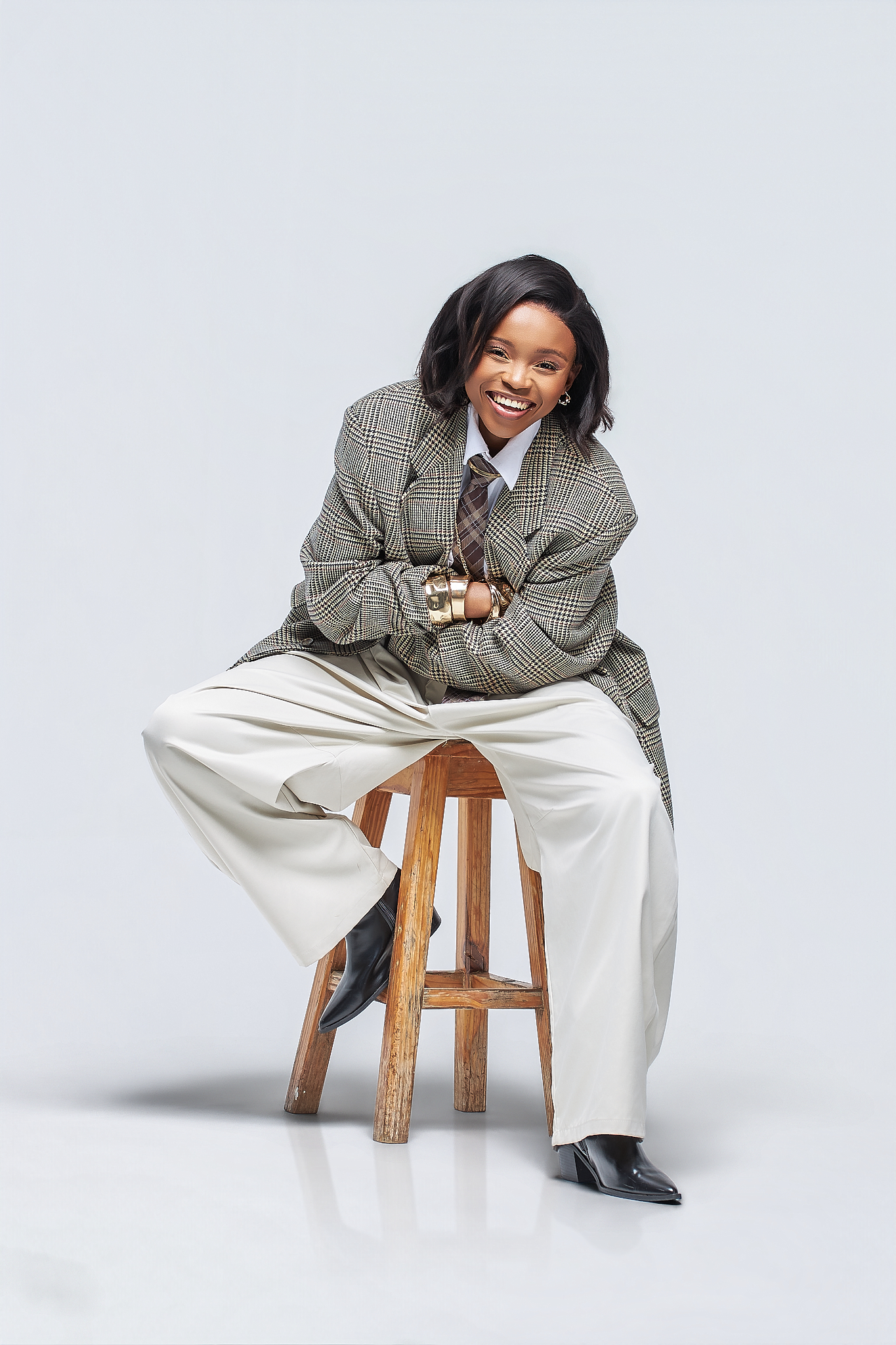
The roles still to come
Away from the stage and screen, Ngubo is something of a homebody. She enjoys reading, watching television, painting and spending time with family and friends. Her faith is central to her life, as is her commitment to serving at church.
Although she describes herself as outspoken and comes from a lively, sociable family, she tends to observe when she enters an unfamiliar room. She likes to understand the atmosphere and find ways to make other people feel comfortable. It is a quieter side of her personality, but one that reflects her interest in people and what lies beneath the surface.
As for what comes next, she has ambitions that stretch well beyond the characters she has already played. Action is high on the list, particularly roles that would allow her to train for and perform her own stunts.
“I really want action!” she says enthusiastically.
“I want to do the kind of action that allows me to do my own stunts. I want to train for my own stunts.”
Comedy is another possibility she is keen to explore. “Maybe I want to try my hand at comedy a little bit. Who knows?”
She also hopes to see more stories about Black African athletes and the experiences of people whose achievements deserve wider recognition. Her ambition is to help take African stories to international audiences without losing the specificity that makes them meaningful.
“I want to be part of stories that take our experiences and put them on paper, then present them to the world,” she says.
For Ngubo, the journey has never been as simple as landing a role and arriving at a destination. It has meant learning to adapt between theatre and screen, finding confidence in quieter performances and continuing to work through periods of uncertainty. Blood Legacy is an important part of that journey, but it is far from the whole story.
The little girl who once loved the costumes and the company has become a performer still curious about what her craft can offer. She wants to keep learning, take on unfamiliar challenges and tell stories that leave audiences with something to carry home.
She does not need to know every turn her career will take. For now, there is work to do, characters to discover and perhaps a few stunts to master. And if another life-changing call arrives when she least expects it, she has already given us a line worth remembering: today is not the day to play like that.