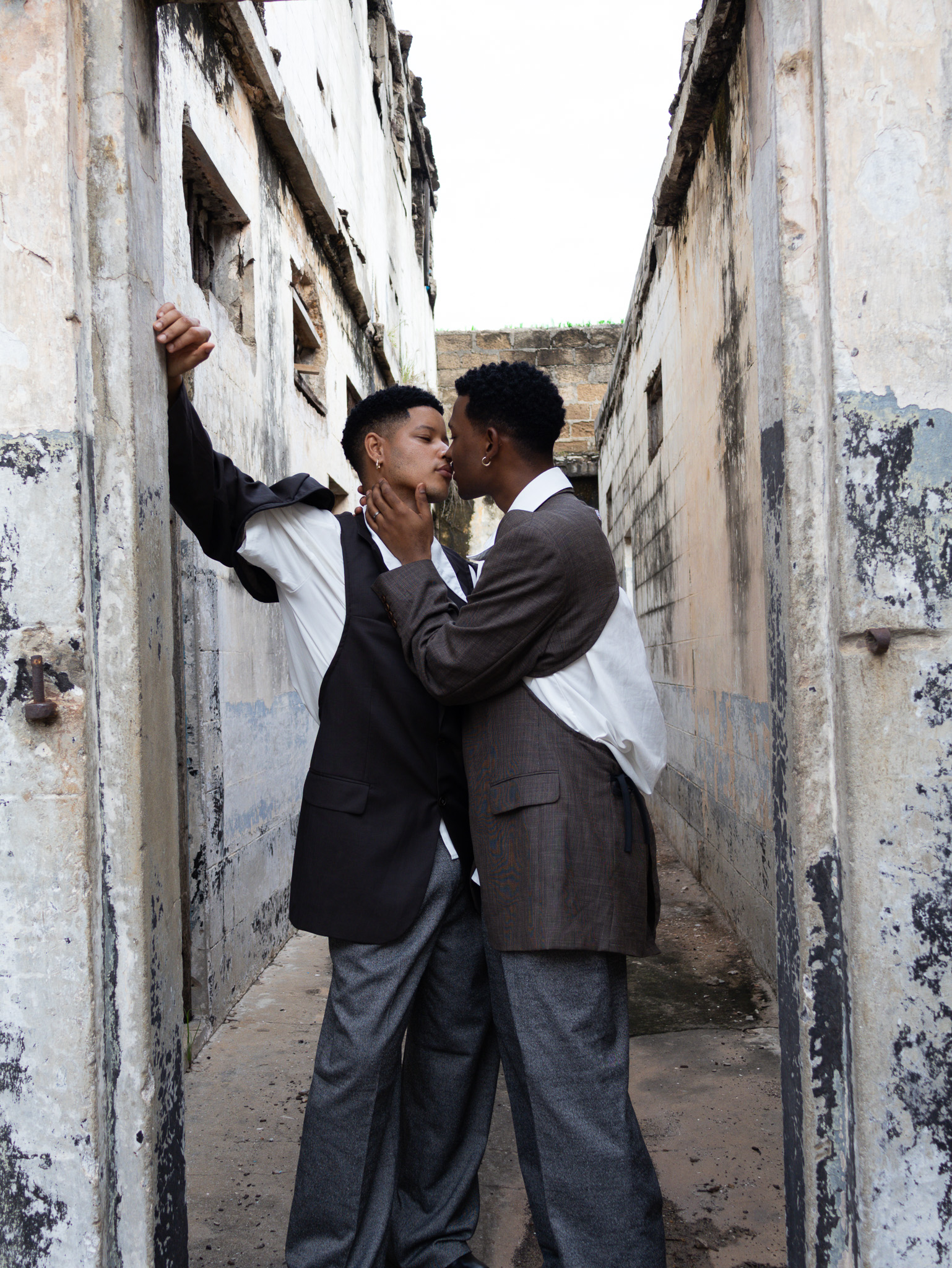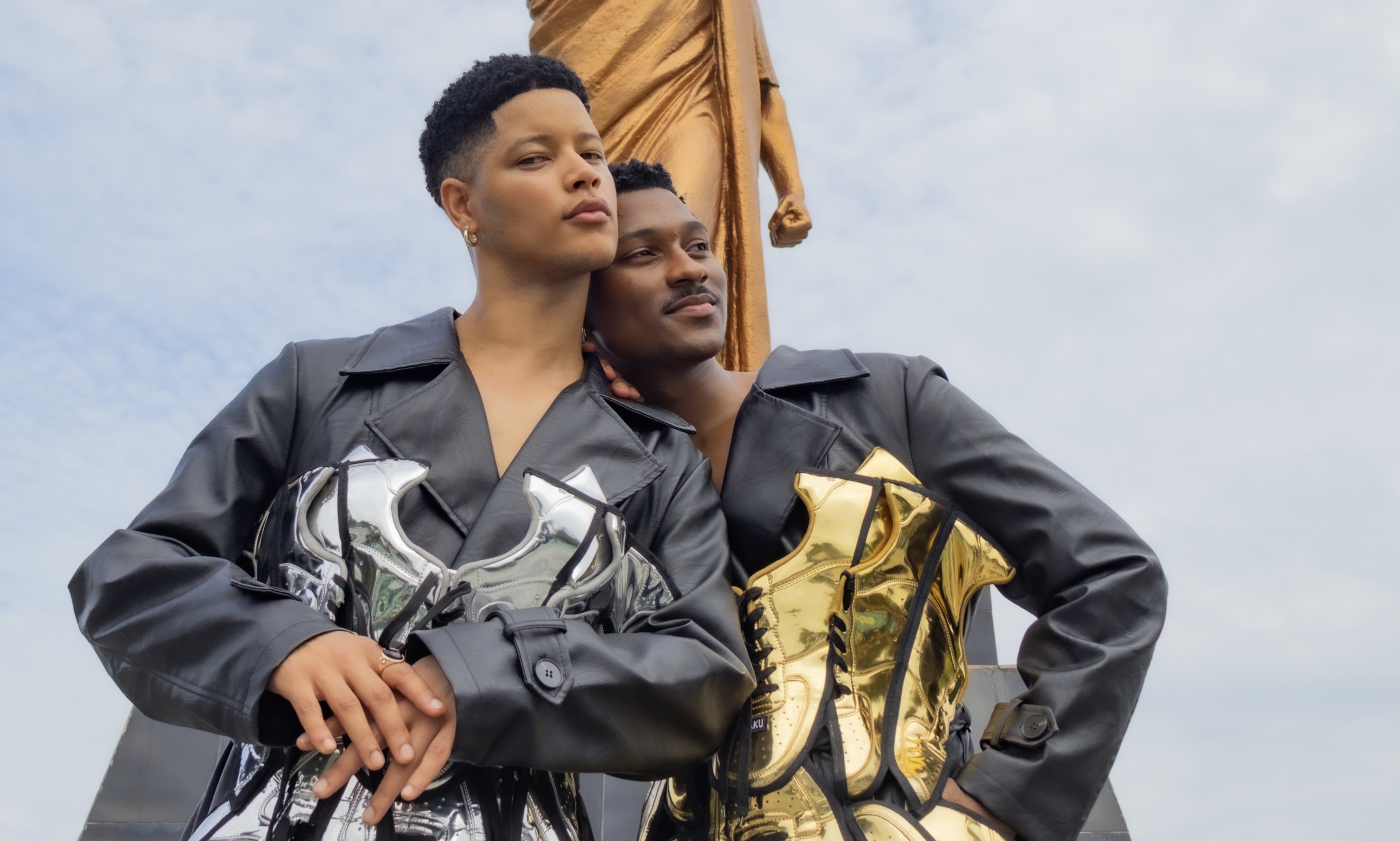
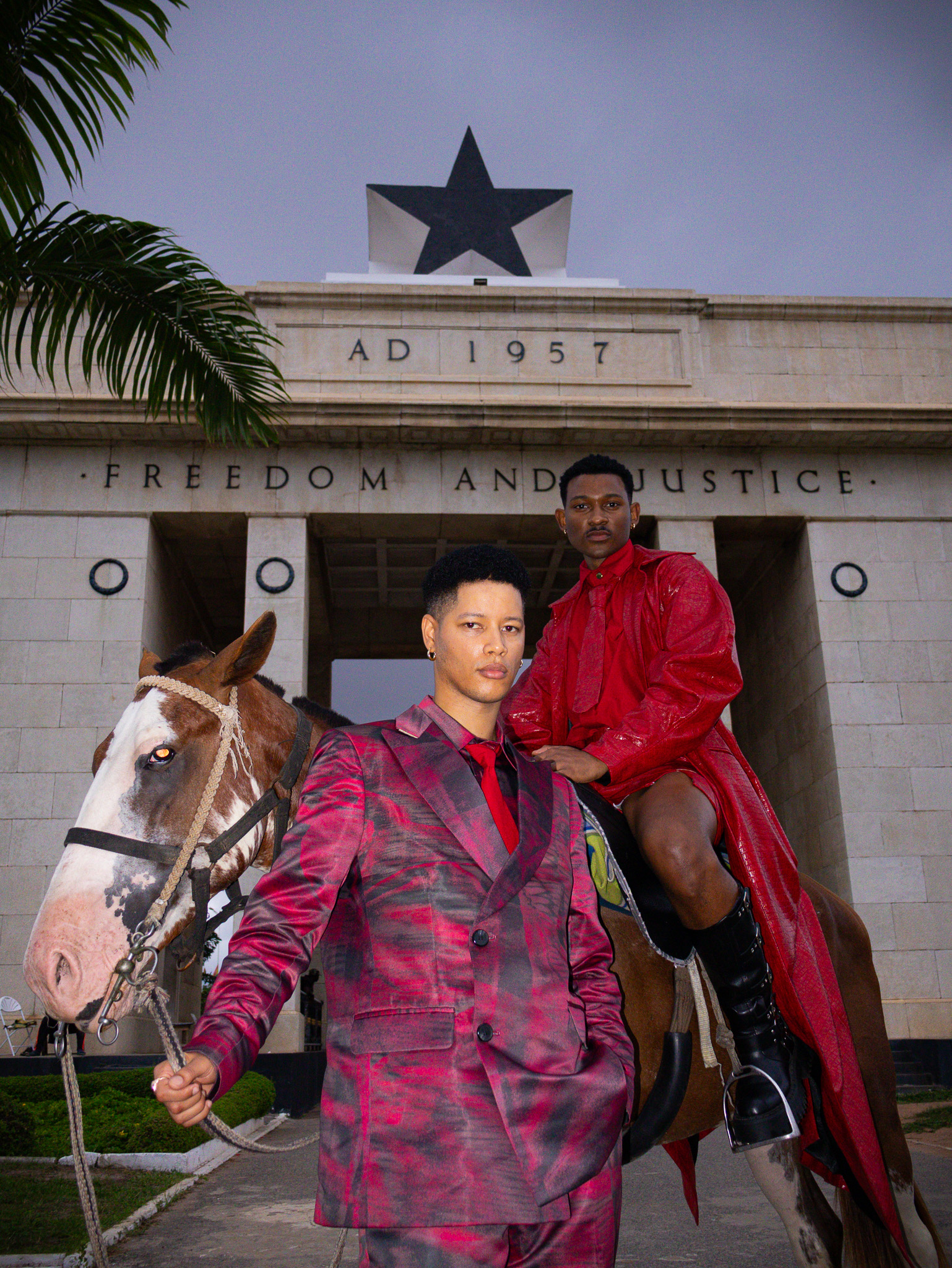
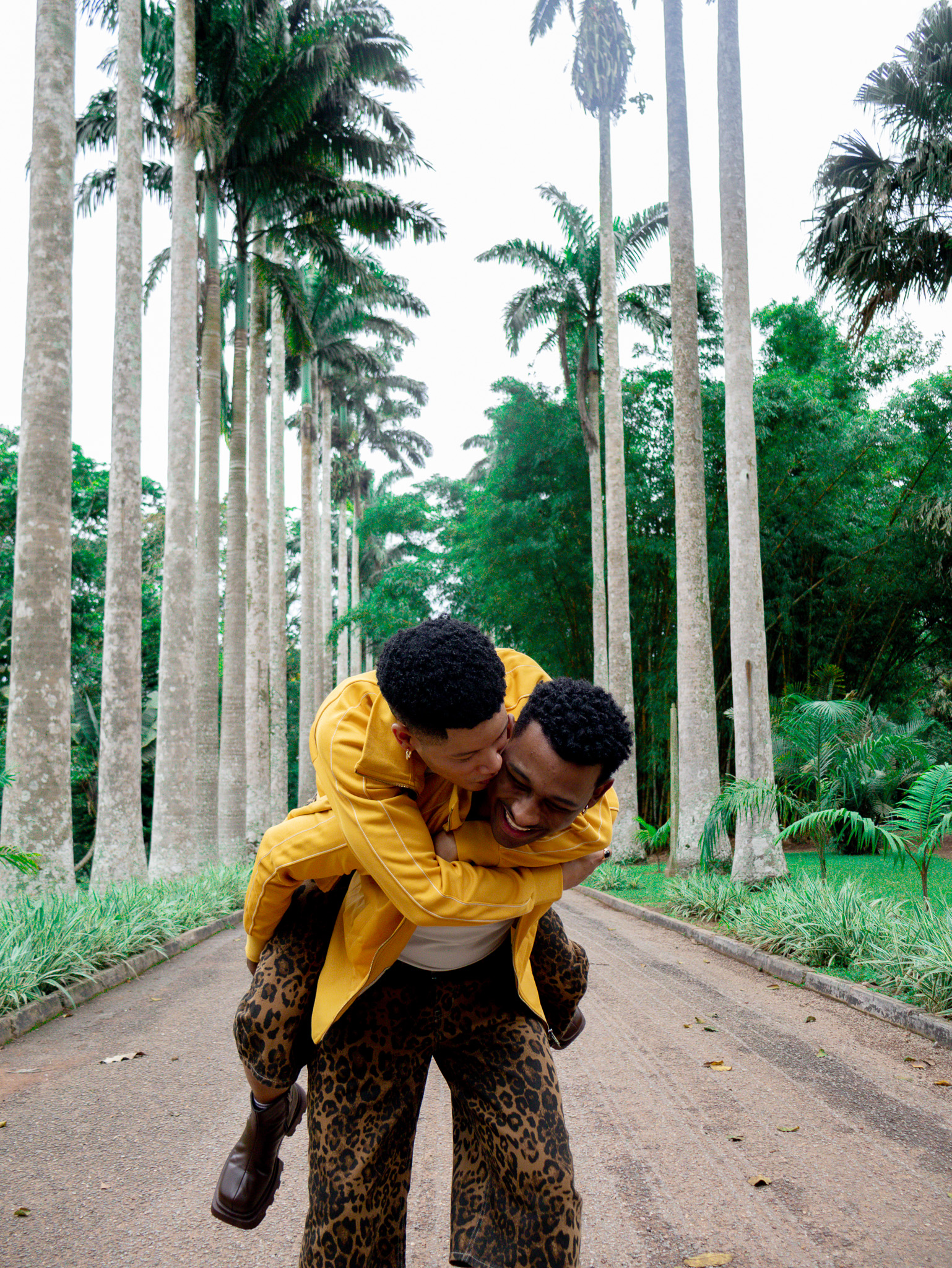
This Pride Month, South African couple Lue and Rue are showing the continent what it means to love out loud, even in the face of criminalisation. Partnering with LGBTQIA+ human rights organisation Triangle Project, the couple travelled to Ghana to launch a visual protest through the “Show Ghana Love” campaign. Their mission was simple but radical: to love, visibly and unapologetically, in spaces where queer intimacy is still considered a crime.
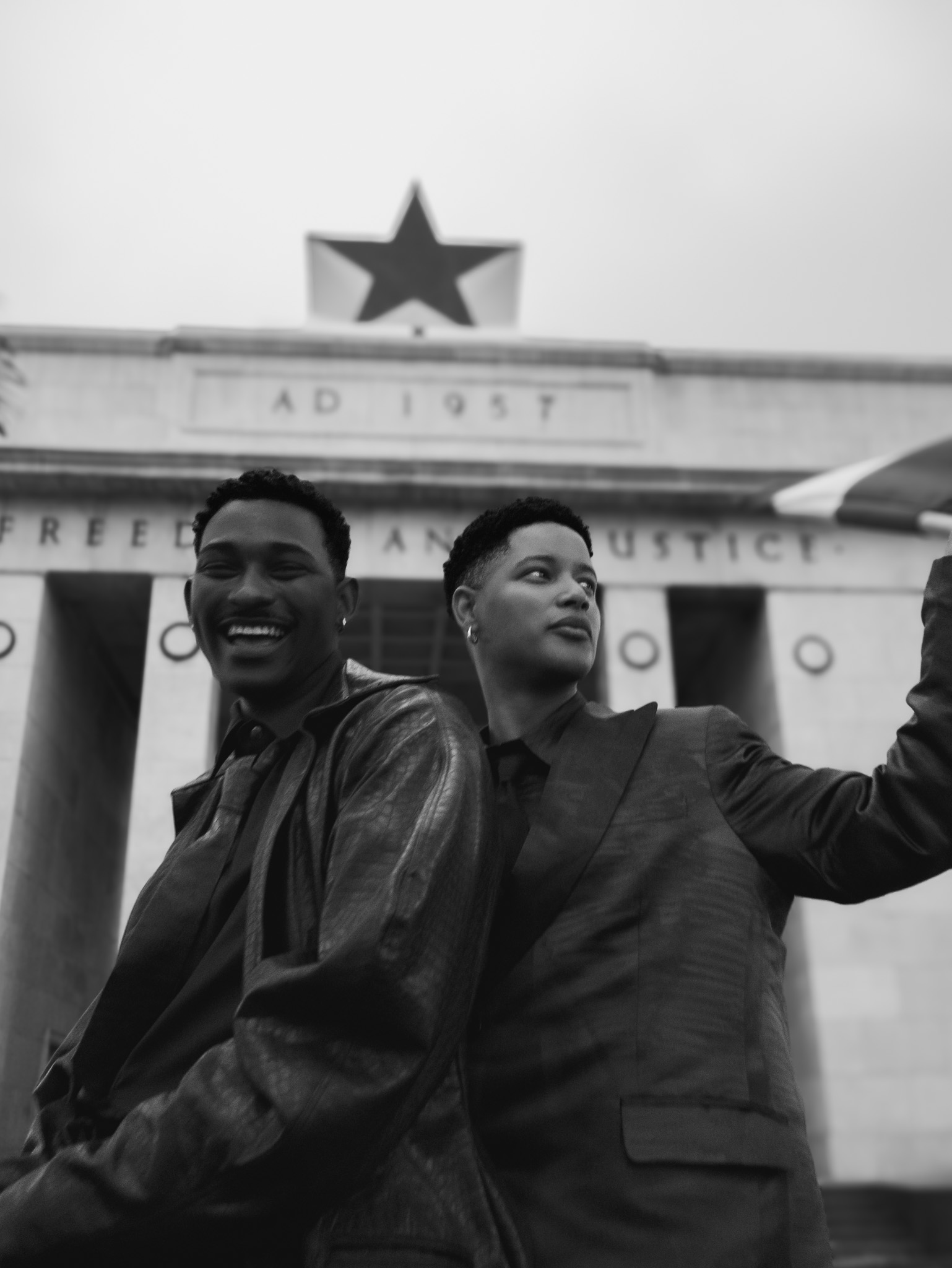
From the historic Black Star Square to the haunting walls of Ussher Fort, Lue and Rue turned public landmarks into acts of resistance. Their presence — documented in a striking digital photo series — speaks volumes. In a country where the proposed Human Sexual Rights and Family Values Bill could soon sentence queer Ghanaians to years in prison simply for existing, their open displays of affection are a quiet revolution.
“We’re showing Ghana love for those who can’t,” the campaign boldly declares. And that love, in its tenderness and truth, is political. It is protest. It is a love letter to every queer Ghanaian who has been forced into silence. In this intimate Q&A, Lue and Rue speak to Previdar about fear, resistance, and what it means to love without permission.
Q: What inspired you to take this trip to Ghana, knowing the risks involved for LGBTQIA+ people?
A: We’ve always wanted to use our voices, platforms, and visibility to make a difference, especially for those in the LGBTQIA+ community who don’t have the same freedoms we have in South Africa. Even though we experience homophobia here too, we can still exist, love, and live openly without fearing for our lives every single second. We knew going to Ghana came with risks, but this wasn’t about us. It was about being present for the queer people in Ghana, showing them they are seen, they matter, and that someone is willing to stand in solidarity with them. Our goal has always been to inspire through our love, our content, and our courage, to show that you can love without fear, without boundaries, even if it costs you everything.
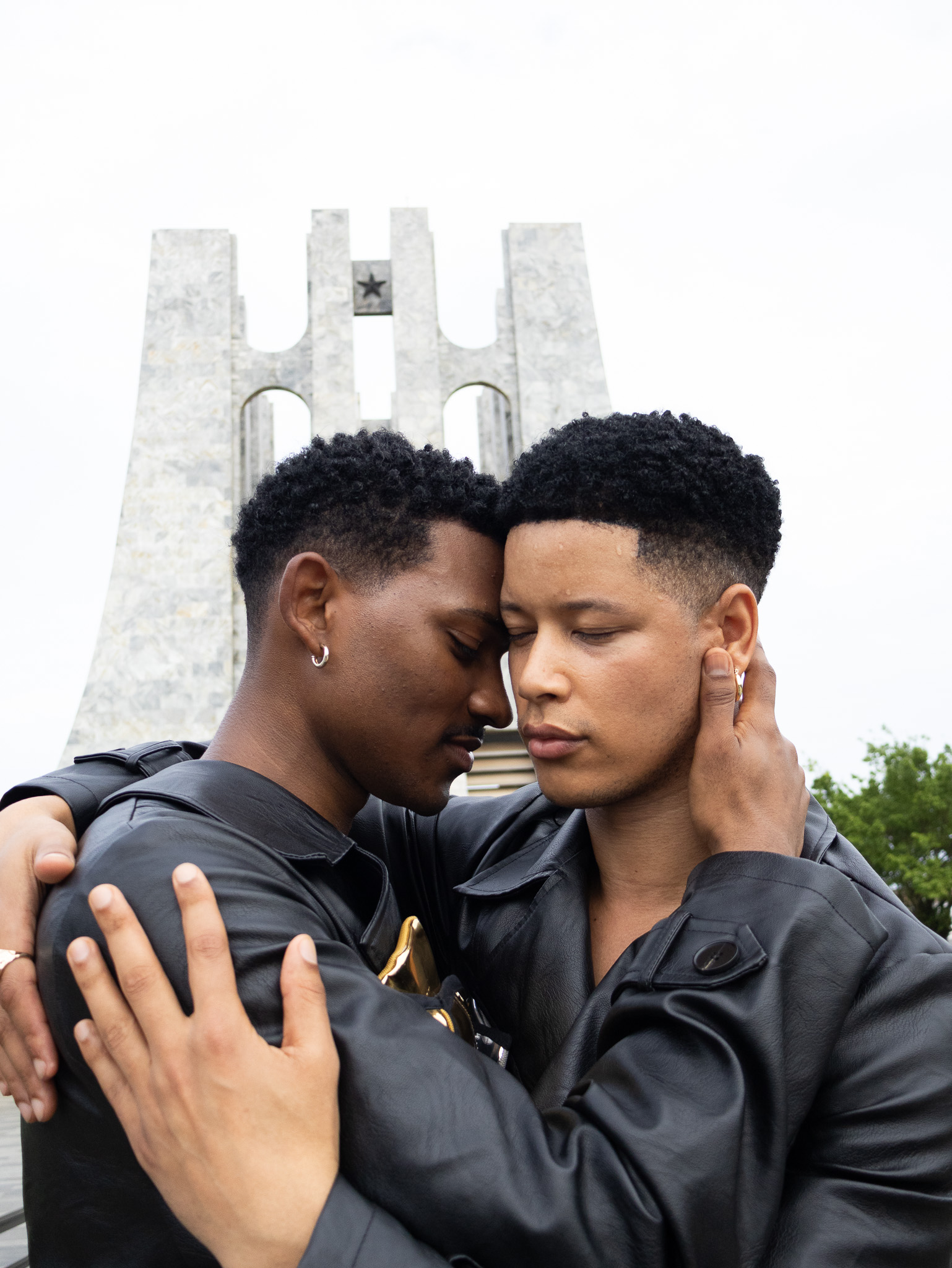
Q: Was there a specific moment or story that compelled you to protest by expressing your love in public?
A: There wasn’t a single defining moment, it’s been building up for years. Even though we live in a country with LGBTQIA+ rights, we still face daily hate, and it reminded us that freedom for one is not freedom for all. We couldn’t sit back and enjoy our privilege while our African brothers and sisters were suffering in silence. We wanted to use our love as a statement. This trip wasn’t just about content, it was a protest, a prayer, a love letter to every queer person fighting for their place on this continent. This was our way of saying, We see you, and we are with you.
Q: What was the energy like as you arrived in Ghana? What were your first impressions?
A: It was tense. The airport experience was stressful, a few hiccups happened when we landed, and from the moment we stepped off that plane, we felt on high alert. We were scared that even a glance or the wrong word might expose us. But then our tour guides met us, and their warmth made us breathe a little easier. One thing about Ghana is the people, they’re genuinely welcoming, kind, and warm. But beneath that kindness, we were painfully aware of the law and the danger it placed us in.
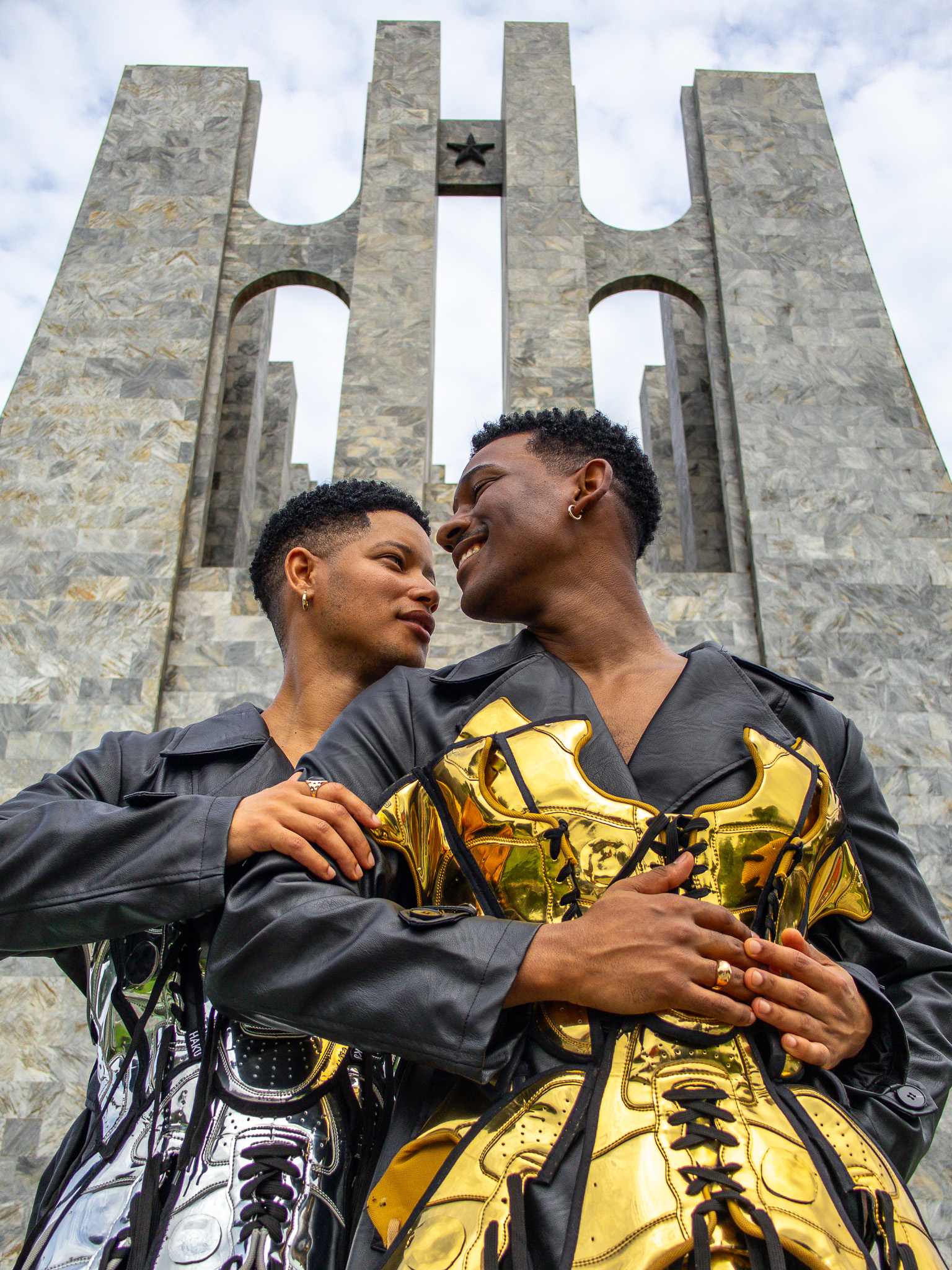
Q: Were there any moments when you feared for your safety?
A: Honestly, yes, more than once. When we shot at Black Star Square, there were security guards everywhere. We couldn’t hold hands, stand too close, or even look at each other for too long. And at every other location, it felt like death was watching us. We didn’t trust anyone, not even our own security, because anyone could report us at any moment. Every time someone stared too long or walked towards us, our hearts would race. But we still did it. Because the fear we felt for a few days is the fear queer Ghanaians live with every single day.
Q: How did locals respond, whether positively or negatively, to your presence and expression of love?
A: On the surface, people were friendly, welcoming, and kind. Ghanaian people have such beautiful souls. But the danger is never obvious; it’s silent. You never know who truly supports you and who might turn you in. So while we appreciated the warmth, we stayed cautious. We couldn’t take chances.
Q: Can you describe one landmark moment that moved you the most?
A: Definitely the visit to Usher Fort Slave House. Standing in those dark, heavy rooms where hundreds of innocent people were kept captive, abused, and dehumanised, and thinking about how today, centuries later, people are still being imprisoned by the world’s hatred and fear, simply for who they love. Ghana says its people are free now, but what about our queer brothers and sisters? Who fights for them? That moment shattered something in us.
Q: What do you hope Ghanaians — especially young queer people — take away from your visibility?
A: We hope they see that no matter how impossible it feels, there’s someone out there rooting for them. We want them to know their voices matter. Even if you whisper in a room where no one listens, keep speaking. One day someone will hear you. You are not alone, and you never will be. Never apologise for who you are, and never stop fighting for your freedom.
Q: How do you respond to those who say your trip was provocative or disrespectful to Ghanaian cultural values?
A: Our love isn’t a provocation; it’s a human right. Culture should never be an excuse for hate. We don’t go to countries to disrespect traditions; we go to challenge systems that harm innocent people. If someone finds love offensive, the problem isn’t with us. Queer Ghanaians exist whether people want to accept it or not, and they deserve to live free from fear and violence.
Q: In your eyes, how can love be used as a tool for resistance?
A: Love is the most radical form of protest. It’s defiance wrapped in tenderness. When you love loudly in a place that tells you not to exist, you are resisting. Every hand held, every kiss shared, every ‘I love you’ spoken in the face of hatred chips away at oppression. Love is our weapon, our shield, our revolution.
Q: What message are you sending to other countries criminalising identities and expressions of love?
A: You can criminalise people, but you’ll never erase them. We’ve survived worse. Our existence is not up for debate. The world is watching, and history has shown that love always wins, no matter how long it takes.
Q: Do you feel there’s enough global attention on the LGBTQIA+ rights crisis in West Africa?
A: No, not nearly enough. The world can rally for causes thousands of miles away, but when it comes to the queer rights crisis in Africa, it often goes ignored. And the media only pays attention when there’s tragedy. We need consistent, unapologetic support. Not only when things go wrong, but when queer Africans are living, loving, and surviving too.
Q: What role do you think allies have to play?
A: Allies need to do more than post rainbow flags in June. They need to speak up in rooms we’re not invited into. Donate to grassroots organisations. Call out homophobia, even when it’s uncomfortable. Create safe spaces. Protect queer lives, not just queer trends. This is a shared fight, and silence is complicity.
Q: What does “radical love” mean to you after this journey?
A: Radical love is choosing to love yourself and your partner when the world tells you you shouldn’t exist. It’s walking into danger, hand in hand. It’s standing in front of monuments built on oppression and leaving behind a memory of tenderness. It’s risking everything for a future you may never live to see, but knowing it matters anyway.
Q: What would you say to queer couples who are afraid to be seen?
A: Your fear is valid. Never let anyone rush you into visibility if it costs you your safety. But when you’re ready, and if you’re able, know that the world needs your story. Your love matters. Even if it feels small. Even if no one claps for you. You are already changing lives just by surviving.
Q: How can people support LGBTQIA+ activists and organisations in Ghana?
A: Start by educating yourself. Share their stories. Follow organisations like Rightify Ghana and LGBTQI+ Rights Ghana. Donate if you can. Write to your governments, apply pressure, amplify their voices. And when you have a platform, give it to those who need it more than you.
Let me know if you want a headline for print, pull quotes for IG, or a suggested photo caption to accompany this feature!