
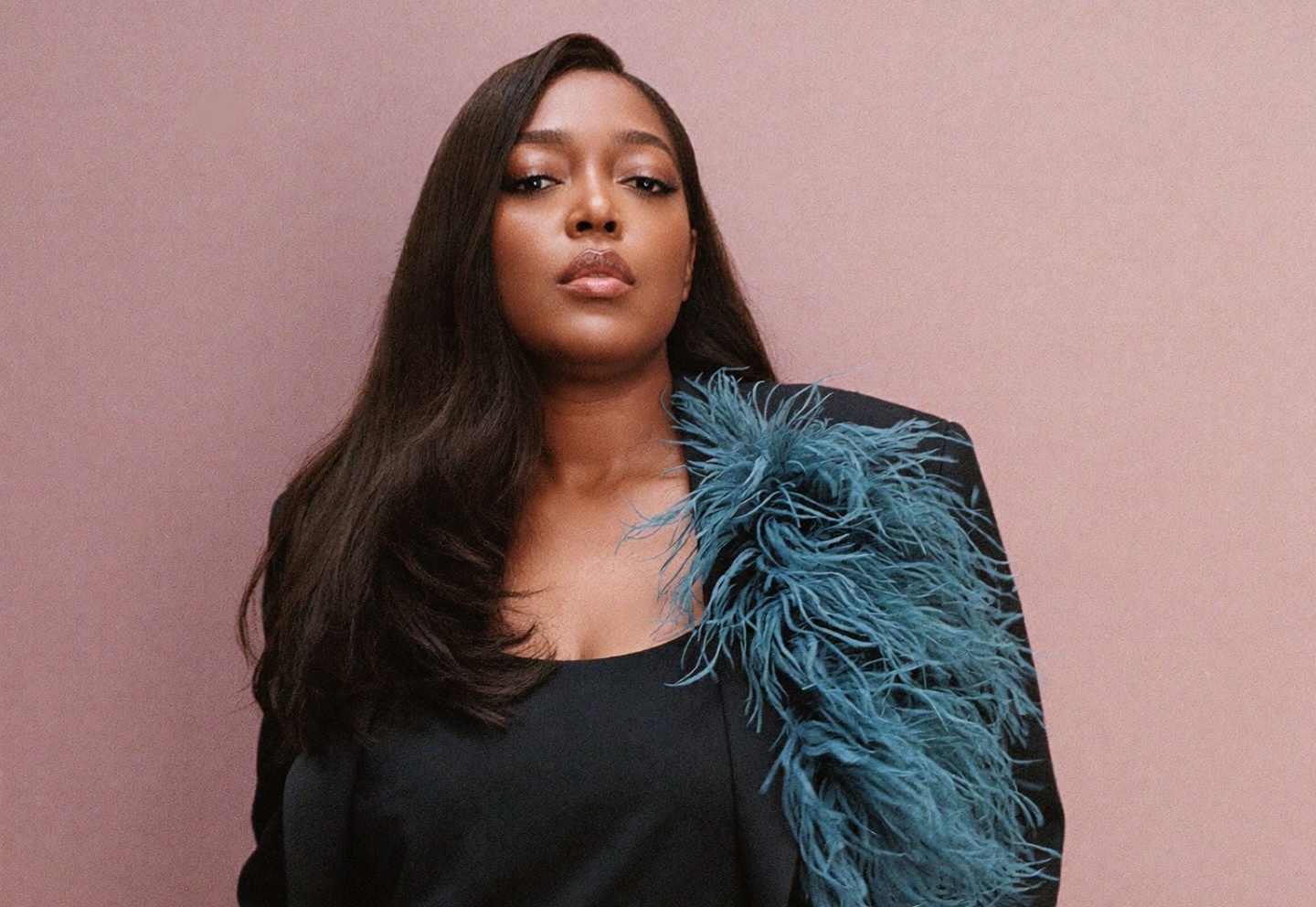
After an extended production pause, Hanifa is making its return with a new collection and a renewed approach to the business. Founded by designer Anifa Mvuemba, the independent fashion label is entering its next chapter 15 years after its launch, with an offering that reflects its signature aesthetic while embracing a more versatile approach to dressing.
Known for its feminine silhouettes, sculptural designs and statement-making details, Hanifa has built a distinct identity in contemporary fashion. Its latest collection stays true to that visual language, bringing together fluid draping, textured knitwear, sculpted volume, fringe and feather detailing. The result is a wardrobe that moves between everyday dressing and more occasion-led pieces.
There is also a noticeable shift towards versatility. Alongside eveningwear, the collection introduces office-ready separates, elevated everyday pieces and relaxed styles. Mvuemba has revisited designs from the brand’s archives, reworking familiar silhouettes with considered fabrics and fresh details, including bouclé wool, textured fringe, structured knitwear and outerwear.
The evolution reflects a broader understanding of the Hanifa customer, whose wardrobe needs have grown beyond special occasions. In an interview with EBONY Magazine, Mvuemba spoke about how her own experiences have influenced the direction of the label, explaining: “As I have evolved and shifted in the last 15 years, so has the Hanifa woman.”
The return is also significant for the business itself. Hanifa’s production pause followed a period of public criticism and customer frustrations, bringing attention to the challenges of managing production, fulfilment and customer relationships as an independent fashion label. Rather than simply resuming business as usual, the brand has introduced changes intended to address some of these concerns.
These include an external customer service team, new manufacturing partners and a third-party logistics provider. Hanifa has also adopted a direct purchase model, with the aim of giving customers more immediate access to products. The changes signal an effort to strengthen the systems supporting the label as it moves forward.
The challenges Hanifa has faced also speak to the wider realities of building and sustaining an independent Black-owned fashion business. Creative direction and brand recognition are only part of the equation. Production, logistics, customer support and the resources required to scale all play an important role in keeping a fashion label running.
For Mvuemba, the time away also came during a significant period in her personal life, following the birth of her second child. The pause offered an opportunity to spend time with her family, rest and reassess how she wants to lead the business.
With a new collection and changes to its operations, Hanifa’s return marks more than a fresh release. It signals a period of adjustment for a label looking to preserve the distinctive design identity that brought it recognition while building a stronger foundation for its future.