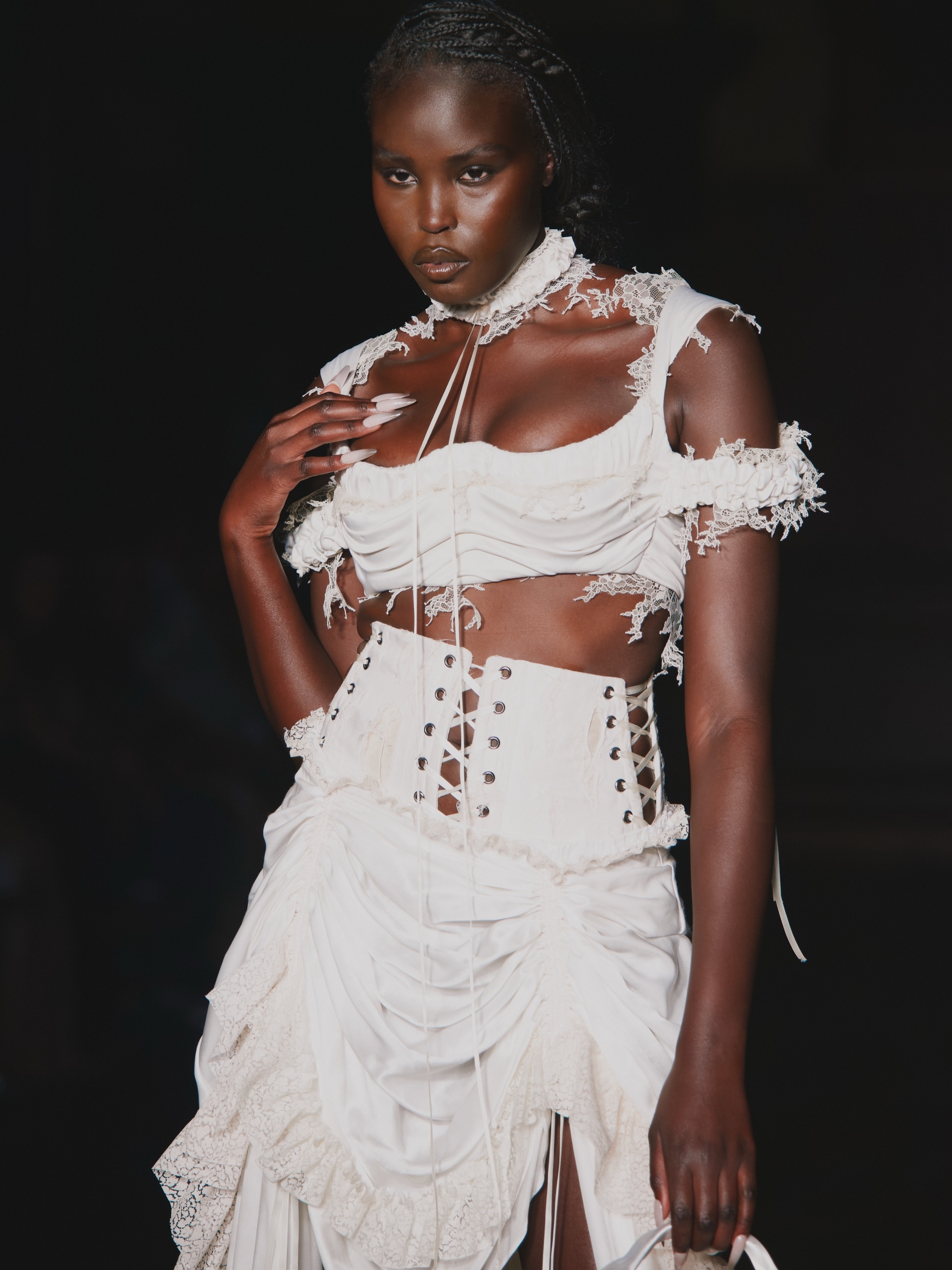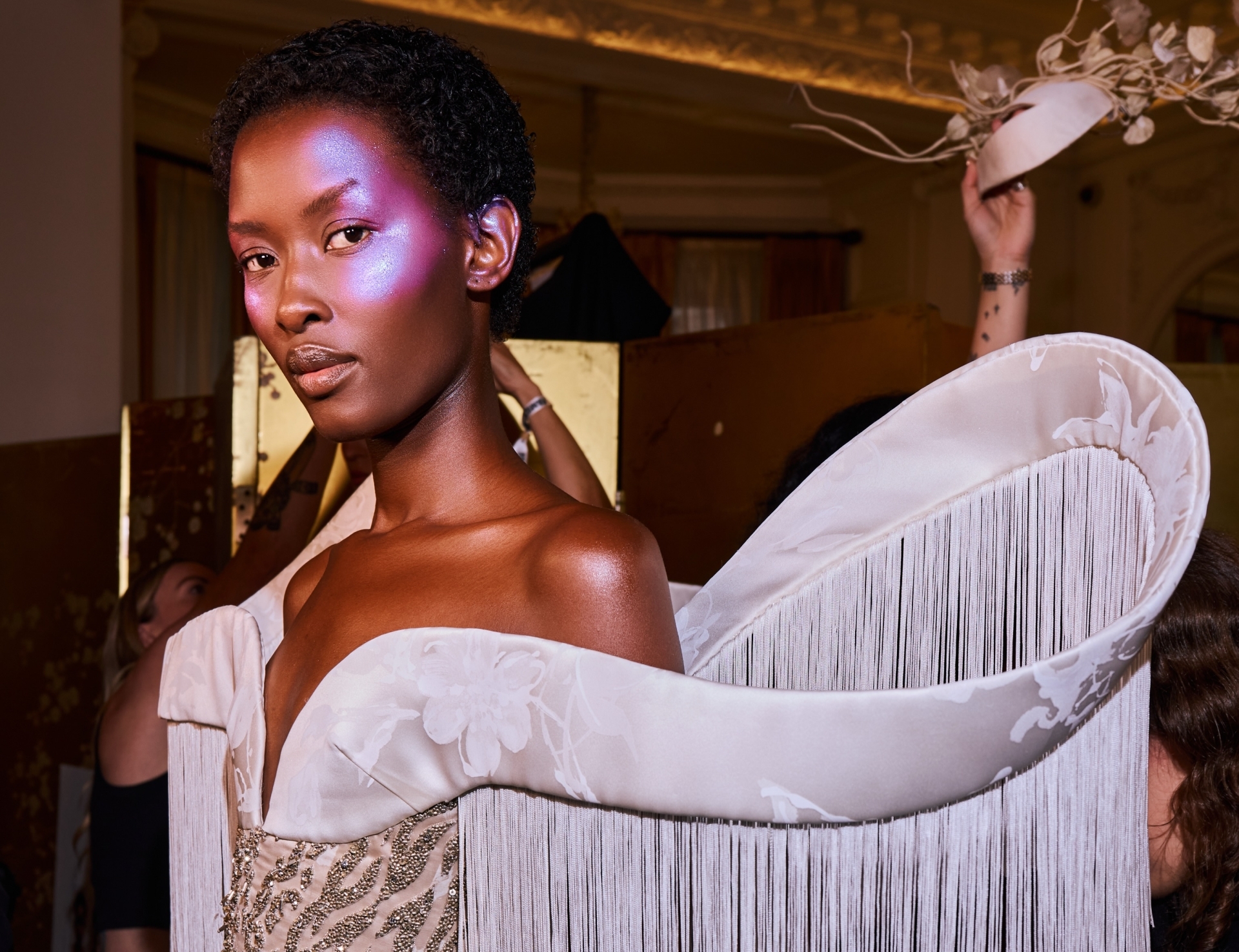
London Fashion Week has always had a particular relationship with beauty. It rarely asks for perfection, and Spring/Summer 2027 was no different. Across the city’s runways, makeup and hair moved between restraint and excess, bare lashes against saturated lips, skin turned almost metallic, sculptural updos and wigs that transformed the wearer in an instant. Beauty was not treated as a finishing touch to the clothes. It became part of the visual language of the collections.
At Burberry and Simone Rocha, the face was stripped back enough for the mouth to take over. There were no elaborate lashes competing for attention, just skin, natural-looking eyes and lipstick with enough presence to carry the entire look. At Simone Rocha, makeup artist Thomas De Kluyver used Byredo’s Matte Liquid Lipstick in “Marriage,” pairing the red lip with velvet-toned nails. Ahluwalia offered a softer alternative, with makeup artist Rebecca Davenport turning to Ilia Beauty for a honey-brown lip that felt warmer and more understated. The effect was familiar but not nostalgic, a reminder that sometimes the most powerful beauty statement is simply choosing one feature and letting it dominate.
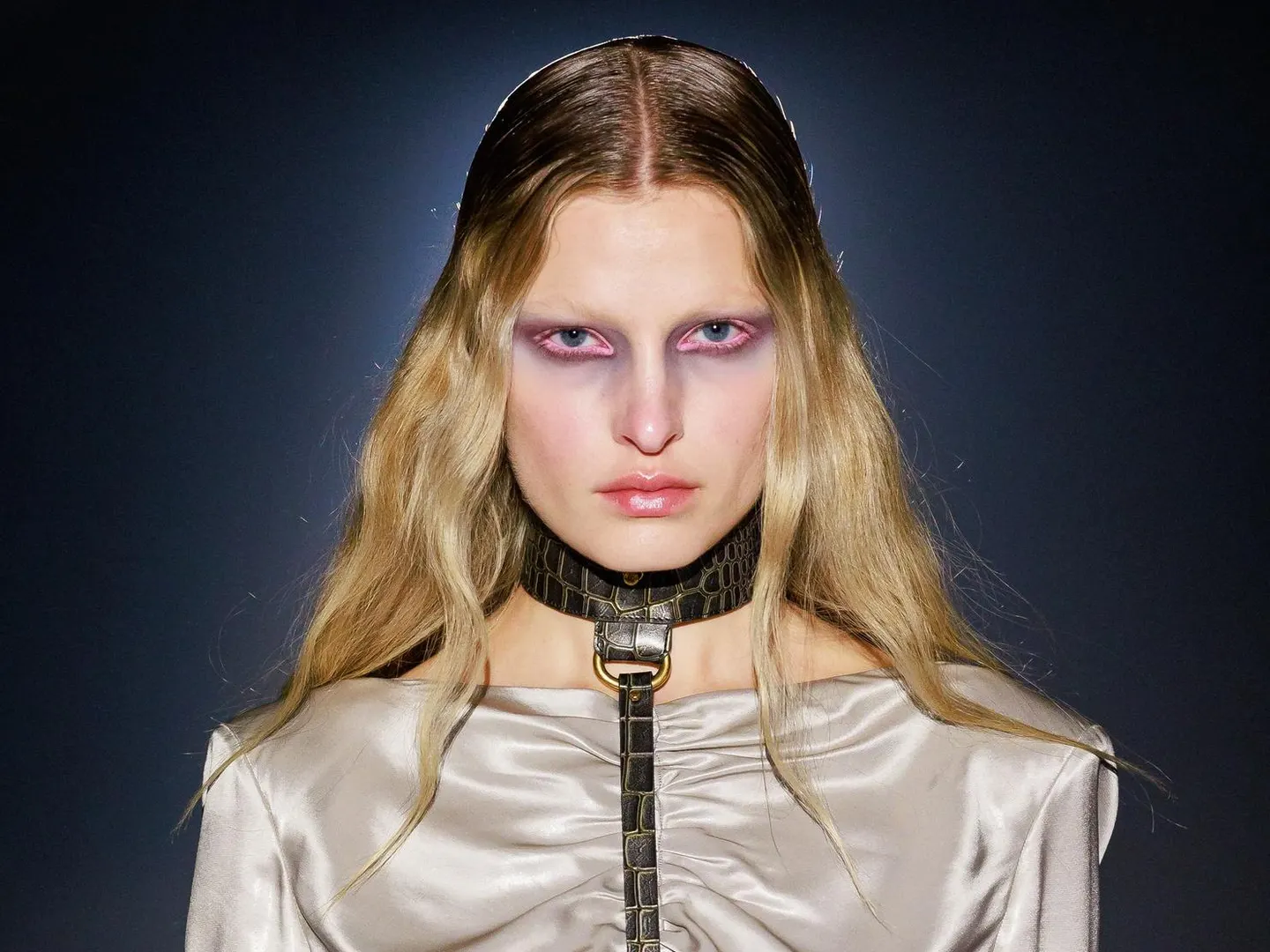
Then London turned the lights up. At Harris Reed, Sofia Schwarzkopf-Tilbury mixed Charlotte Tilbury’s Unreal Highlighter Stick with blush, carrying the luminosity from the cheek towards the brow bone. Di Petsa took the idea into more surreal territory, with makeup artist Emma Regan giving models an almost entirely pearlescent complexion. At Selasi, glass skin created a similarly reflective effect without relying on traditional blush and highlight. The common denominator was not necessarily “glow” but light itself. Skin became something to manipulate, catch and exaggerate.
Hair was arguably where the season became most experimental. Richard Quinn’s ballroom buns came with gelled micro-bags, transforming the conventional elegance of an updo into something stranger and more architectural. Simone Rocha worked locs into an intricate side coif, while Alexander McQueen covered hair in silver, producing a finish that looked almost industrial. These were styles built to be seen from across a room. Their appeal came from construction, precision and the refusal to let hair simply sit quietly around the face.
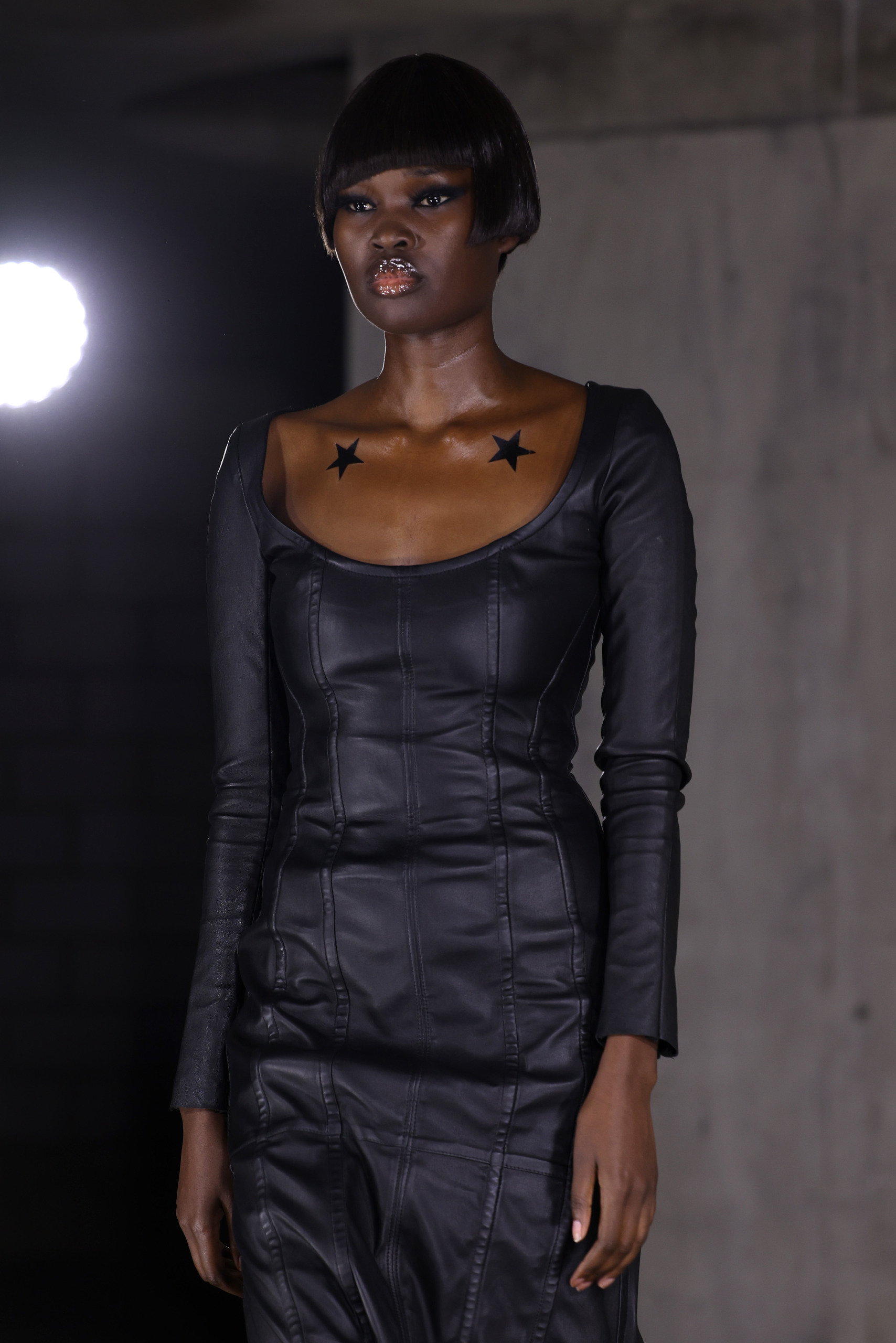
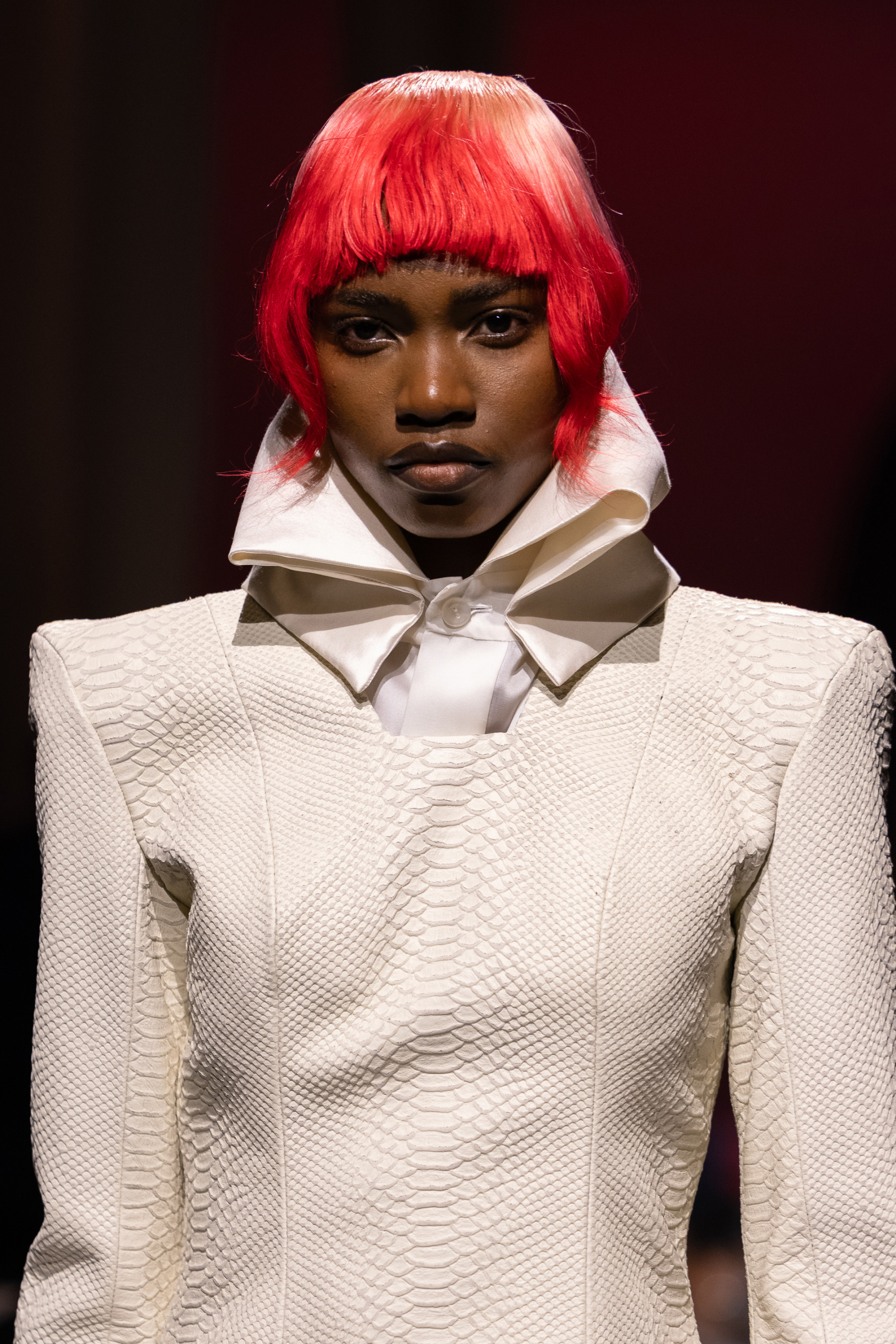
That theatricality extended to the season’s obsession with wigs. Francesca Lake played with blunt yellow bobs and orange pin curls through headpieces created by hairstylist Issac Poleon, while Ashley Williams put models in matching dirty-blonde bobs. Natasha Zinko offered a more wearable interpretation with an off-kilter black micro-bob styled by Michaël Delmas. The bob itself is hardly a new fashion idea, but the runway treated it less as a haircut than a temporary identity.
That distinction is particularly significant when looking at Black beauty. Hair is rarely an uncomplicated accessory. The decision to cut, colour, straighten, braid, loc or protect it can involve time, maintenance and personal identity in ways fashion often overlooks. The wig offers another possibility, transformation without permanence. You can step into a sharp micro-bob, a vivid colour or an exaggerated silhouette without making a permanent decision about your own hair. On the runway, that flexibility became part of the fantasy.
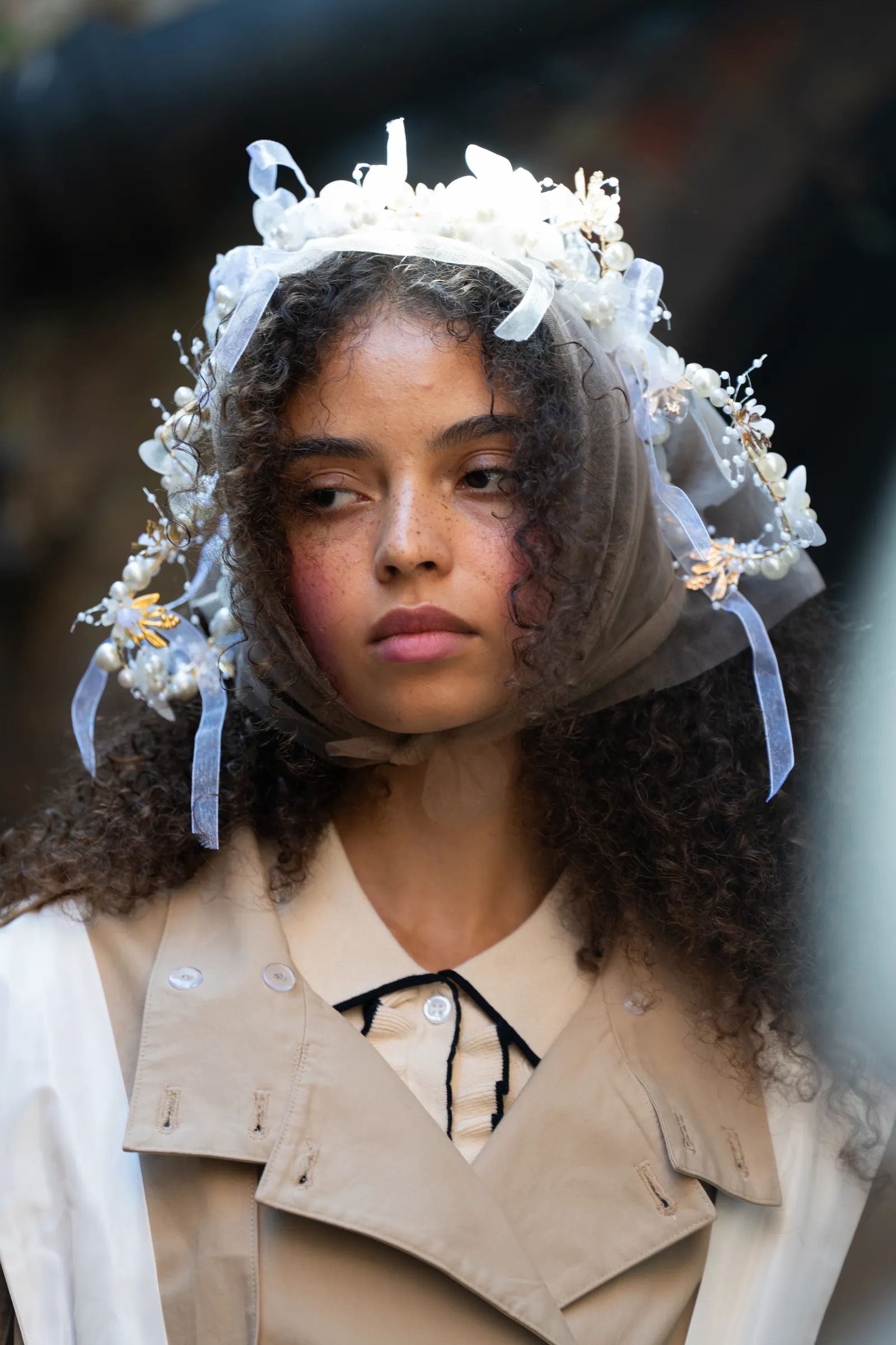
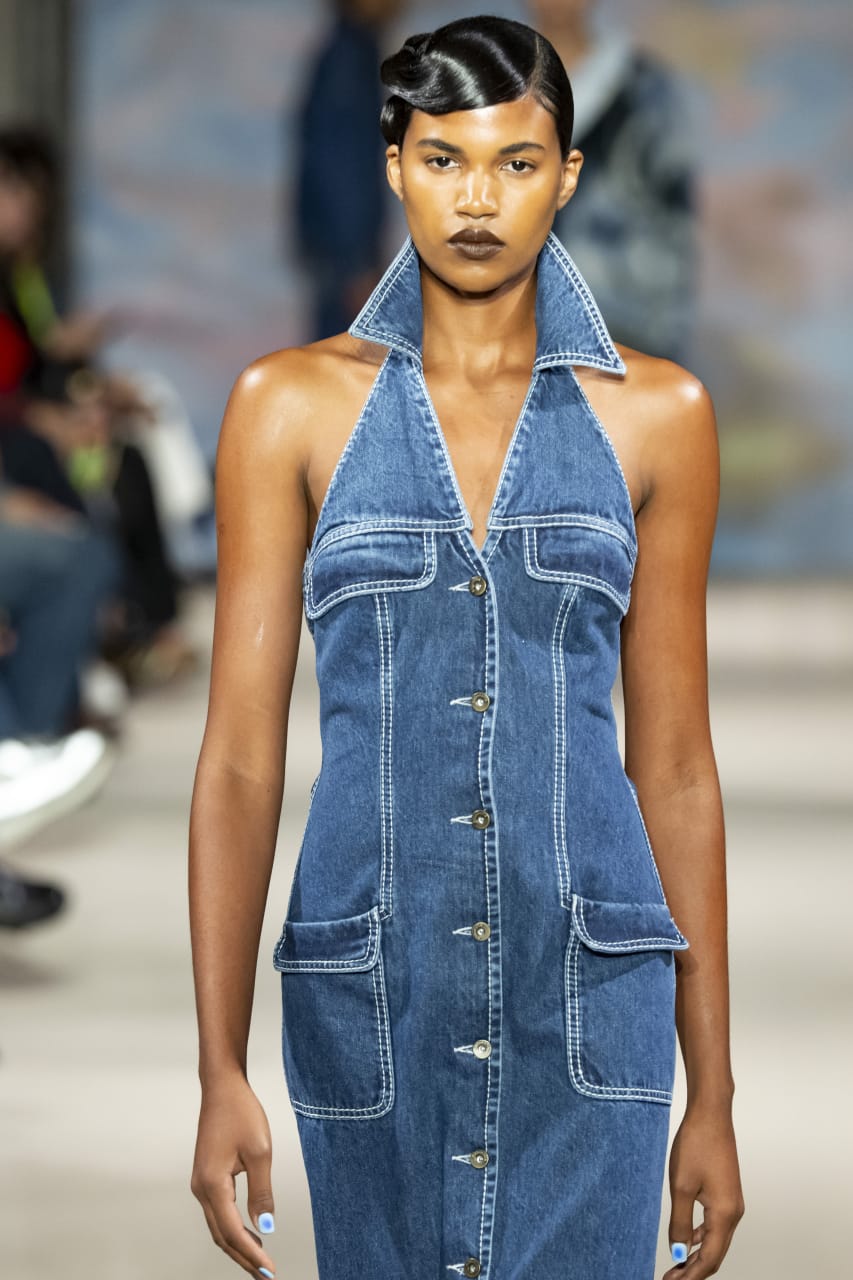
What London ultimately offered was not another definitive beauty trend but a collection of competing attitudes. There was restraint and excess, natural texture and artificial transformation, the intimacy of a brown lip and the spectacle of pearlescent skin. The beauty looks did not appear designed to make everyone look the same. They seemed designed to give the wearer another character to inhabit.
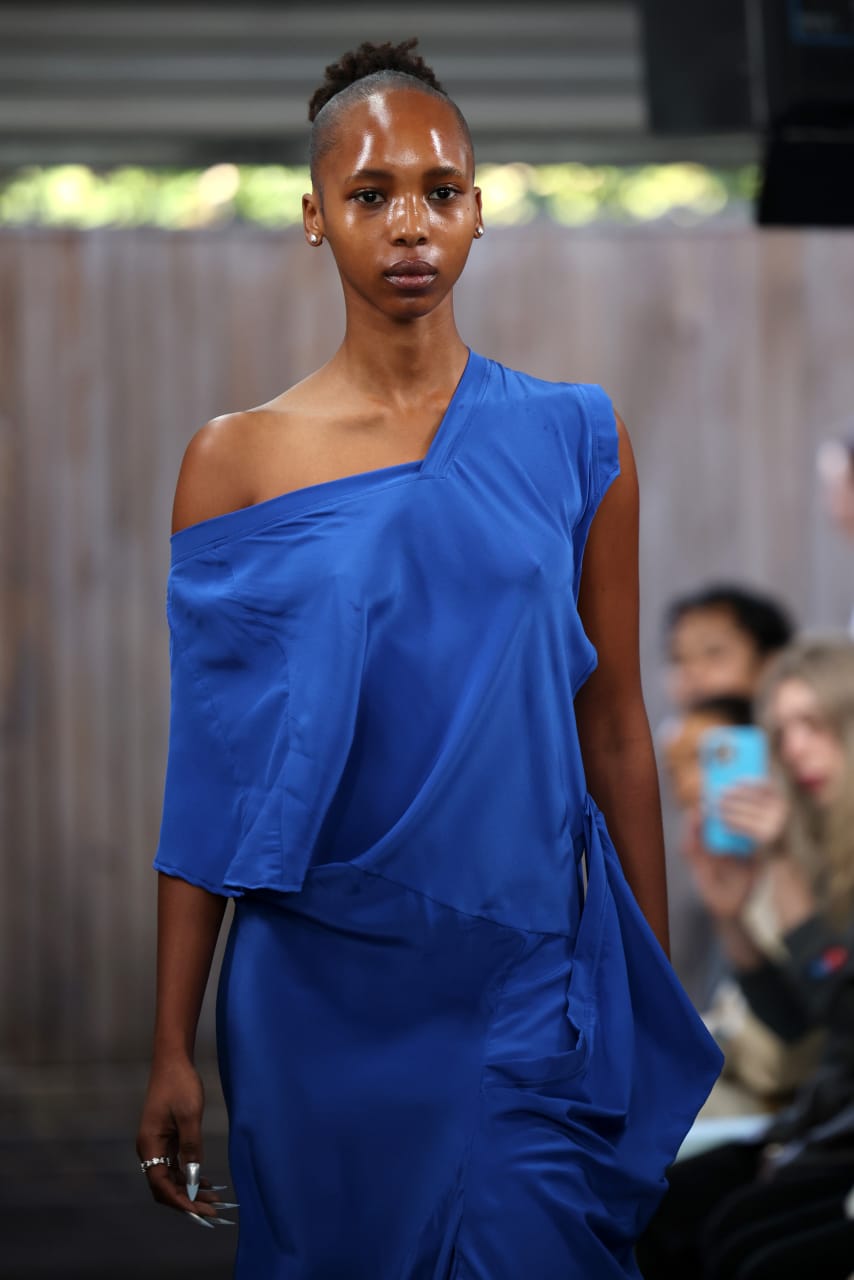
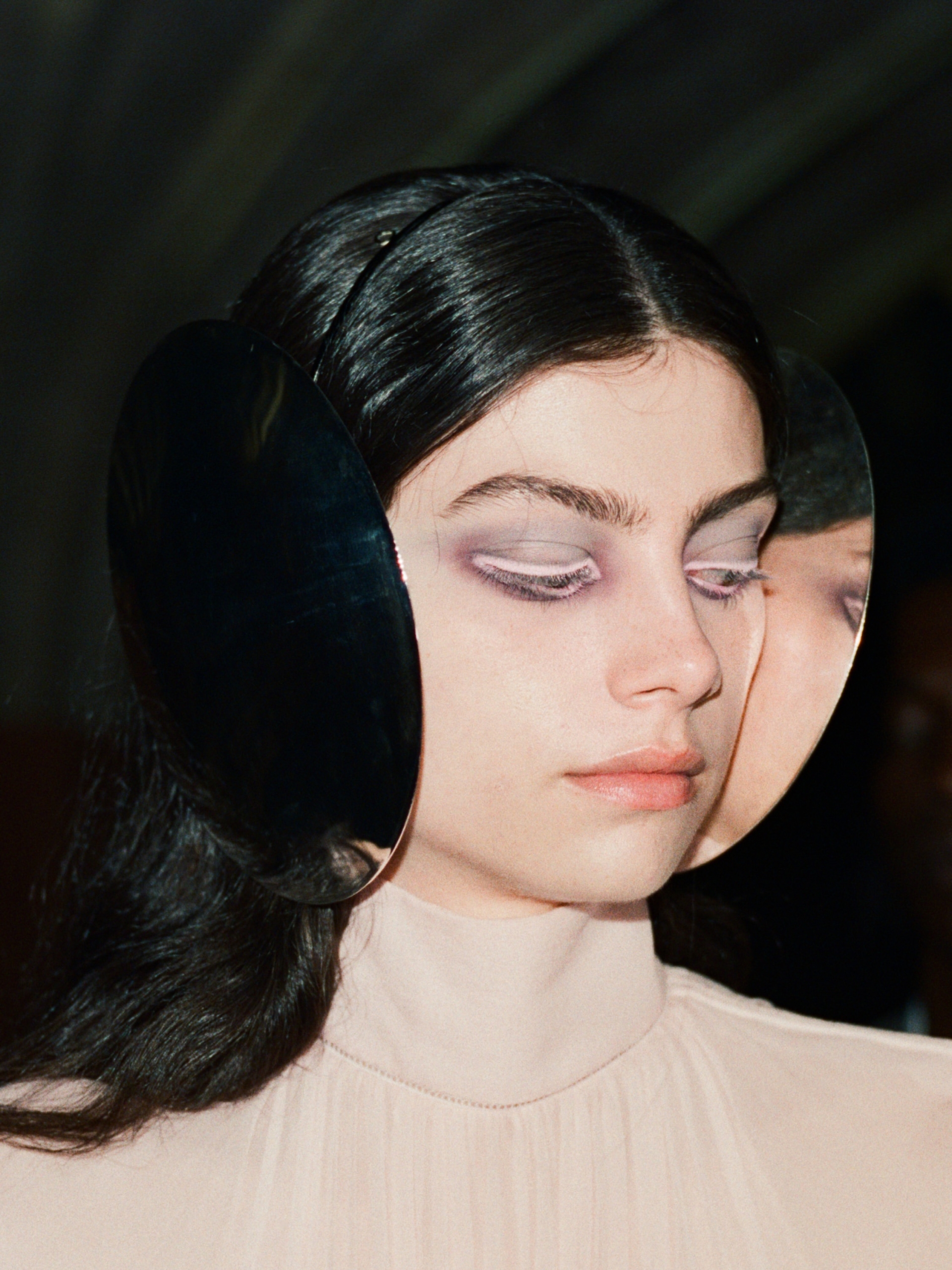
That is perhaps the most interesting thing about SS27. Beauty is moving further away from the idea that there is one correct version of polish. London made room for the deliberately strange, the hyper-reflective, the sculptural and the temporary. A lipstick could be enough. A wig could change everything. Hair could become architecture. Skin could become a surface for light. And for a season supposedly looking toward summer, London seemed less interested in making beauty effortless than making it impossible to overlook.