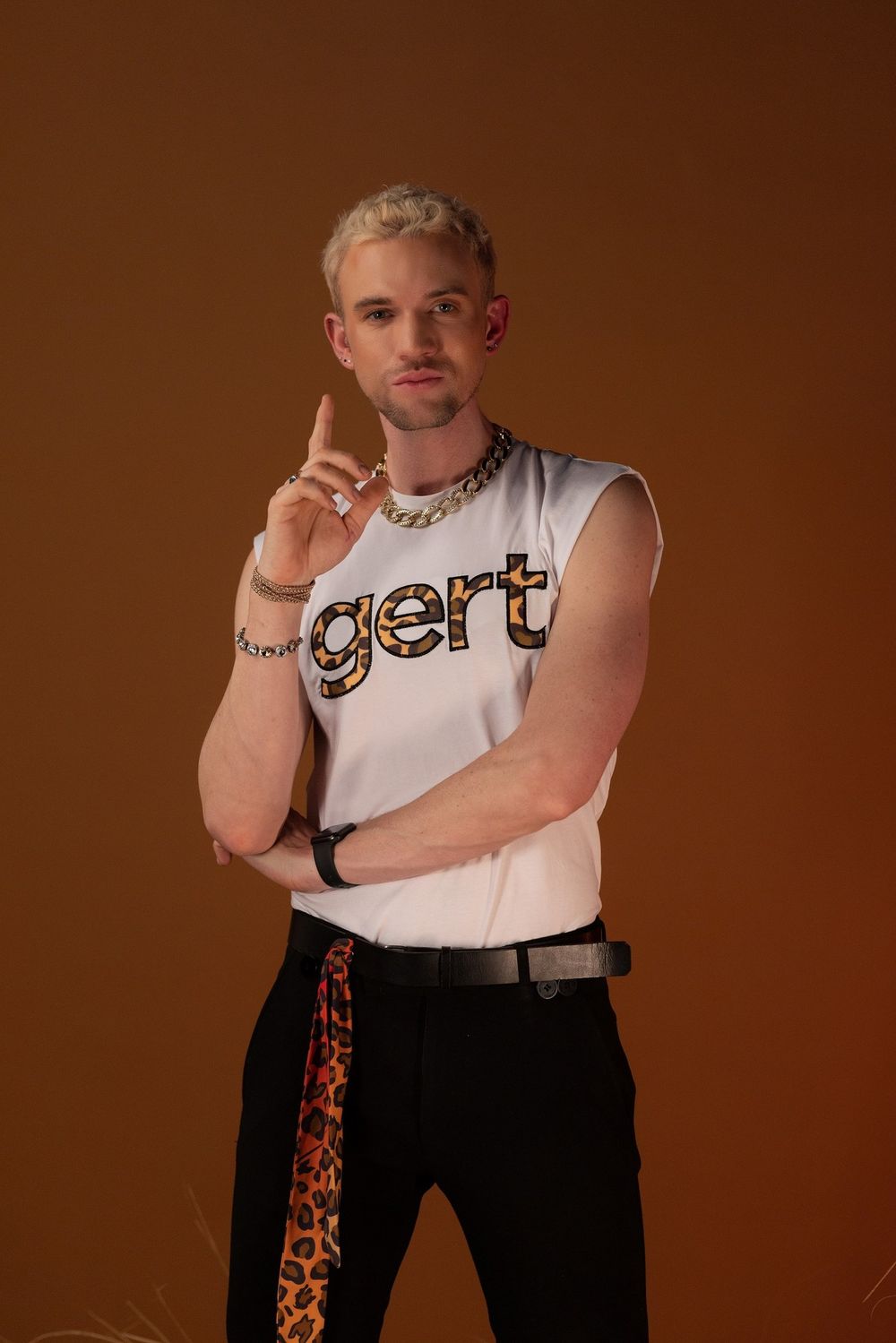
There is something rather fitting about Gert-Johan Coetzee finding his way into fragrance at a time when so much of his life has been about learning to slow down.
For almost two decades, the designer has made a name for himself through the drama of couture, sculptural silhouettes and the kind of fashion made to be seen. But after undergoing a 12-hour operation last December to remove a rare benign brain tumour, Coetzee has spent much of the year away from the spotlight, recovering and reflecting on a life that, until recently, seemed to move at a relentless pace.
Now, there is a softness to the way he speaks about creativity. He is less interested in simply what comes next and more drawn to what lingers. It is a sentiment that finds a natural home in fragrance, an art form that is invisible yet deeply intimate, unfolding slowly on the skin and leaving behind something far more enduring than a fleeting first impression.
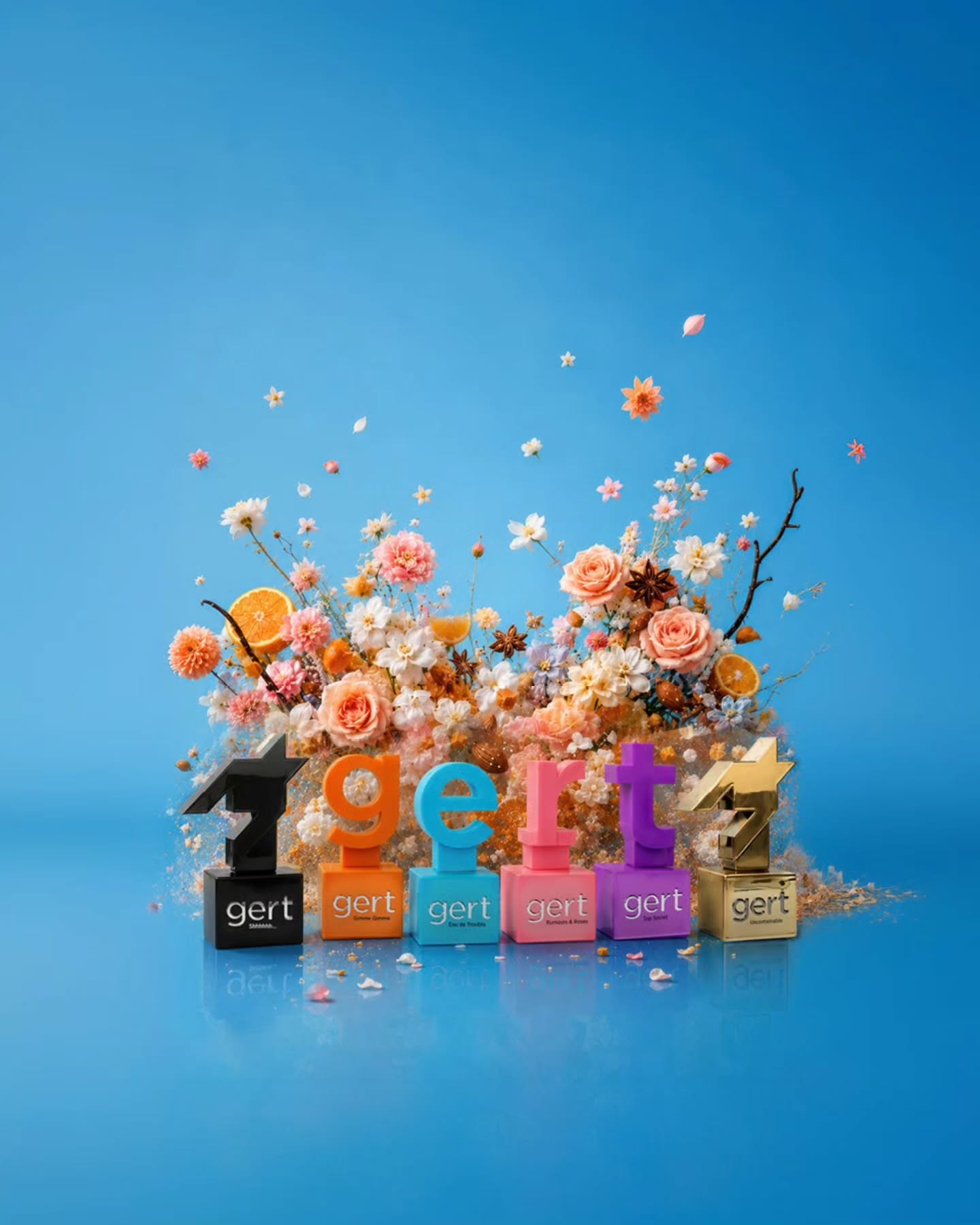
Born from his time in Grasse, France, the historic heart of fine perfumery, and developed alongside master perfumers, Coetzee’s debut collection of six eau de parfums brings together very different expressions of the Gert-Johan Coetzee woman. There is the sugared playfulness of Gimme Gimme, the smoky romance of Rumours & Roses, the quiet power of Top Secret and the fearless spirit of Uncontainable. Together, they form a fragrance wardrobe for the many selves we carry within us.
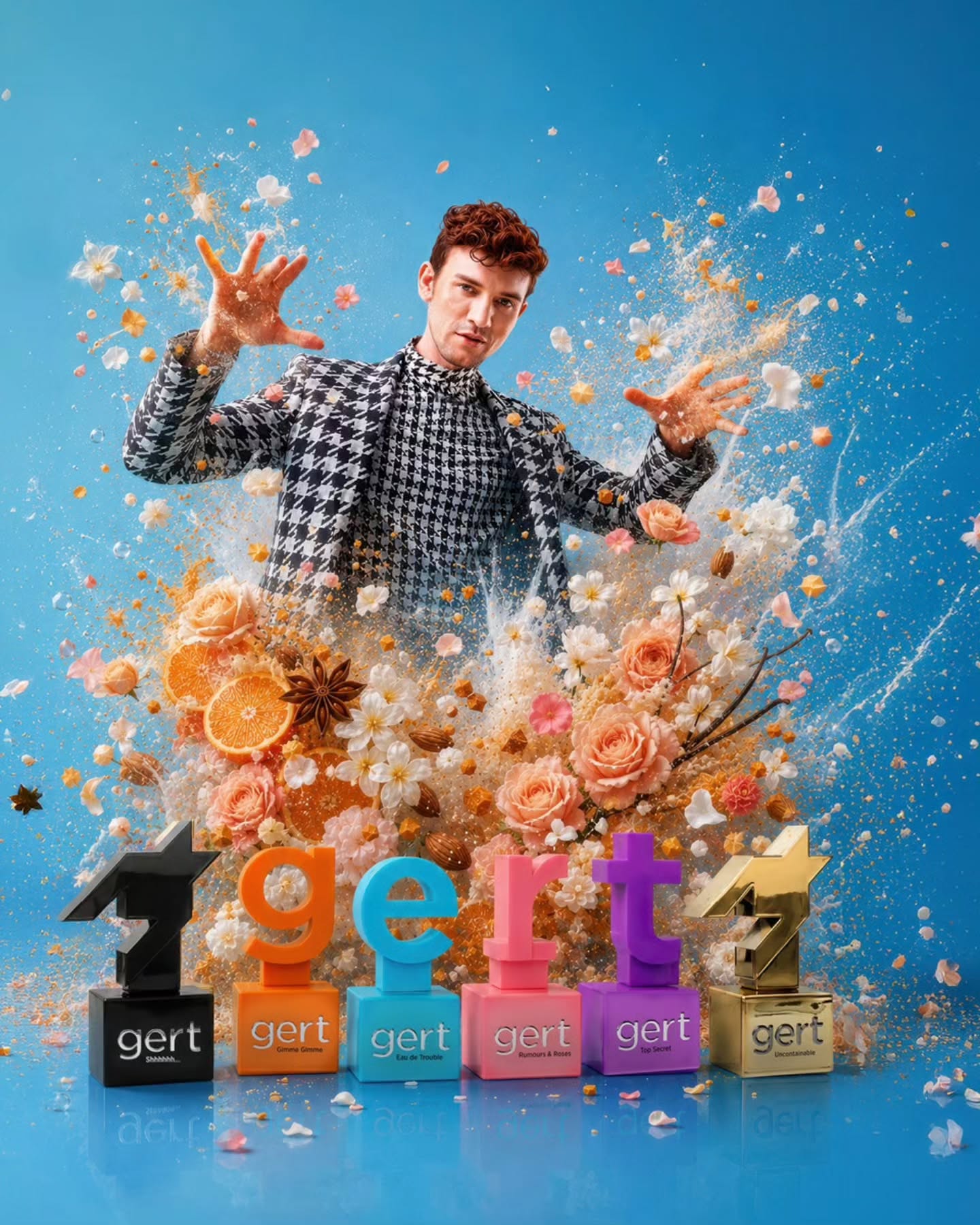
It is, in many ways, fashion translated into scent. Fabric gives way to fragrance, silhouettes become moods, and the runway becomes the skin. As he recovers, reflects and looks towards what comes next, fragrance offers him a way to tell stories that do not need to be seen to be felt.
We chat with Coetzee about the creative freedom he has found in fragrance, the lessons that came with slowing down and what it means to begin again with a different perspective.
You’ve spent almost two decades expressing yourself through fashion, but fragrance asks you to create in a much more invisible, intimate medium. What did you discover about your creativity when you began working with scent?
Fashion taught me to think visually: silhouette, proportion, movement and colour. Fragrance forced me to let go of all of that and work almost entirely through emotion and instinct.
What surprised me most was discovering how similar the creative process actually is. When I design a dress, I am never simply thinking about fabric; I am thinking about the woman wearing it, where she is going, how she wants to feel and how she wants to be remembered. Fragrance begins in exactly the same place.
The difference is that scent leaves more space for the person wearing it. A garment is immediately visible, but fragrance reveals itself slowly. It changes on the skin, becomes associated with a particular person and eventually with a memory. That taught me something important about my own creativity: I don’t necessarily need to create something people can see in order to tell a story. Sometimes the most powerful creative expression is the thing you cannot see at all.
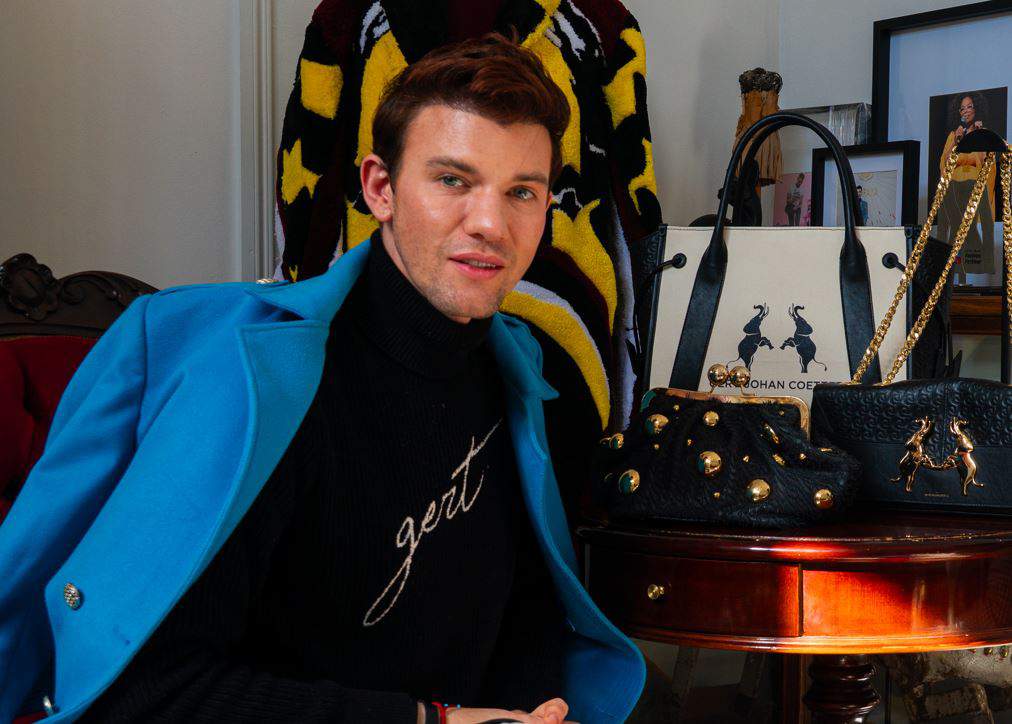
Your journey to Grasse became an important part of developing this collection. What was it about being immersed in the history and craftsmanship of French perfumery that changed the way you thought about fragrance?
Going to Grasse made me understand that perfumery is not simply about creating something that smells beautiful. It is a discipline. There is an extraordinary amount of knowledge behind a fragrance: the provenance and quality of ingredients, extraction, balance, concentration, evaporation and the way individual notes behave over time. I realised very quickly how much I still had to learn, and I loved that.
Being surrounded by generations of perfumery knowledge also reminded me of couture. In both worlds, true luxury is often found in the details that the customer may never consciously notice. It is the hours of refinement, the decisions to remove rather than add, and the insistence on getting something right even when most people would never know the difference.
Working closely with perfumers in that environment shifted my thinking from simply asking, “What smells good?” to asking, “What does this fragrance say? How does it evolve? What emotion remains several hours later?” That was the beginning of treating fragrance as seriously as I have always treated fashion.
There are six fragrances in the collection, each with its own personality, from the playful Gimme Gimme to the more mysterious Top Secret and the unapologetic Uncontainable. How did you translate something as intangible as a mood, memory or emotion into an actual scent?
I approached each fragrance almost as though I were creating a character. Before thinking about individual notes, I thought about personality. Is this person seductive or mischievous? Are they entering a room quietly or demanding attention? Is there vulnerability beneath the confidence? What time of day is it? What are they wearing? Where are they going?
Once that emotional world existed, the ingredients became a vocabulary. The perfumers and I could then begin translating those ideas into structure: perhaps something initially bright that becomes darker on the skin, or something floral that needs an unexpected edge so that it never becomes too polite.
That is also why I wanted six fragrances rather than one signature scent. People are too complex for that. We are not the same person every morning, every evening or at every stage of our lives. Gimme Gimme, Eau de Trouble, Rumours & Roses, Top Secret, Shhhh… and Uncontainable each represent a different energy. The collection is less about telling somebody who they should be and more about giving them permission to decide who they want to be that day.
You’ve described this period of your life as one of reflection and learning to slow down. Has stepping away from the pace and spectacle of fashion changed what you want the Gert-Johan Coetzee brand to represent in this next chapter?
Absolutely. For many years my world was built around momentum: the next collection, the next show, the next red carpet, the next deadline. Fashion can convince you that movement itself is a measure of progress. Slowing down made me question that.
I am much more interested now in longevity than noise. I want to create things that have meaning beyond a season and that become part of people’s lives rather than simply part of a moment. That doesn’t mean the theatricality or excitement of the Gert-Johan Coetzee world disappears. That is part of our DNA. But I think there is now more intention behind it. I am asking more questions about why something deserves to exist.
Fragrance represents that evolution beautifully because it is not tied to a runway season. Someone can discover one of these fragrances years from now and form an entirely new relationship with it. For me, this next chapter is about building a creative house rather than simply a fashion label: a world with fashion at its foundation, but with the freedom to explore beauty, fragrance, objects and experiences that can live for much longer.
After such a profound personal experience and time away from the limelight, are you returning to your work with a different relationship to ambition, success and visibility?
Yes, because I think my definition of ambition has changed. I am still extremely ambitious. I still want to create extraordinary things, build the company and challenge myself creatively. But I don’t think ambition has to mean being everywhere, all of the time.
There was a stage in my career when visibility could easily feel synonymous with success. The more people saw you, the more successful you must be. I don’t believe that anymore. Success now feels much more connected to substance: building something enduring, creating opportunities for the people around me, continuing to learn and producing work that I can still be proud of when the excitement surrounding its launch has disappeared.
There is something incredibly liberating about no longer needing every moment to be witnessed. I still love the spectacle of fashion, but I want the work to earn the attention rather than constantly chasing attention for the work.

Fashion has always been about creating an image that people can see, while fragrance is about creating something people experience privately and remember long after you’ve left the room. What does that kind of intimacy mean to you as a designer?
I find it incredibly powerful. A dress can transform the way somebody is perceived, but fragrance can become intertwined with the way somebody is remembered.
We have all experienced that moment when a scent suddenly takes us back ten or twenty years. You remember a person, a room, a relationship or an entire period of your life before you have even consciously worked out why. Very few creative mediums have that ability.
As a designer, it also requires a certain humility because once somebody puts on the fragrance, it no longer belongs entirely to me. Their skin changes it. Their memories change it. Their life becomes attached to it. That intimacy is probably what I love most about fragrance. I may have created the beginning of the story, but the person wearing it ultimately decides what that story becomes.
The collection is being launched exclusively through Foschini, Beauty Box and Bash, making your work accessible to a much broader South African audience. Was accessibility part of your vision for this chapter of the brand, and what does it mean to see your creative world enter people’s everyday lives in this way?
Accessibility was very important to me. Couture is extraordinary, but by its nature it exists for relatively few people. One of the exciting things about fragrance is that it allows somebody who may never own a couture gown to still enter the Gert-Johan Coetzee world in a very personal way.
And I don’t believe accessibility has to mean compromising luxury. The challenge was to create something that felt considered, beautifully made and genuinely special, while allowing it to reach people across South Africa through Foschini, Beauty Box and Bash. That was important because this brand was built here. South African women have supported me, worn my clothes and followed this journey for years. I wanted this chapter to belong to them too.
There is something very meaningful about knowing that these bottles won’t only exist in campaign imagery or at an exclusive event. They will sit on dressing tables. Someone will spray one before their first date, their wedding, an important meeting or simply before going to work. That is when a brand moves beyond being something people observe and becomes something they actually live with.
If the Gert-Johan Coetzee woman has evolved with you through this new chapter, who is she now, and what do you hope she feels when she puts on one of these fragrances?
I think she has become even more comfortable with contradiction. She can be powerful without being hard. Sensual without performing sensuality for anybody else. She can love glamour and still understand restraint. She can enter a room and command it, but she doesn’t always need to be the loudest person in it.
More than anything, she knows that identity is not fixed. There are days when she is Gimme Gimme and wants to play. There are moments that belong to Top Secret. And sometimes she is completely Uncontainable.
What I hope she feels when she wears one of these fragrances is not that she is becoming a Gert-Johan Coetzee woman. I hope she feels more like herself. Because ultimately the most compelling thing a woman can wear has never been a dress, a handbag or a fragrance. It is a sense of self.