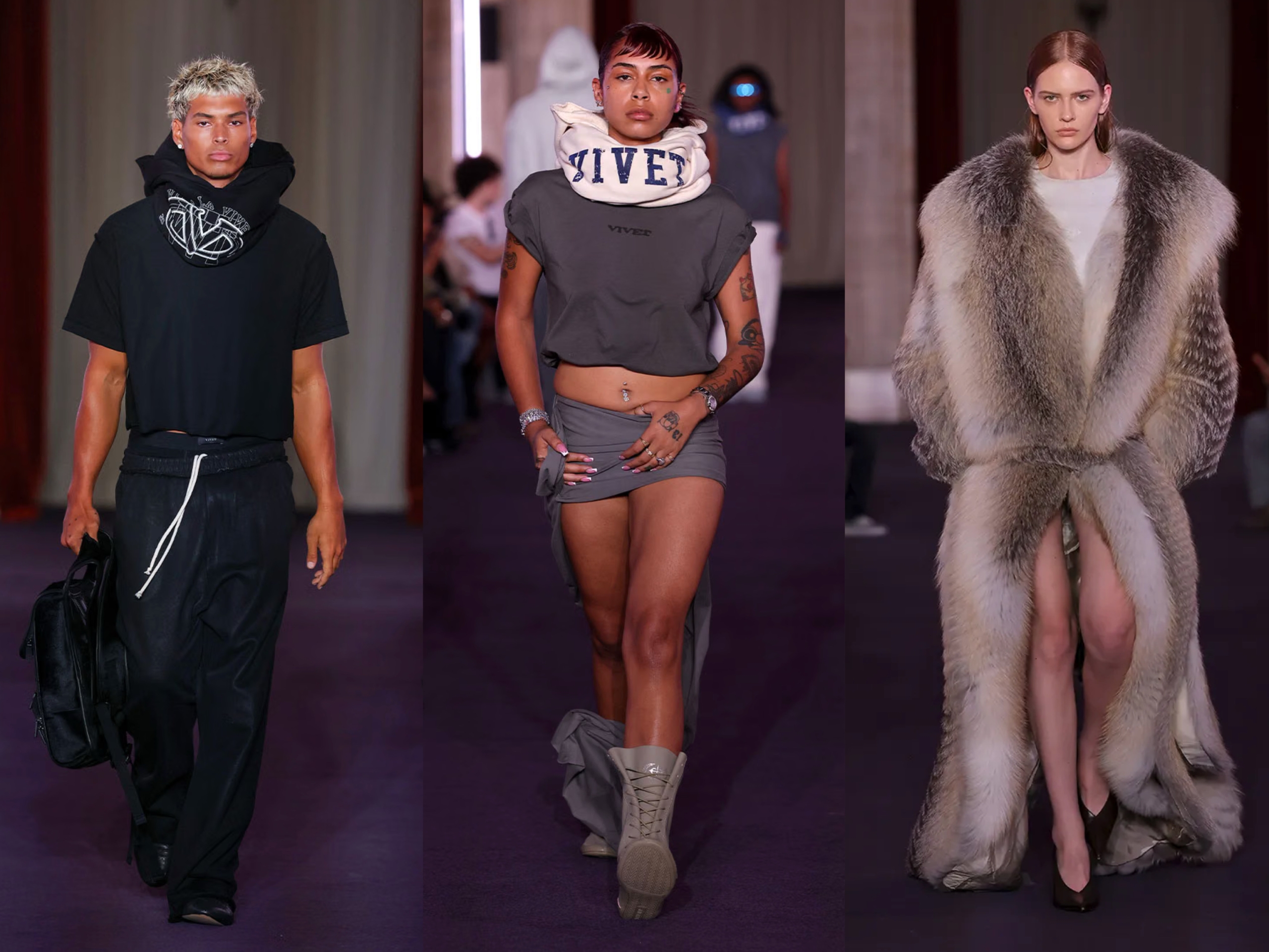
The NYFW is in full effect, and somewhere between the established houses and the season’s familiar names, Kai Cenat has made a particularly interesting entrance. Not as a streamer who happens to have a clothing line, but as a creative willing to step away from the thing that made him famous and see what else he could become. At Cipriani in Lower Manhattan, VIVET presented its Spring Summer 2027 debut as a three-act study of evolution, moving through menswear, womenswear, footwear and leather goods. The significance was less about a celebrity entering fashion than it was about watching a creator translate an identity built on the internet into something physical, tactile and deliberately made.
There is a certain risk in leaving your strongest territory. Cenat already understands attention better than most people in his generation. He has built an enormous audience through marathon broadcasts, personality and an instinct for turning moments into culture. Fashion offers none of those guarantees. A camera can forgive improvisation, a garment cannot. VIVET therefore feels interesting because Cenat did not simply attach his name to a product and call it a creative extension. He took time away from the familiar machinery of streaming and went to Italy, studying textiles, pattern-making and leather construction with industry specialists. The decision reads less like diversification and more like apprenticeship.
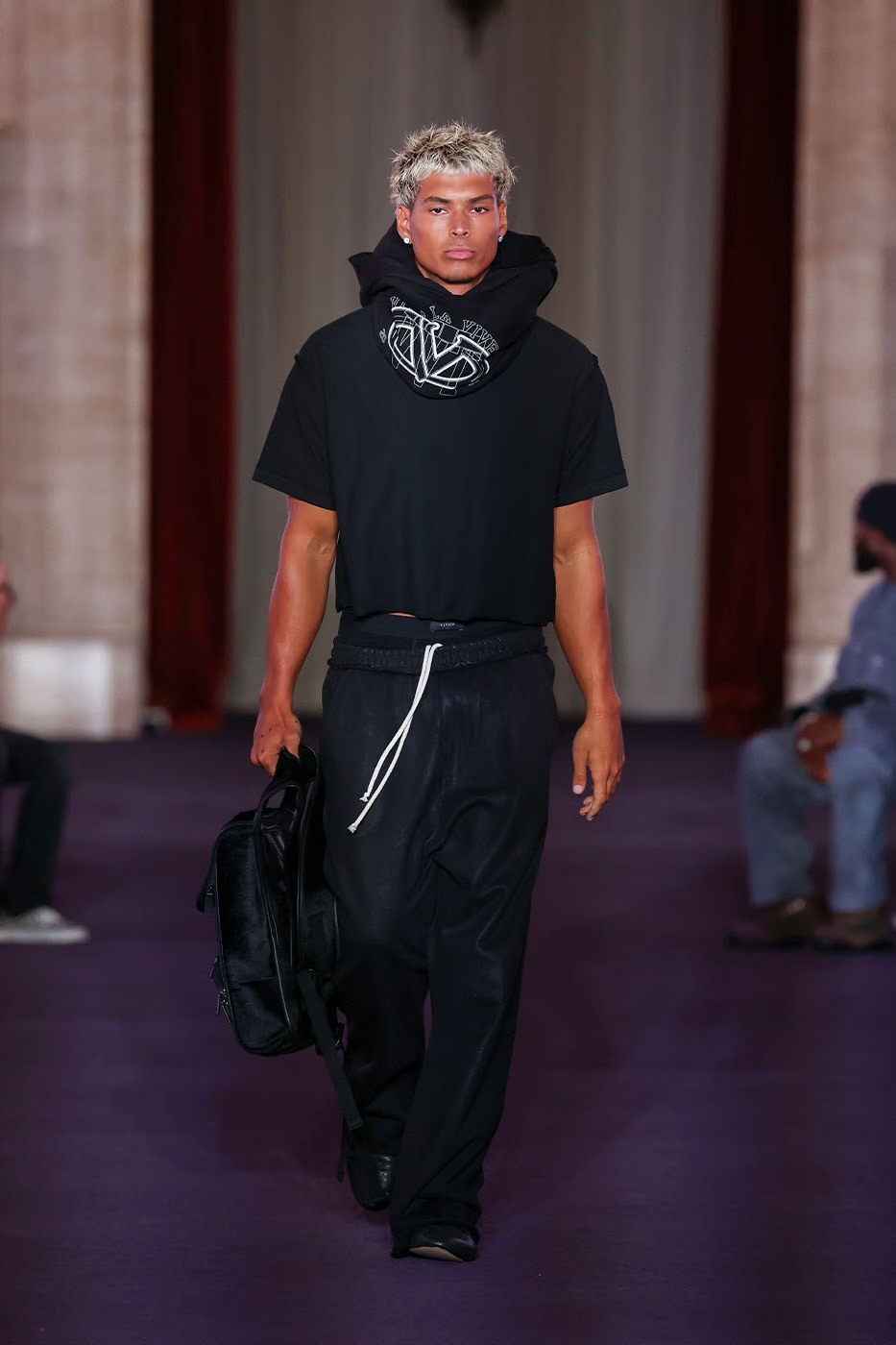
That distinction sits at the centre of VIVET. The collection is essentially a physical record of Cenat learning how to make something rather than simply how to present something. The first piece he sewed by hand, the Beginner Hoodie, opened the show in Origin, alongside deliberately unresolved hoodies, sweatpants and oversized jackets with crude proportions and misshapen forms. There is something unusually honest about beginning a fashion story with evidence of not knowing exactly what you are doing. Instead of hiding the beginner stage, VIVET puts it on the runway.
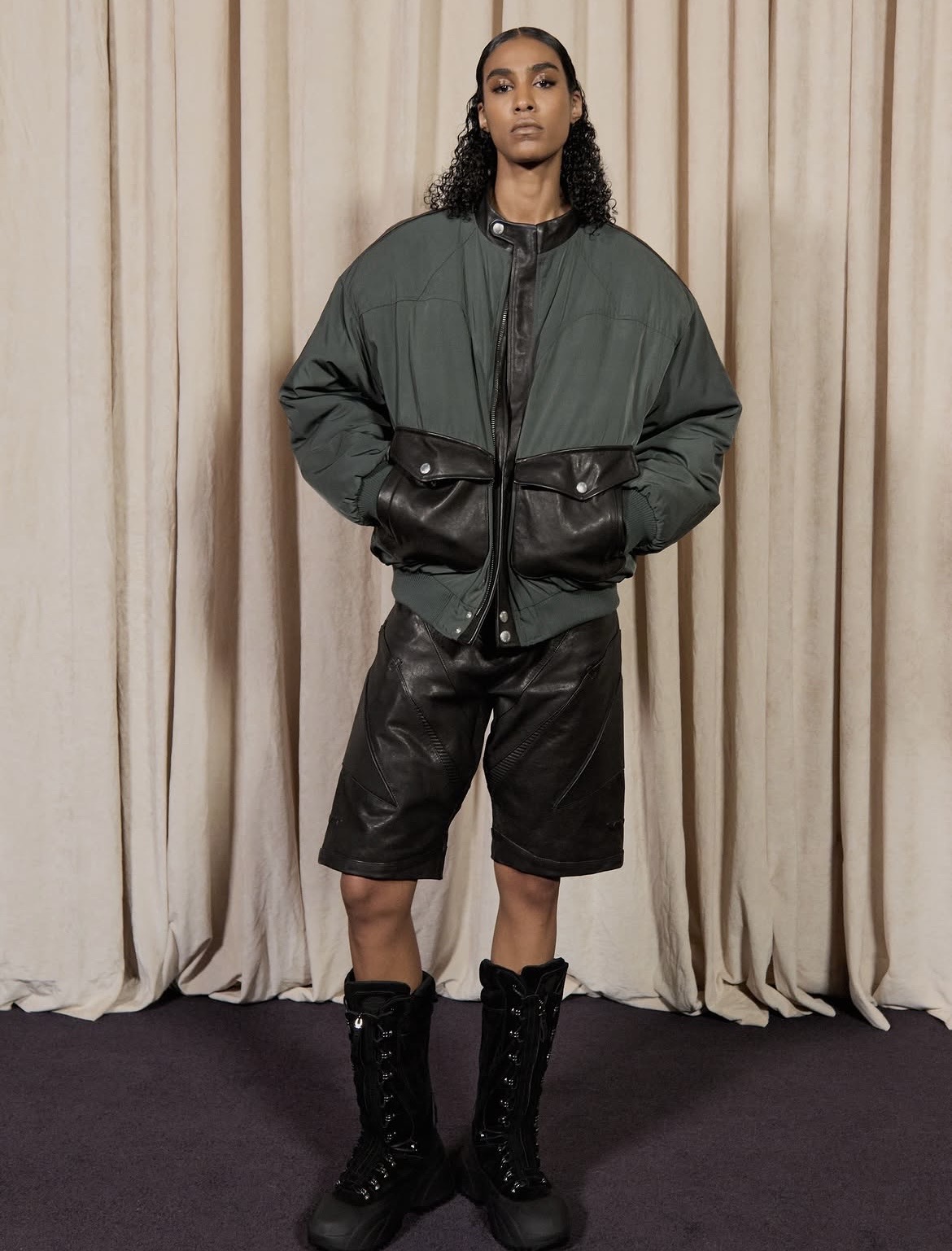
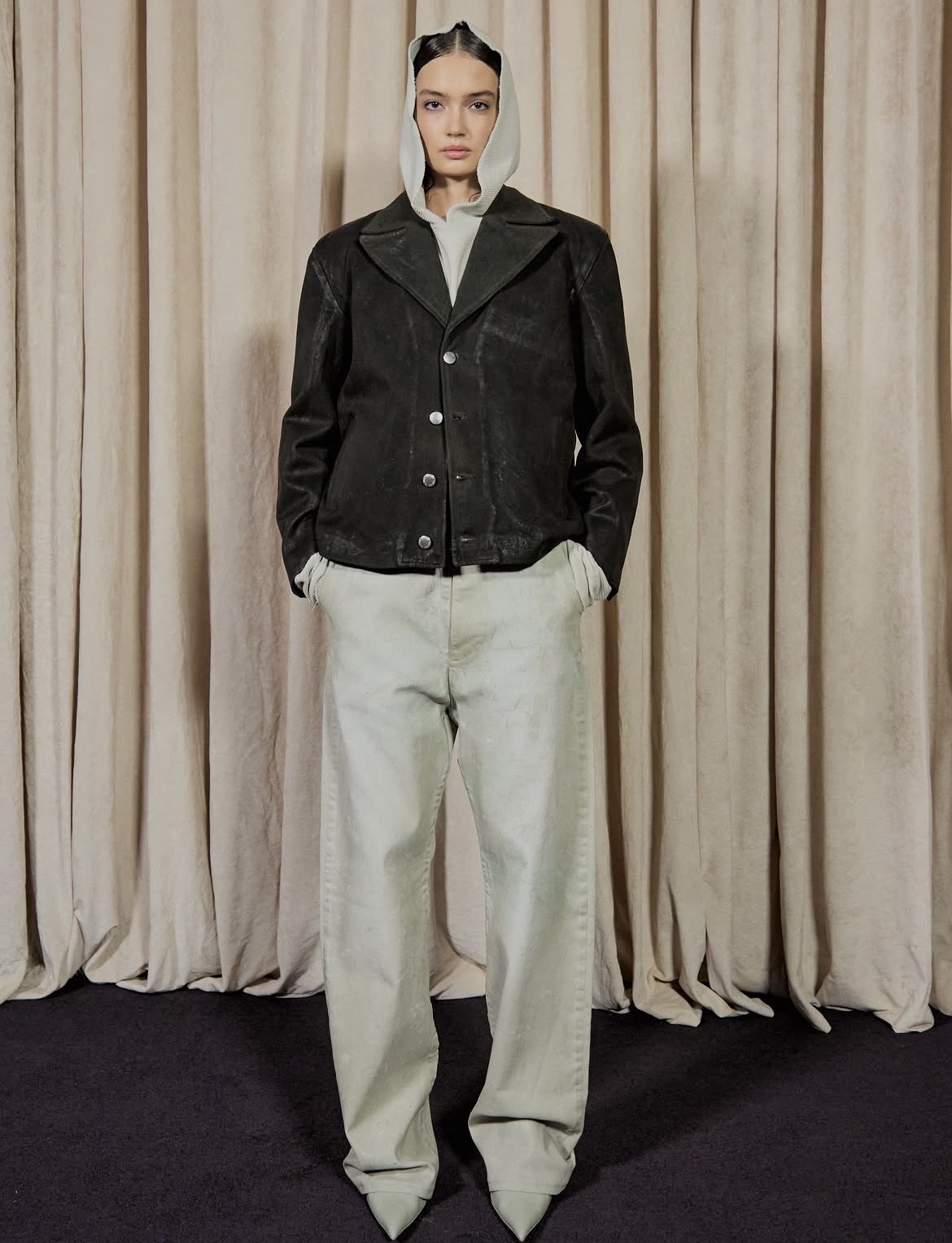
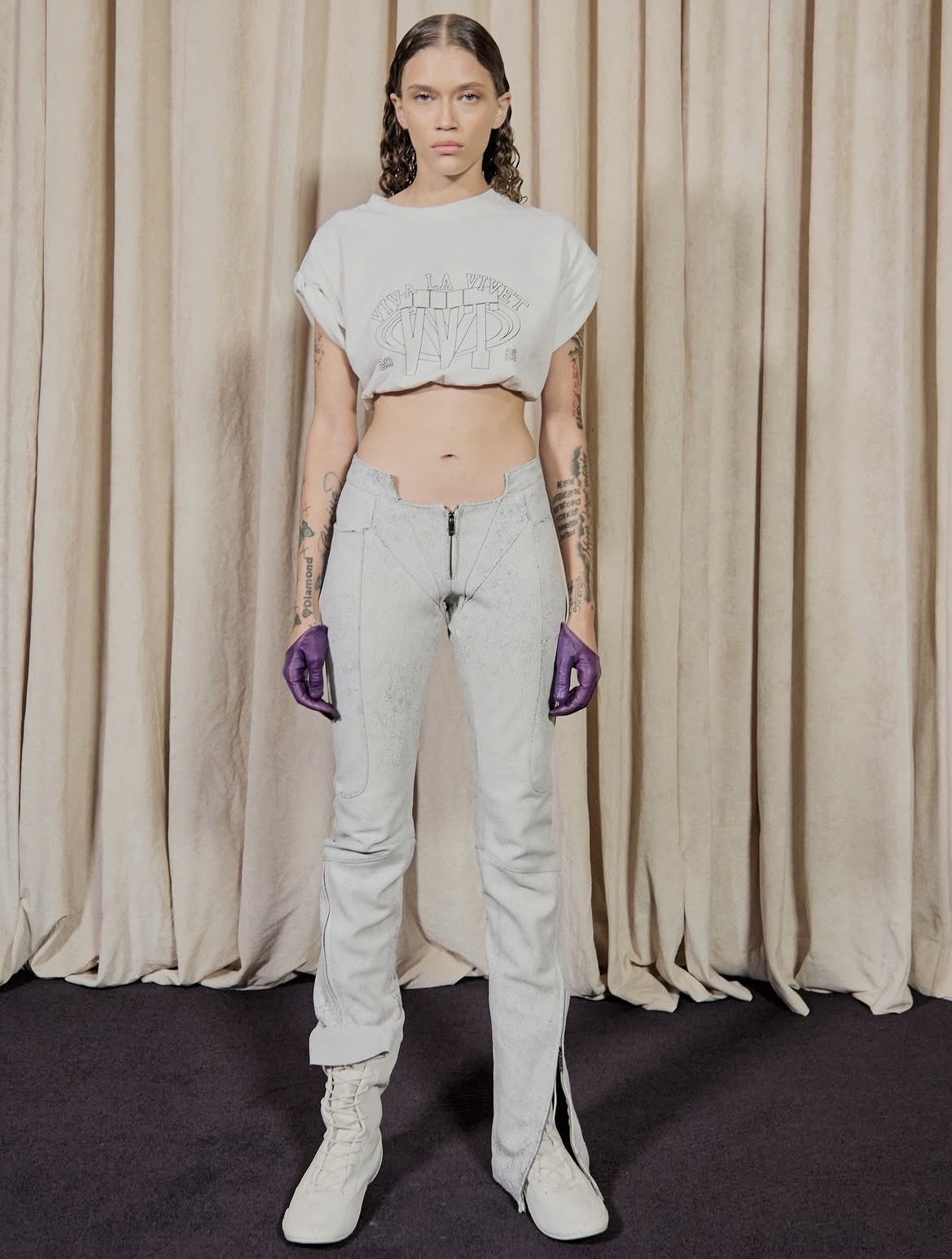
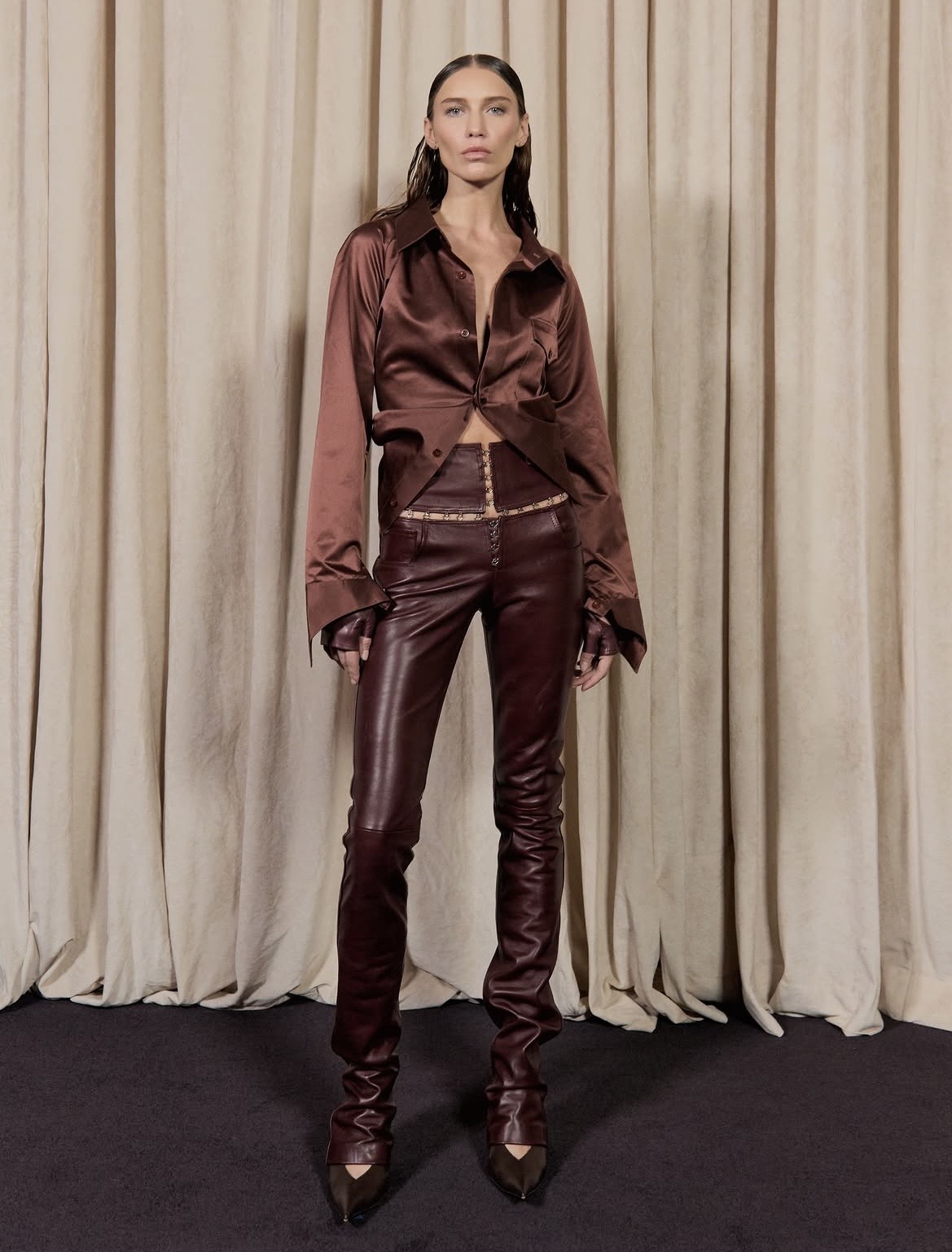
Then the clothes begin to change. Exploration pushes the collection into heavier territory, with leather overcoats, substantial outerwear, skinny denim and structured boots creating dense, almost confrontational silhouettes. Leather becomes increasingly important, while open jackets preserve some of the informality of Cenat’s original streetwear language. It is here that VIVET starts to feel less like merchandise and more like a developing design vocabulary. Cotton canvas and denim provide a workwear foundation, neoprene introduces structure, leather becomes both material and statement. The garments carry the evidence of their construction through gusseted elbows, diagonal pleats, visible seams, waxes and varnishes that alter their surfaces.
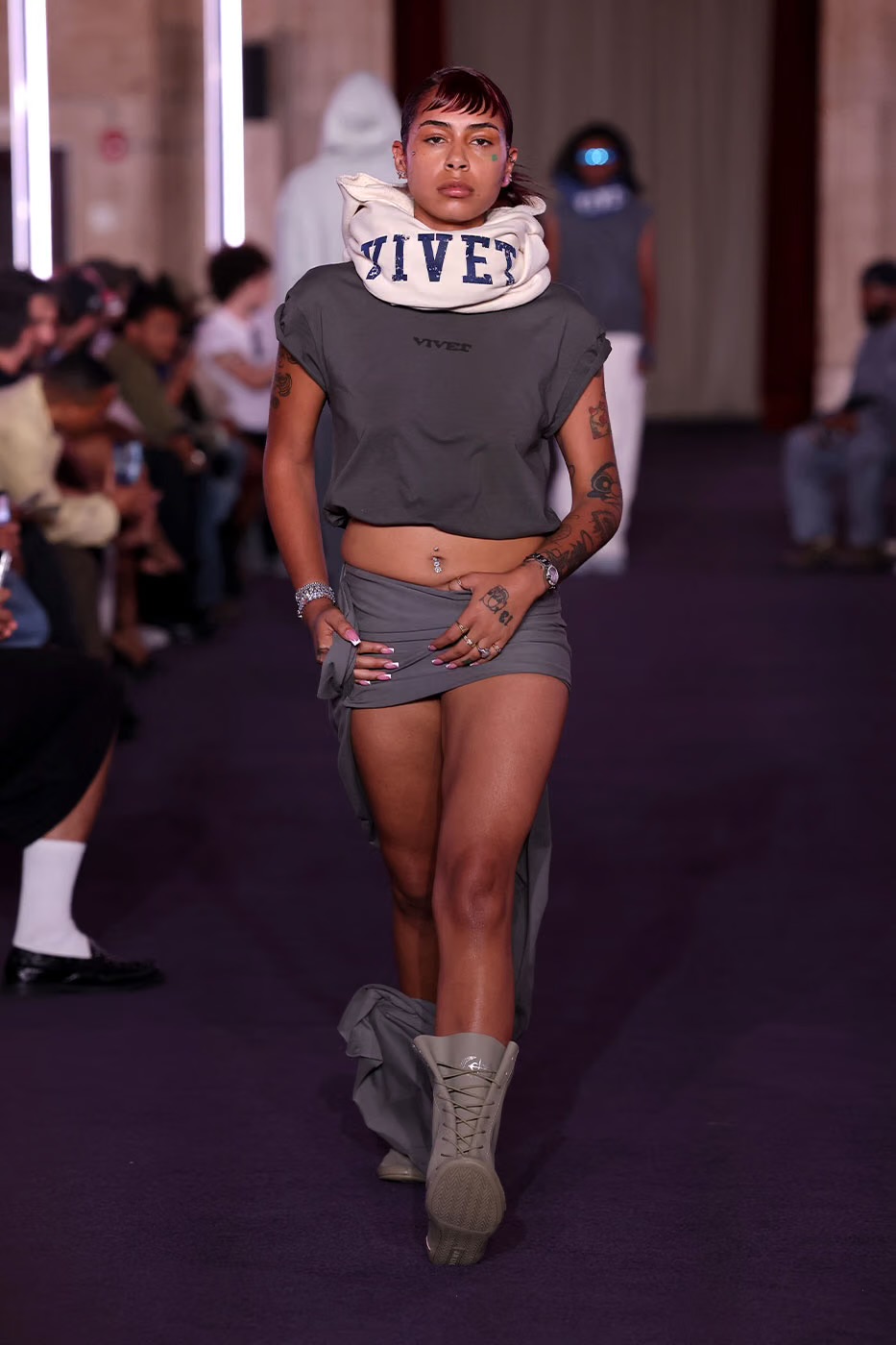
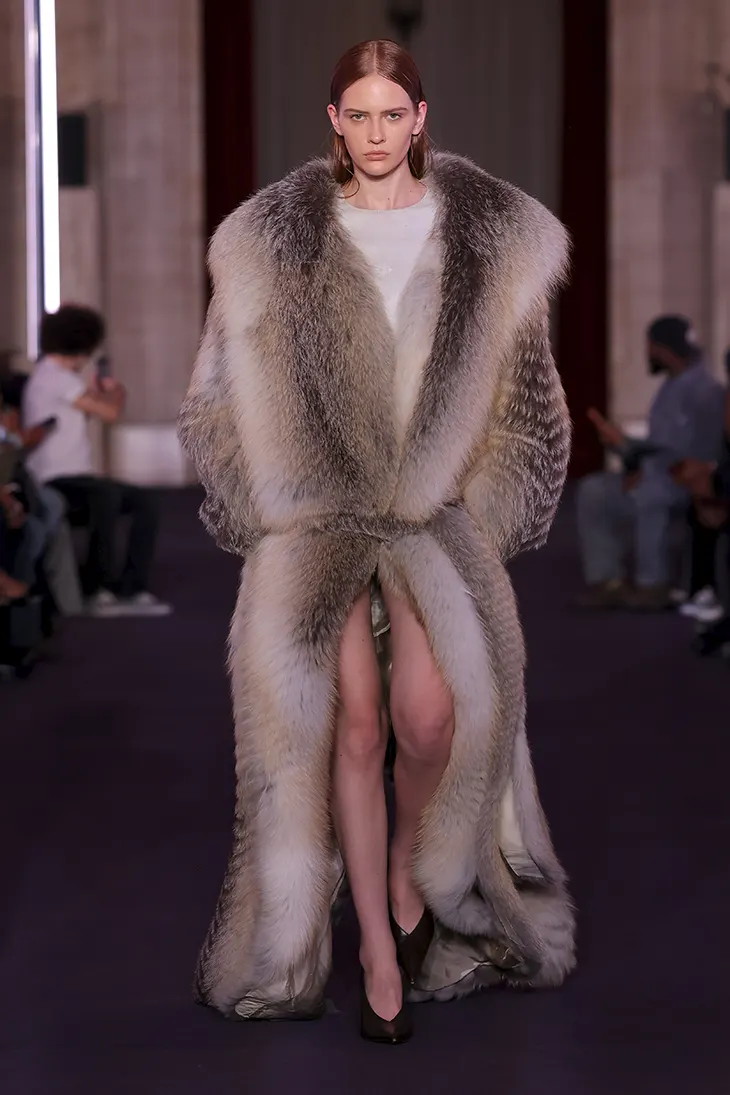
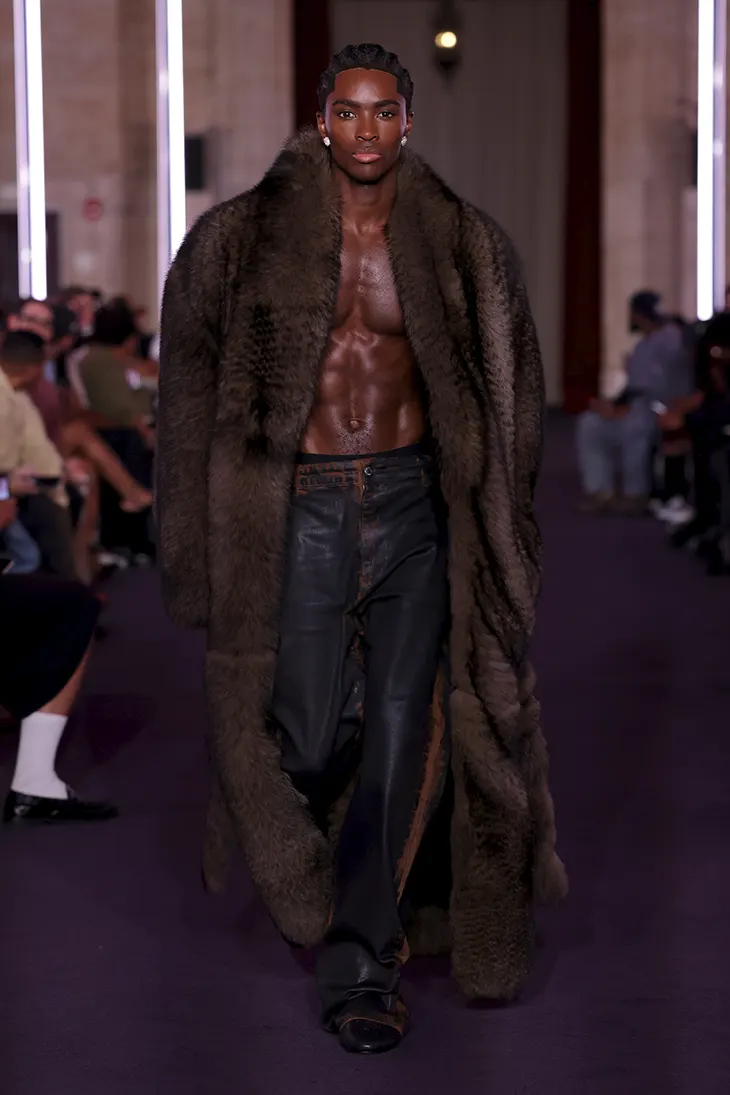
By the time Authorship arrives, the transformation is visible. Tailoring replaces some of the earlier looseness with sharper suits, structured leather coats and fluid silk. Jackets that had previously remained open are now closed. That small change becomes an important visual metaphor, the collection has moved from uncertainty toward control. VIVET is not pretending Cenat arrived in fashion fully formed. Instead, it makes the process part of the product. The three acts, Origin, Exploration and Authorship, turn a runway into something closer to a coming-of-age story, except the medium is clothing rather than content.
There are also details that make the project feel distinctly personal rather than assembled from the usual vocabulary of contemporary streetwear. The Cenova bag was among the earliest accessory ideas, while the Streamer bag turns Cenat’s relationship with digital broadcasting into a luxury leather object. His Haitian background and carnival traditions surface in the scuba moto shirt, varnished jeans and cargo work jacket, giving the collection an autobiographical dimension. Even the name VIVET, derived from a Latin phrase meaning “he, she, or it will live forever,” suggests an ambition that extends beyond a seasonal drop, to make something capable of existing after the moment that created it has passed.
The larger story, then, is not really about whether Kai Cenat can become a fashion designer. That question is almost too narrow for what VIVET represents. The more interesting question is what happens when someone whose creative life has been defined by speed, immediacy and digital performance chooses to slow down and learn a craft. Cenat’s break from his usual world created room for another version of his creativity to surface. Italy, the journals, the sketches, the hands-on construction and eventually the runway all point toward the same idea, sometimes the most consequential creative move is to become a beginner again.
VIVET’s first New York presentation therefore lands as more than another celebrity fashion debut. It is Cenat betting that the attention he built online can be converted into authorship offline, and that his audience might follow him somewhere he has never been before. The collection does not need to prove that he has already mastered fashion, its strength is that it allows us to watch him figure it out. At NYFW, where image is currency and novelty is quickly consumed, Cenat has offered something more valuable, evidence of an artist willing to risk being bad at something before becoming good at it. VIVET is the beginning of that experiment, and perhaps the most compelling thing about it is that the experiment is genuinely his.